Transform your living spaces with the timeless charm of indoor trees! This comprehensive guide explores how to select the most realistic artificial indoor trees and master clever, budget-friendly DIY tricks to make them look incredibly authentic.
There’s an undeniable magic that a well-placed indoor tree brings to any room. For me, it’s a non-negotiable element in every corner of our home and in every room makeover I undertake for friends. The simple addition of lush greenery can instantly uplift a space, adding a touch of nature that calms and invigorates.
While the dream of cultivating thriving real indoor trees is appealing, the reality of busy schedules, demanding routines, and the constant attention required for watering and feeding (not just plants, but also the active little humans running around!) often makes it a challenge. Over the years, this has led me on a quest to discover the very best artificial indoor trees – those that genuinely fool the eye – and to uncover ingenious styling hacks that elevate their realism.
This guide is designed for anyone who loves the idea of indoor greenery but perhaps lacks the green thumb or the time to maintain live plants. We’ll delve into the surprising benefits of incorporating plants (both real and faux) into your home, highlight top picks for realistic artificial trees across various budgets, and reveal insider tips and tricks to ensure your fake foliage looks astonishingly real.
The Surprising Benefits of Indoor Greenery (Real & Faux)
Have you ever walked into a room and felt like it was missing that certain something, a spark of life or a foundational anchor? Often, that “something” is a touch of natural greenery – a leafy plant, a vase of fresh flowers, or, for maximum impact, a striking indoor tree. Adding an indoor tree, whether real or artificial, injects immediate drama and vitality into any space.
The benefits of real indoor plants are well-documented and widely celebrated. Scientific studies consistently link indoor plants to a variety of positive effects on human health and well-being:
- Improved Cognition: Research suggests that even small doses of nature can enhance our ability to focus, solve problems, and retain information.
- Increased Productivity: Studies show that green environments can lead to higher productivity levels, fostering a more engaging and less stressful work atmosphere.
- Enhanced Well-being: Interacting with nature, or even just being in its presence, has been proven to reduce stress, lower blood pressure, and elevate mood.
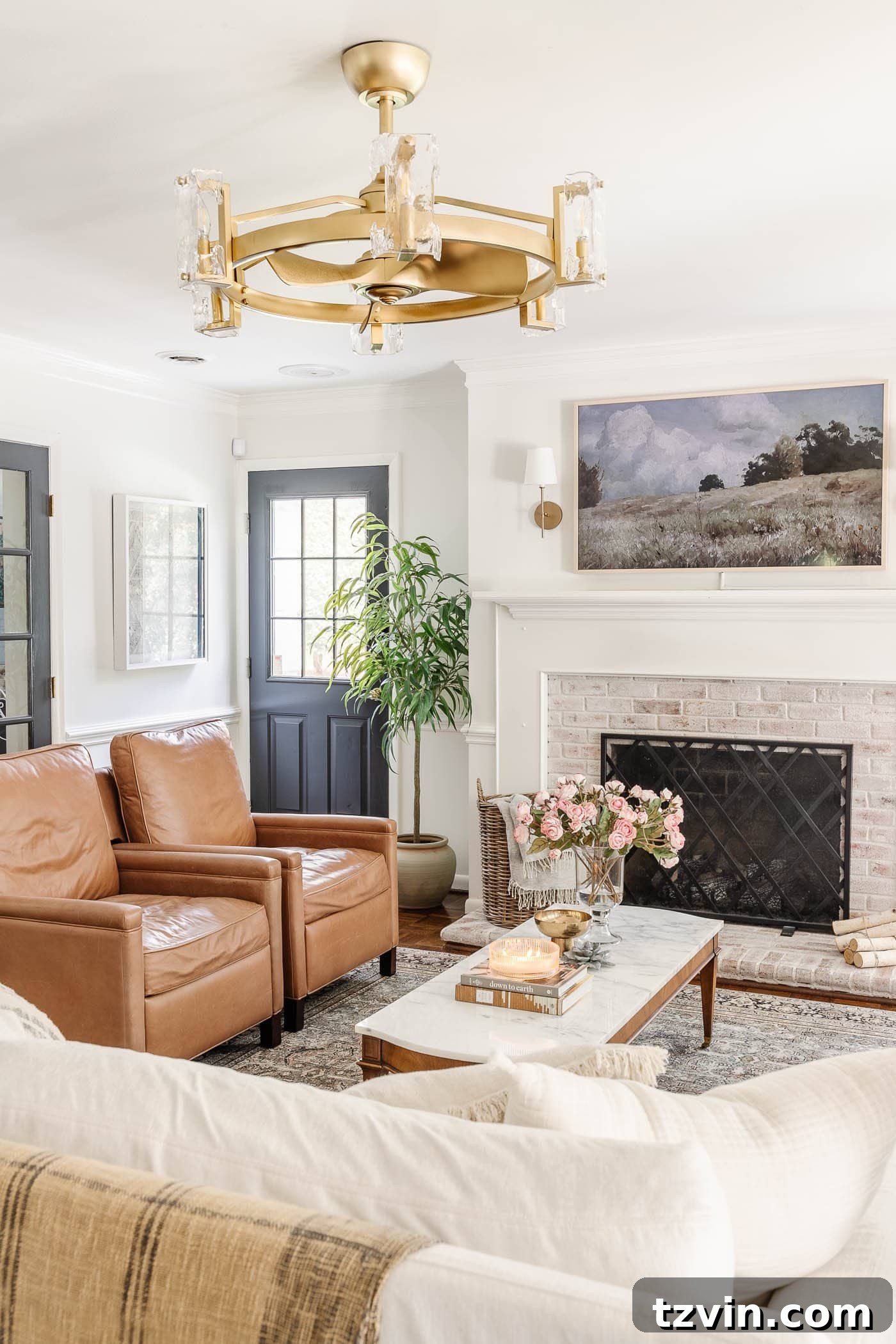
To truly appreciate the transformative power of indoor greenery, try a little experiment: cover the image below of our living room, featuring a beautiful eucalyptus tree. Doesn’t the room feel significantly less vibrant, less inviting, without that dynamic burst of green gracefully occupying the corner?
While real plants offer specific advantages like air purification and tangible growth, the psychological benefits of greenery extend to well-chosen artificial varieties too. Our brains are remarkably adept at perceiving and responding to visual cues. When you introduce a high-quality artificial tree, your mind can still register its presence as a calming, natural element, thereby boosting your mood and contributing to a serene environment. It’s an effective way to tap into the principles of biophilic design – connecting humans with nature – even when live plants aren’t feasible.
Beyond mood enhancement, opting for artificial plants comes with a host of practical advantages. They are incredibly low-maintenance, requiring no watering, specific lighting, or pest control. This makes them ideal for busy individuals, those with allergies, or rooms where natural light is scarce. Their consistent beauty ensures a perfectly styled look year-round, without the worry of wilting leaves or sudden die-offs.
Selecting the Best Realistic Artificial Indoor Trees
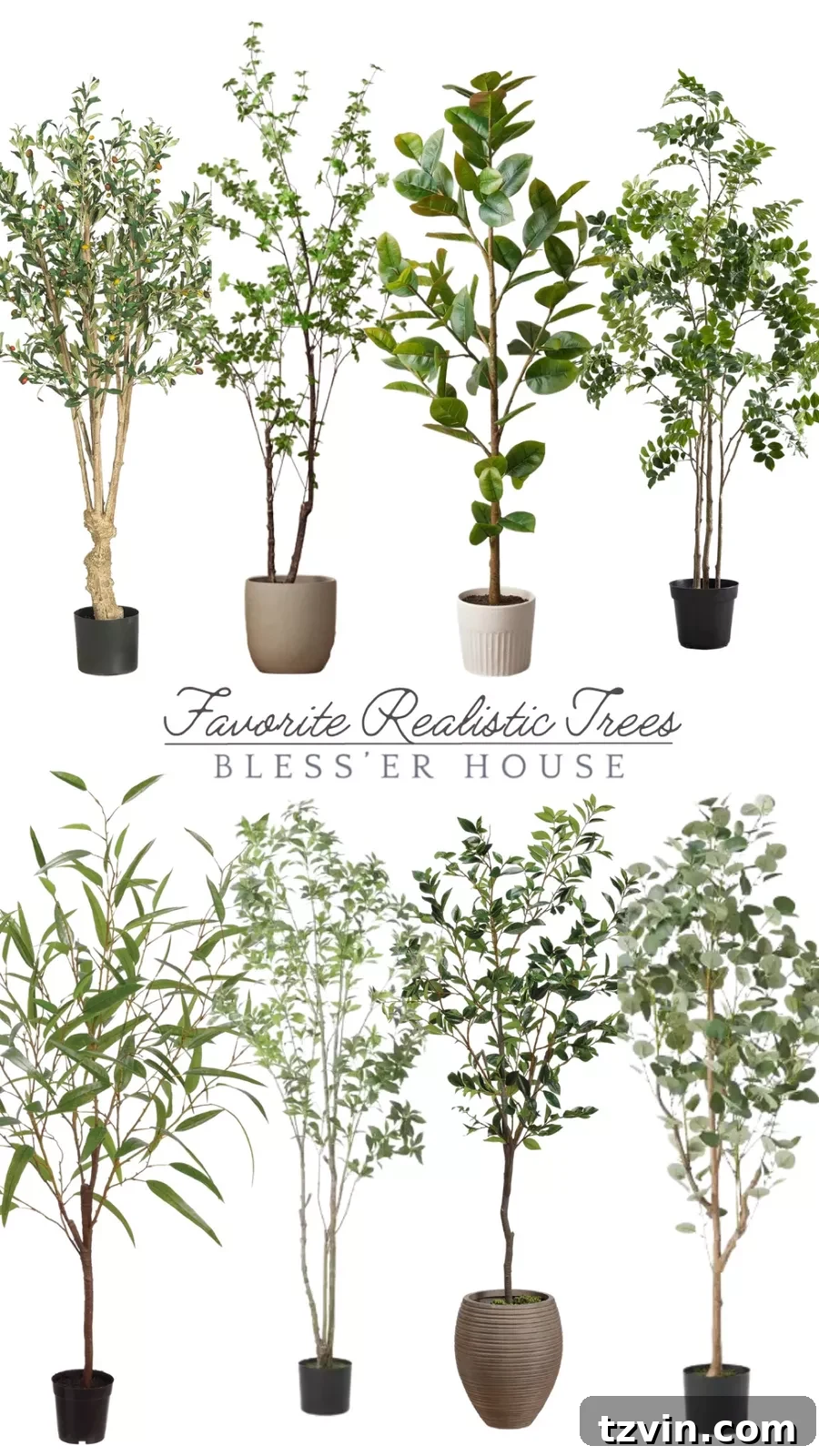
The market for artificial plants has evolved dramatically, moving far beyond the dusty, obviously fake flora of yesteryear. Today, you can find incredibly lifelike options that genuinely elevate your home decor. After years of searching and styling, I’ve curated a selection of the best artificial indoor trees that cater to various budgets and size requirements, all designed to offer that desired realistic touch.
What to Look For in High-Quality Faux Trees:
- Material Quality: Opt for trees made from high-grade silk or “real touch” plastics. These materials offer a more natural look and feel, mimicking the texture and subtle imperfections of real leaves.
- Natural-Looking Trunk and Branches: The trunk is often the biggest giveaway for a fake tree. Look for trunks with realistic bark texture, natural color variations, and believable branch structures. Some premium options even incorporate natural wood for the trunk, further enhancing their authenticity.
- Leaf Color and Variation: Real leaves are rarely one uniform shade. High-quality artificial trees will feature subtle color gradients, varying shades of green, and even slight browning or yellowing on some leaves to mimic natural growth and aging.
- Sturdy, Adjustable Branches: Good faux trees come with wired branches that can be gently shaped and fluffed to achieve a natural, expansive look, rather than remaining stiff and compressed from packaging.
- Overall Proportions: Ensure the tree’s height and width are proportionate to what a real tree of that species would naturally achieve, avoiding any awkward or stunted appearances.
Popular Realistic Faux Tree Styles:
- Fiddle Leaf Fig Tree: A perennial favorite for modern interiors, known for its large, sculptural leaves. Faux versions have mastered replicating its distinctive shape and vibrant green.
- Olive Tree: Perfect for a Mediterranean, rustic, or minimalist aesthetic. Realistic faux olive trees feature delicate silvery-green leaves and often gnarled trunks that exude charm.
- Eucalyptus Tree: Offers an airy, contemporary feel with its distinct round or oval leaves. Faux eucalyptus trees bring a subtle, muted green tone that complements many decor styles.
- Bird of Paradise Plant: For a touch of tropical drama, the Bird of Paradise, with its broad, banana-like leaves, makes a striking statement.
- Monstera Deliciosa: A trendy choice, famed for its large, fenestrated (split) leaves. Faux Monstera plants capture its unique, jungle-like appeal beautifully.
Budget-Friendly DIY Tip: If purchasing a store-bought artificial tree is currently outside your budget, consider a fantastic DIY indoor tree project! For as little as $25, you can create a stunning piece using a carefully selected cut branch from your yard, some hot glue, and realistic faux leaves. This method allows for incredible customization and a truly unique, natural look.
How to Make Any Fake Indoor Tree Look Real: Expert Styling Tricks
The secret to convincing artificial greenery isn’t just about the tree itself; it’s often in the styling. Over my years of decorating and transforming spaces, I’ve picked up several invaluable tricks that can make even a moderately priced fake indoor tree appear remarkably realistic. These methods involve simple steps that significantly enhance the overall illusion.
1. Choose the Perfect Planter and Add Fillers
One of the most common giveaways of a fake tree is its small, often plastic, base. A real, substantial indoor tree would require a much larger planter to accommodate its root system and future growth. Therefore, the first crucial step is to house your artificial tree in a large, appropriately sized planter that adds visual weight and realism.
Selecting Your Planter: Consider materials like ceramic, terracotta, concrete, or woven baskets. The planter itself should complement your room’s decor style, adding to the tree’s presence. Once you’ve chosen a larger planter, simply place your fake tree’s original small base inside it.
Adding Height and Stability: If your tree appears a bit too short for its new large planter, don’t worry! You can easily add height by placing old books, bricks, empty plastic bottles, or even crumpled newspaper at the bottom of the larger planter before inserting the tree. These act as risers, elevating the tree to a more natural and commanding height. Ensure the tree is stable and upright once placed.
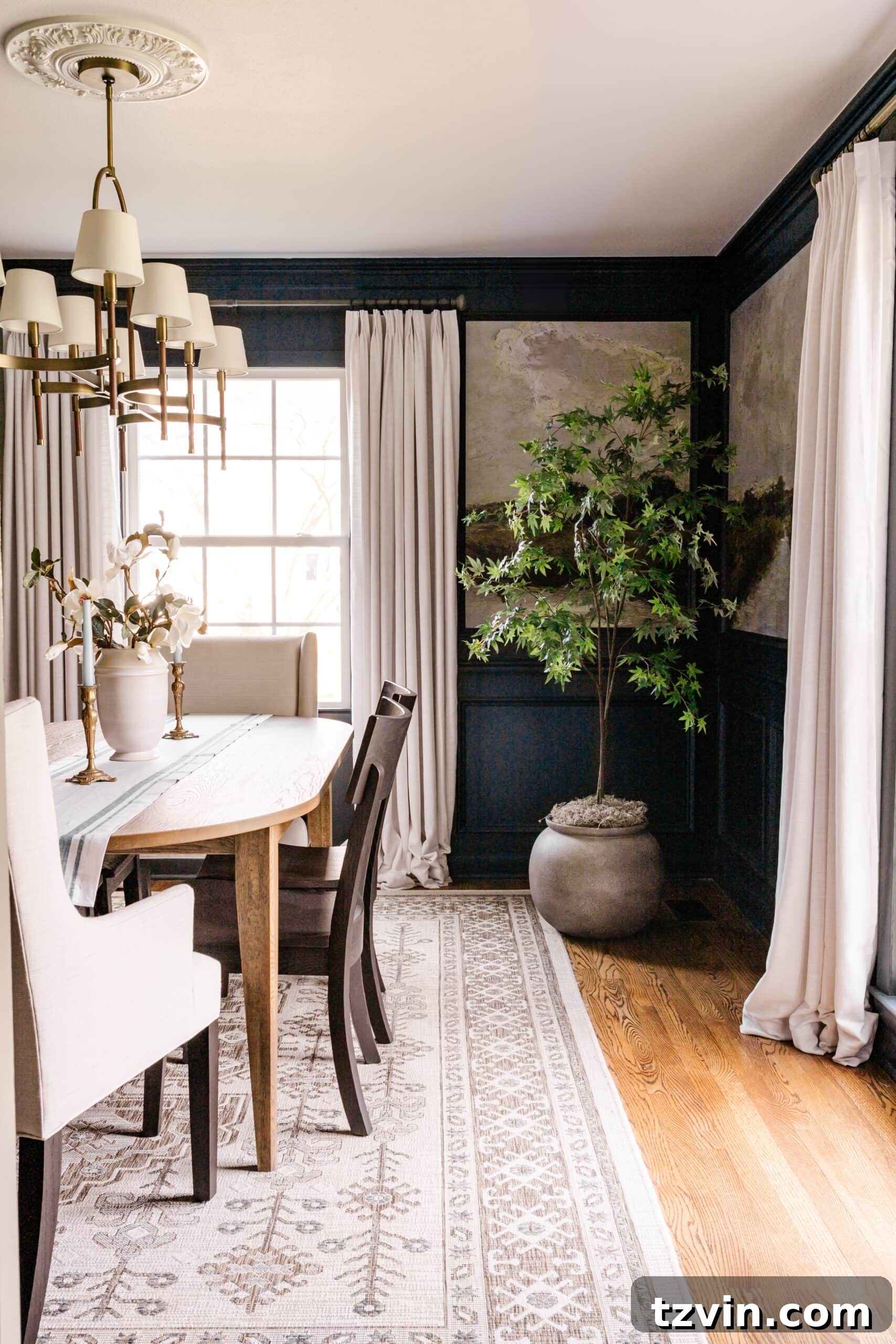
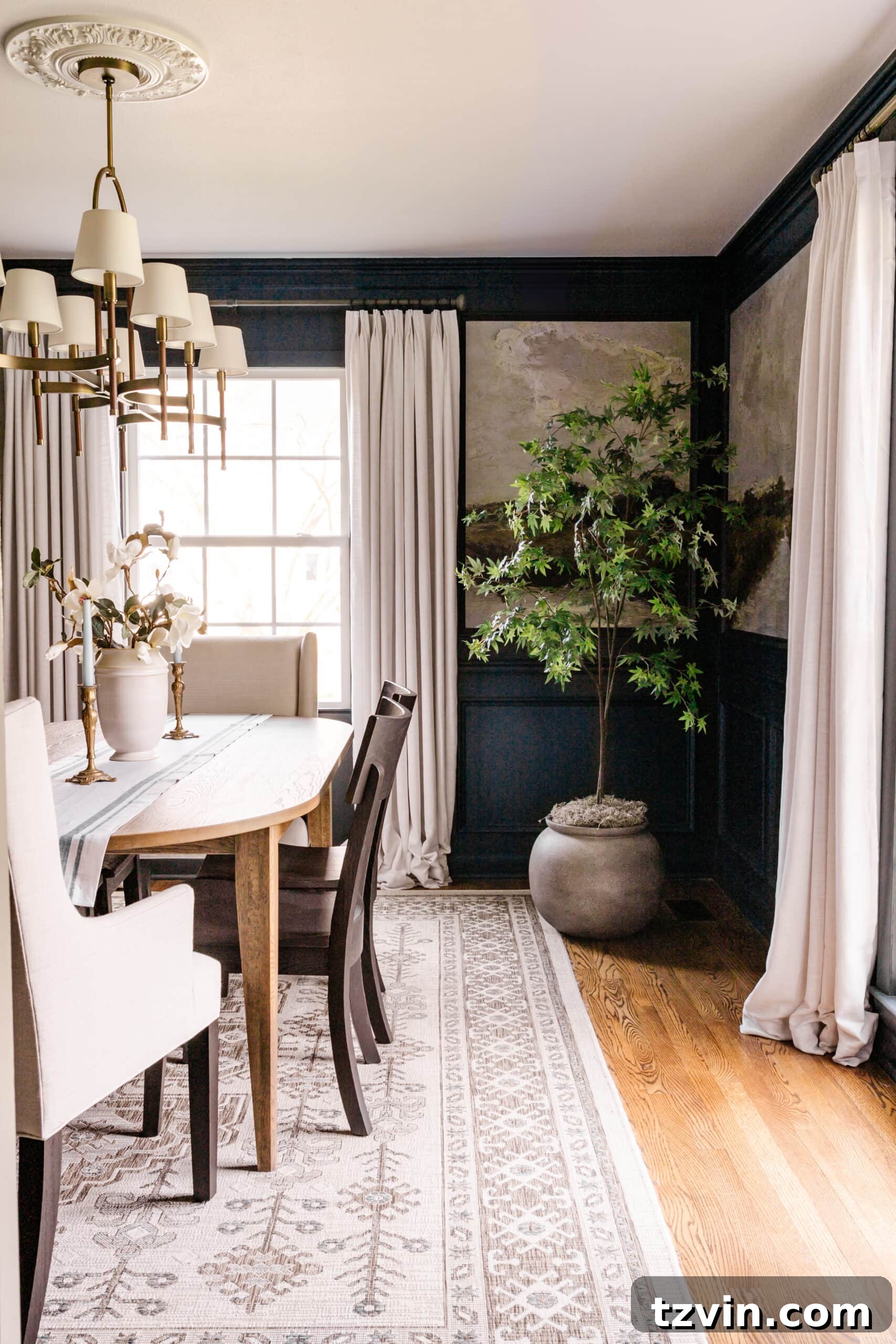
Concealing the Base: To truly sell the illusion, you must conceal the original plastic base and any risers. The best way to do this is by adding a top layer of natural material. My go-to choice is craft moss, which instantly gives the impression of living soil. Alternatively, you can use decorative pebbles, river rocks, or a thin layer of real potting soil on top. This crucial detail makes it look like the tree is genuinely growing in its pot.
Tip: For a high-end, designer look without the hefty price tag, check out this incredible DIY 3-ingredient stone planter – a perfect dupe for expensive concrete planters!
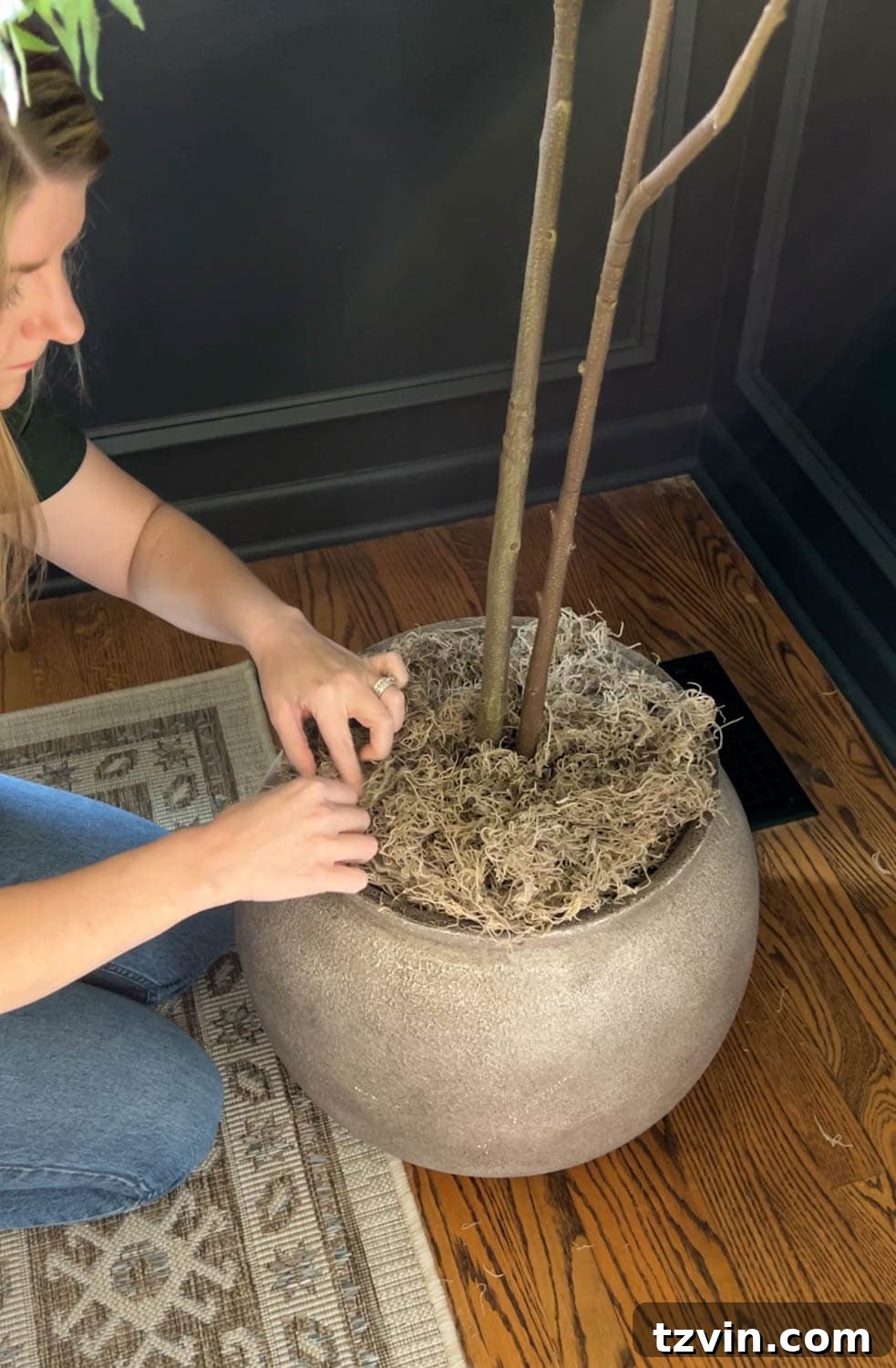
I was fortunate to discover the elegant large planter for our dining room’s artificial tree at Target, proving that stylish options are accessible. However, an even more rewarding approach can be found in regular thrift store excursions. Keep a keen eye out for unique vessels such as large baskets, antique urns, or vintage crates, which can serve as distinctive and budget-friendly planters. These unexpected finds often add character and a bespoke touch to your decor.
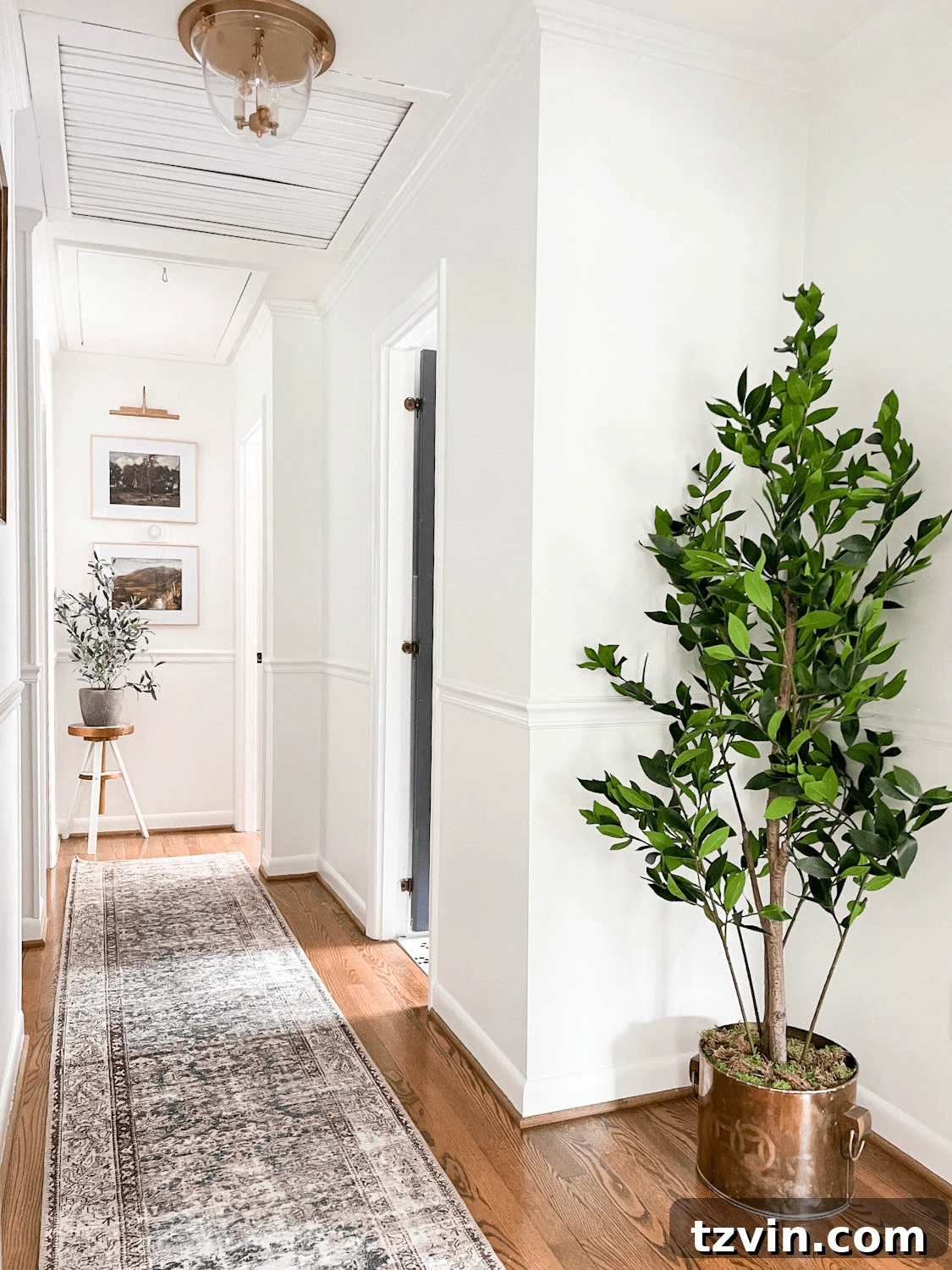
For instance, the stunning brass planter that houses the fake tree in our hallway was a mere $14 thrift store gem, demonstrating that remarkable pieces can be acquired without breaking the bank.
2. Fluff and Separate the Branches
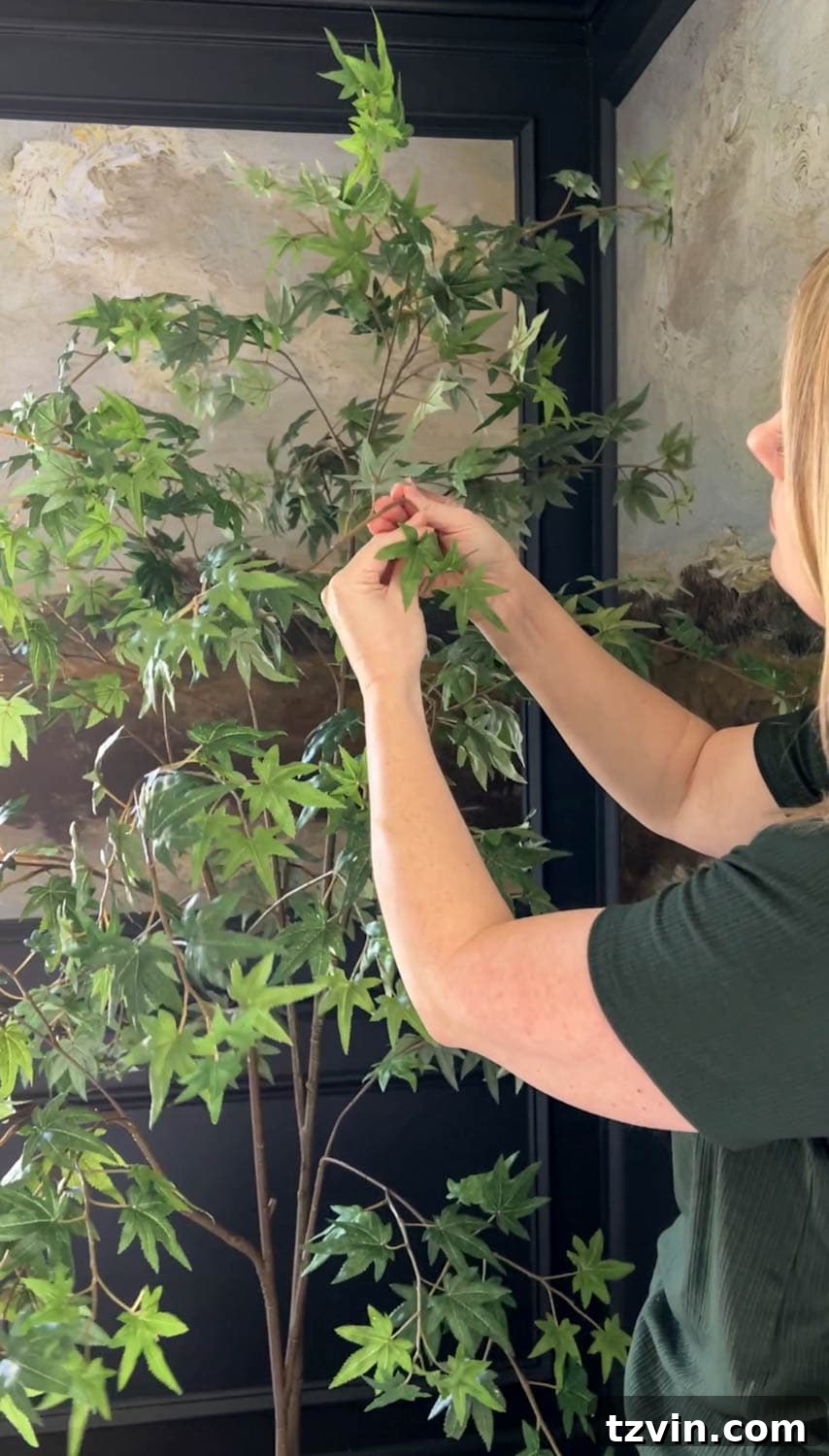
Artificial trees are typically compressed and squashed during packaging and shipping, resulting in a flat, unnatural appearance straight out of the box. This is where “fluffing” comes in – a critical step that breathes life into your faux foliage.
Take your time to gently pull apart and spread out each individual branch and leaf. Many high-quality artificial trees have wired stems, allowing you to carefully bend and shape them. Observe how real trees grow: branches typically extend outwards and upwards, with leaves facing various directions to catch light. Mimic this organic growth pattern, ensuring there’s ample separation between leaves and branches to create a full, natural silhouette. Gently smooth out any leaves that may have been creased or crushed during transit; sometimes a light mist of water or a gentle pass with a handheld steamer can help them regain their natural shape. This attention to detail can make a dramatic difference in how realistic your tree appears.
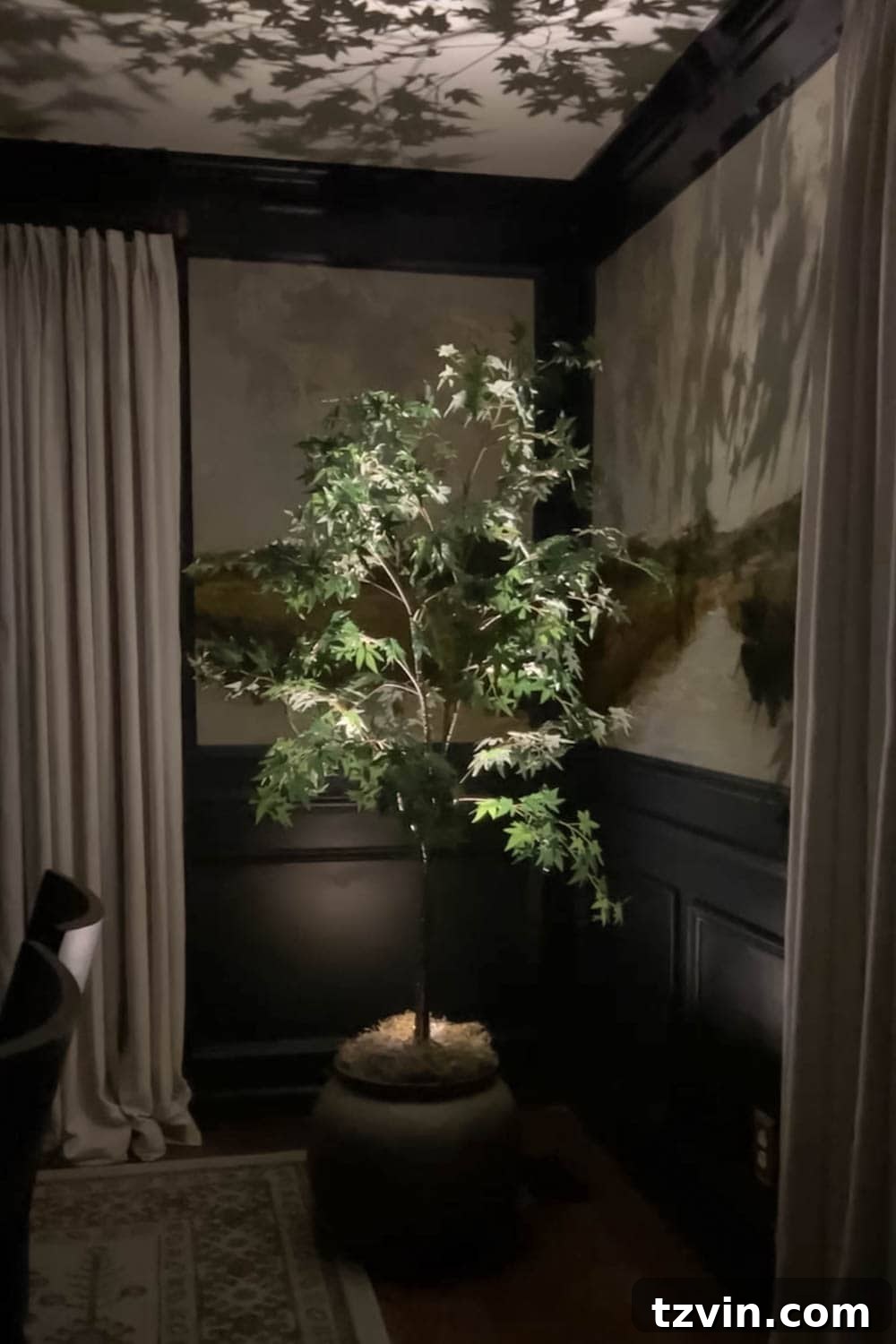
3. Enhance Ambiance with an Uplight
While an uplight might not directly make a fake tree look “real” in the daylight, it creates an astonishingly beautiful effect that significantly enhances its presence and atmosphere, especially in the evening. It’s a clever trick to add a layer of sophistication and visual interest.
I highly recommend integrating a remote-controlled uplight into your tree’s planter. These compact lights can be discreetly tucked away within the moss or other filler at the base of your tree. Position it to shine upwards, casting a gentle glow on the trunk and foliage. Many models offer timer functions, allowing you to set them to automatically illuminate your tree as dusk falls. For long-term savings and convenience, invest in rechargeable batteries.
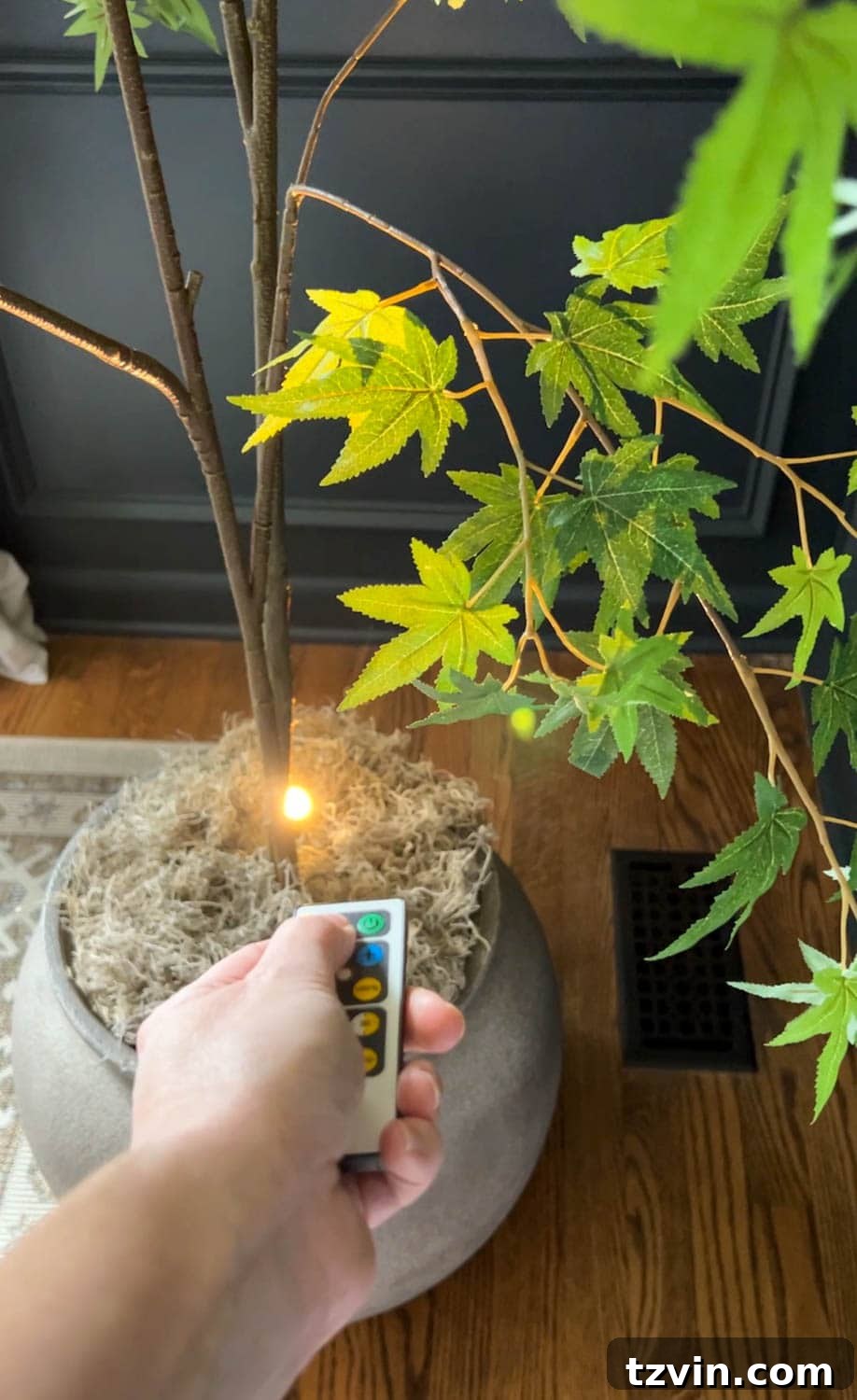
The magic happens when the lights dim: the uplight creates captivating shadows of the leaves dancing across your ceiling and walls. This ethereal effect adds incredible depth and a cozy, inviting ambiance to any room, transforming your faux tree into a stunning focal point and a piece of living art.
4. Integrate Natural Elements and Maintain Your Faux Tree
Beyond the planter and fluffing, a few additional touches can dramatically boost the realism of your artificial trees. Think about what makes a real plant thrive and try to replicate those conditions visually.
- Dust Regularly: Just like real plants, fake plants collect dust. A dusty faux leaf immediately signals its artificial nature. Regularly wipe down leaves with a damp cloth or use a soft duster to keep them looking fresh and vibrant.
- Consider Real Soil: If you’re not using moss or pebbles as a top layer, consider adding a thin layer of real, dry potting soil on top of the base. This can be surprisingly convincing and adds an authentic texture.
- Combine with Live Greenery: Placing your artificial tree near a smaller live plant or a vase of fresh flowers can create an overall impression of abundant, healthy plant life, making the faux tree blend in seamlessly.
- Strategic Placement: Think about where a real tree would naturally thrive in your home. Placing your artificial tree in a spot that receives plenty of natural light (even if it doesn’t need it) or in a corner that feels naturally suited for a plant will enhance its realism.
5. Embrace the Illusion with Confidence
With these thoughtful styling tricks, your artificial tree will command attention and elevate your interior design, appearing as sophisticated and lifelike as those found in high-end design catalogs from Pottery Barn or Crate and Barrel, but achieved at a fraction of the cost, often using finds from places like Target or local thrift stores.
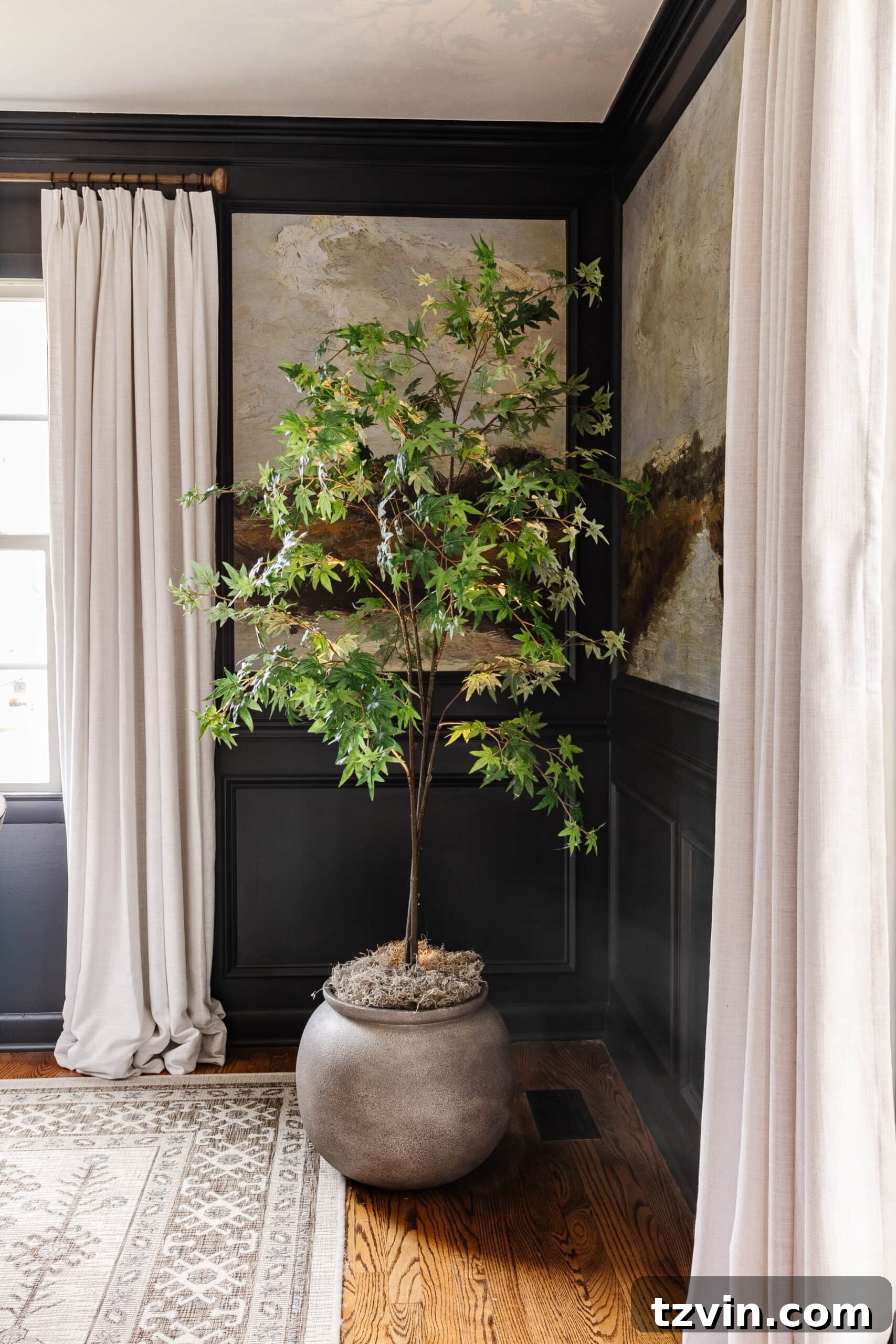
(Shop this delightful corner of our dining room)
Final Thoughts on Embracing Faux Greenery
It’s truly amazing how these simple yet effective techniques can elevate the humble artificial tree into a stunning focal point. I’m constantly impressed by the impact of adding just a few more of those little uplights – they genuinely transform the evening atmosphere!
Do you currently have indoor trees gracing your home? Are you a dedicated member of “Team Real” or do you proudly stand with “Team Faux”? Perhaps, like me, you find yourself somewhere in between, appreciating the low-maintenance beauty of artificial options while still harboring the occasional ambition to nurture a real plant – maybe when the kids are old enough to fend for themselves! Whichever team you’re on, the goal is to create a beautiful, inviting space that brings joy and a touch of nature indoors.
Embracing artificial greenery is not about compromising on style or the desire for a natural aesthetic. It’s about finding smart, sustainable, and stress-free ways to infuse your home with life and beauty, creating an oasis you can truly relax in.
More Greenery and Decor Ideas for a Fresh Home
If you’re eager to incorporate more natural beauty into your living spaces, explore these related articles for additional inspiration and DIY projects:
- Where to Find Fake Flowers That Look Real
- DIY Pressed Flower Art
- DIY Hobnail Vase