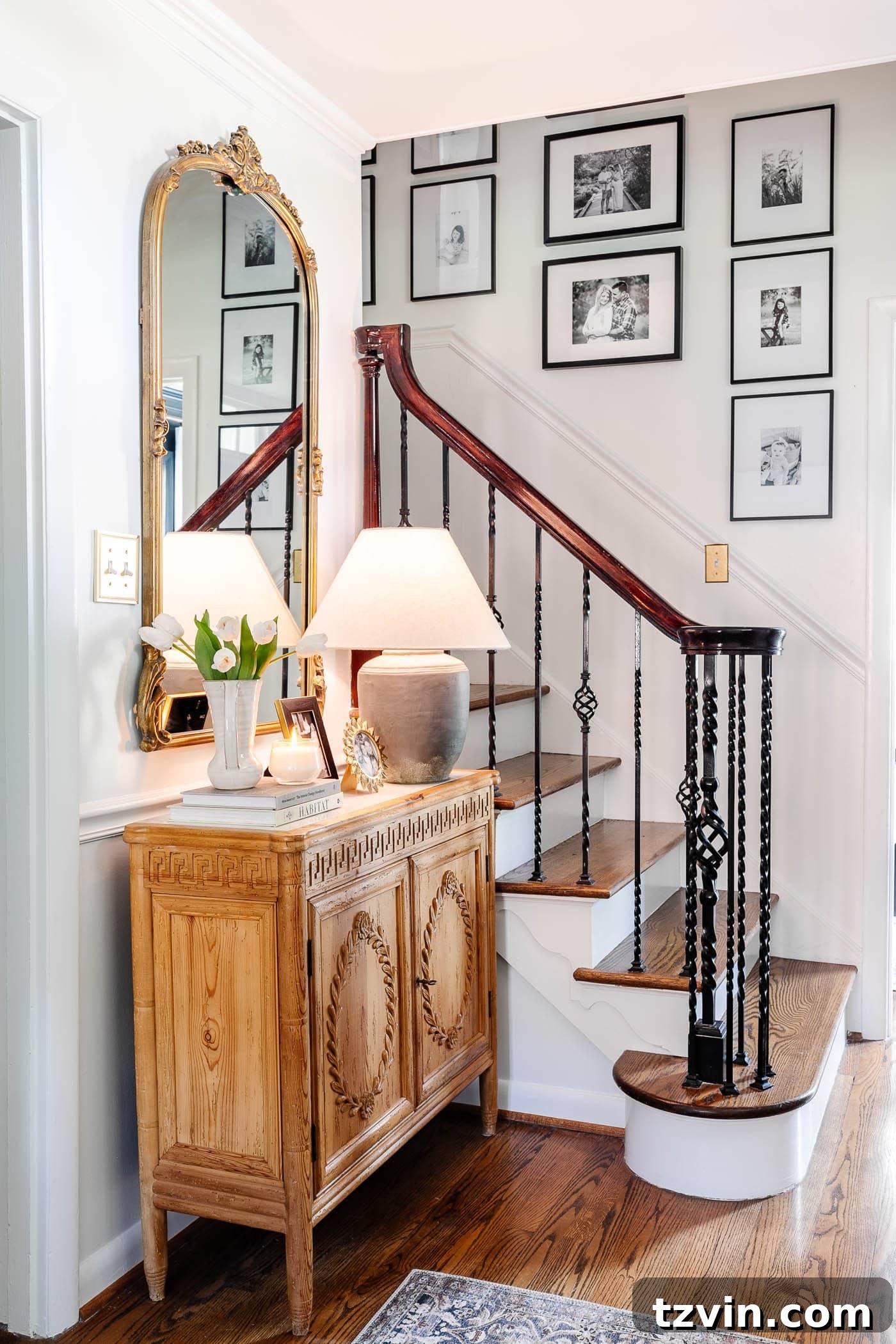
Unlock the secrets to styling your entry table like a seasoned decorator and craft a truly welcoming entryway that makes a memorable first impression.
Your home’s entryway or foyer is more than just a transitional space; it’s the welcoming embrace that greets you and your guests. It sets the tone for your entire home, offering a glimpse into your personal style and warmth. For too long, my own entryway felt like an afterthought – a semi-decorated space that left me completely uninspired each day. After last year’s accidental foyer and stairway refresh and discovering the perfect entry table on Facebook Marketplace, I finally realized it was time to give this crucial area the attention it deserved.
Beyond seasonal decorating for fall or Christmas, I hadn’t truly styled this space with intention. The daily walk through a “blah” foyer spurred me to action, and now I’m excited to share a comprehensive guide on how to decorate an entry table. If you’ve ever felt overwhelmed or unsure where to begin with your home’s entrance, you’re in the right place. Let’s transform that blank canvas into a beautifully curated and functional welcome zone.
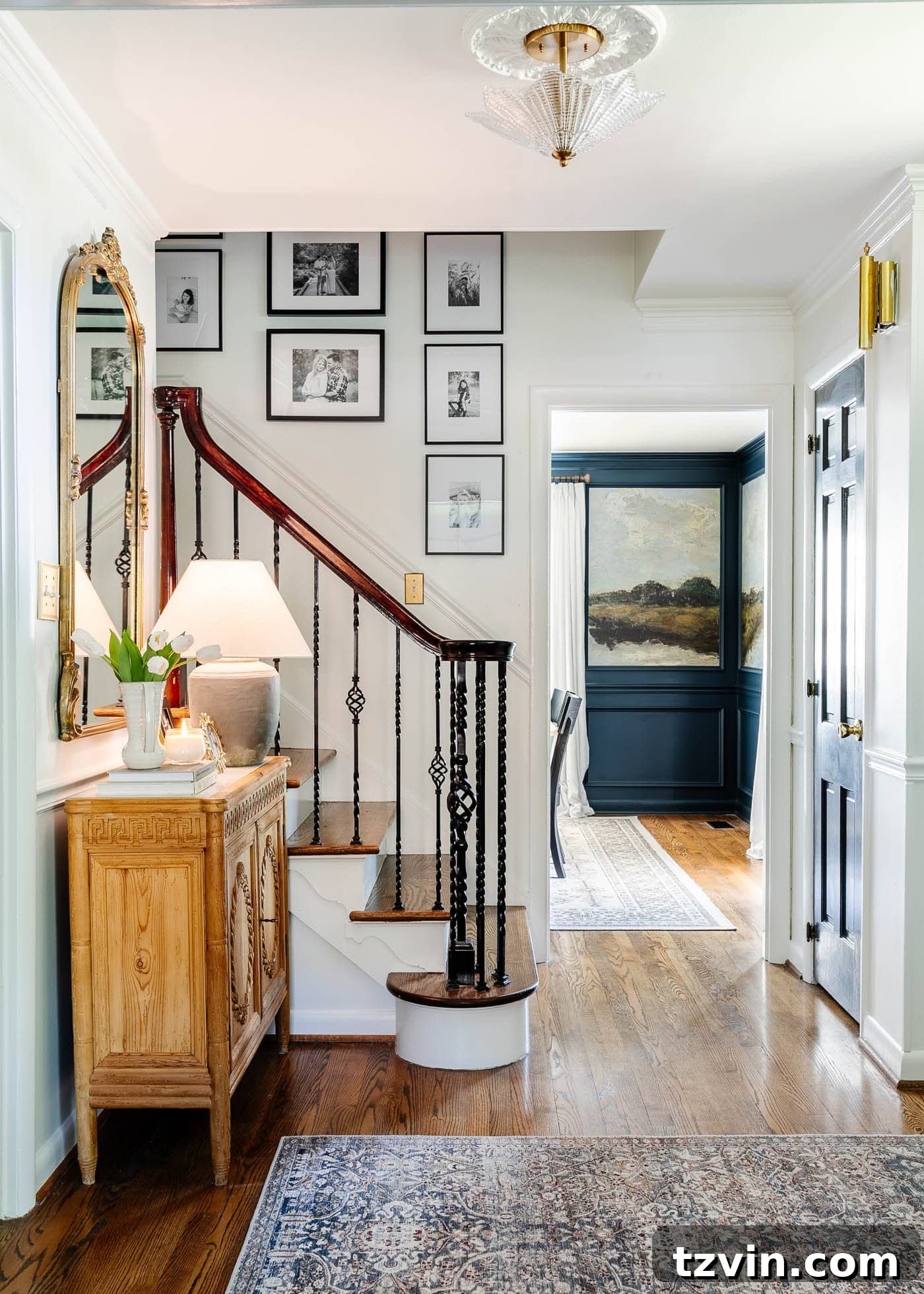
Essential Elements for Your Entry Table Decor
Creating an inviting and functional entryway begins with selecting the right decor pieces. The goal is to strike a balance between aesthetics and practicality, ensuring your space feels both beautiful and useful. Here are the fundamental items every well-styled entry table should consider:
- A Mirror or Large Piece of Art: This serves as the focal point above your entry table, anchoring the entire vignette. A mirror can amplify light and make a space feel larger, while a striking piece of art or a thoughtfully arranged gallery wall offers a pop of personality and color.
- A Table Lamp: Beyond its practical purpose of providing illumination, a lamp introduces a soft, welcoming glow, especially crucial in windowless entryways or during evening hours. It adds warmth and ambiance that overhead lighting often cannot achieve.
- Something Organic: Introduce a touch of nature with a vase of fresh flowers, a low-maintenance plant, or even artfully arranged branches. Organic elements bring life, texture, and a sense of freshness to your decor.
- Sentimental or Meaningful Items: Personalize your entryway with cherished objects that tell a story or evoke joy. This could be a framed family photo, a unique souvenir from a memorable trip, or an heirloom piece. These items infuse your space with character and make it uniquely yours.
Helpful Tips for Mastering Entryway Decor Styling
Decorating an entryway table can be an art form, but with a few guiding principles, you can achieve a professional and polished look. These tips are designed to simplify the process and help you create a cohesive and welcoming space.
- Less is More: As the first impression of your home, your entryway should feel uncluttered and serene. Resist the urge to fill every inch with decor. A few thoughtfully chosen items will always look more sophisticated and inviting than a crowded surface. Keep surfaces clear of unnecessary everyday items to maintain a tidy appearance.
- Bigger is Better: When faced with the choice between several small decor items or fewer large ones, opt for the latter. Large pieces make a bolder statement, create a sense of grandeur, and prevent the table from looking “busy” or messy. Aim for three to five substantial items rather than a dozen small knick-knacks, which can visually shrink the space and feel chaotic.
- Vary Heights and Textures for a Layered Look: A dynamic entryway vignette incorporates items of different heights, shapes, and materials. This variation adds visual interest and depth. Combine tall lamps with medium-height vases and shorter decorative objects. Incorporate smooth ceramics, rough wood, soft textiles, and reflective metals to create a rich, layered aesthetic that engages the eye.
- Group Items into Threes: This design principle, often referred to as the “rule of three” or creating a “visual triangle,” helps to create balanced and aesthetically pleasing arrangements. Mentally or physically group items in odd numbers, typically three, varying their heights to form a triangular shape. We’ll delve deeper into the visual triangle in the step-by-step tutorial below, as it’s a powerful tool for effortless styling.
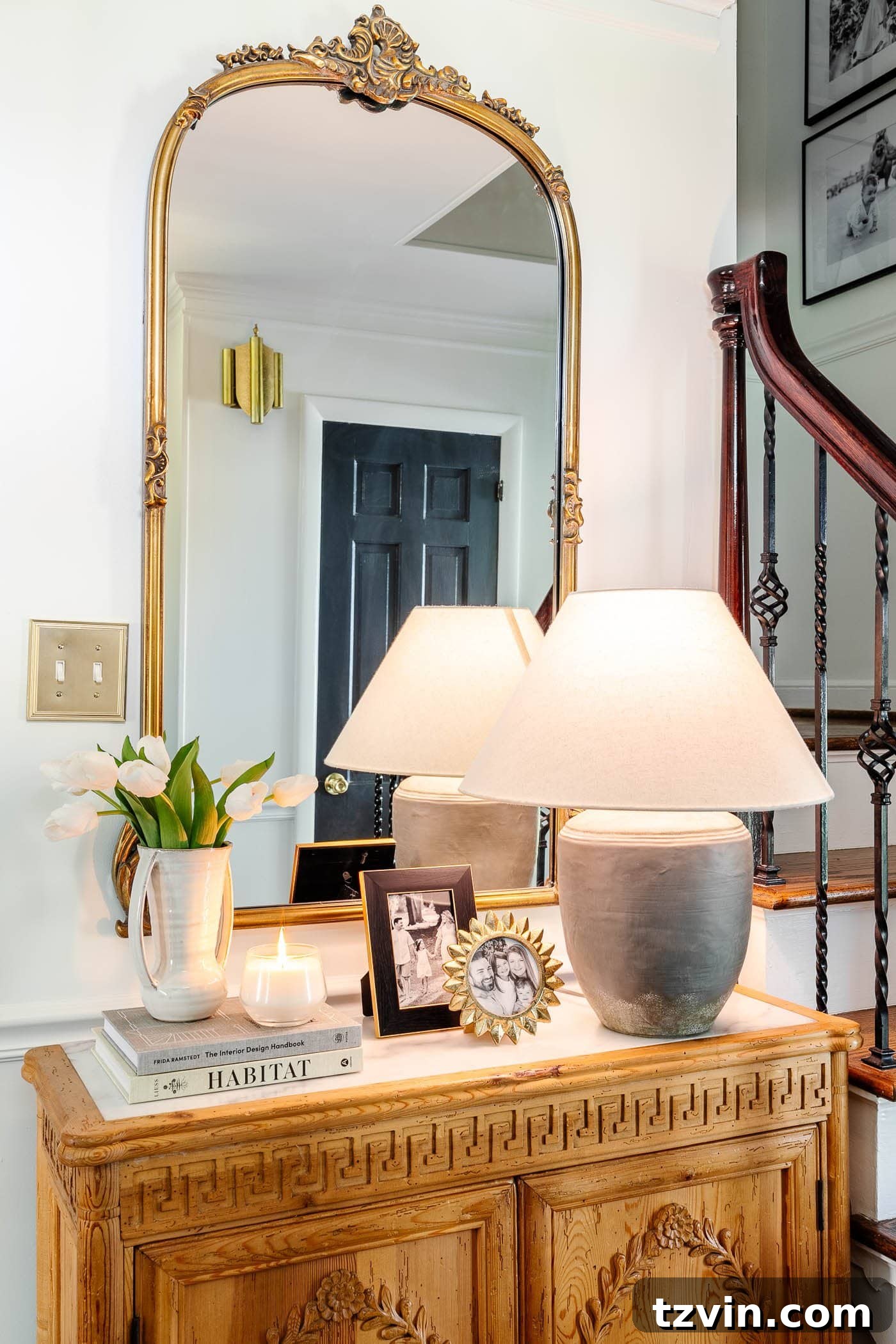
How to Decorate an Entry Table: A Step-by-Step Guide for a Stylish Foyer
Transforming your entry table into a beautifully styled focal point is a methodical process that combines thoughtful planning with creative execution. Follow these steps to achieve a balanced, functional, and visually appealing entryway.
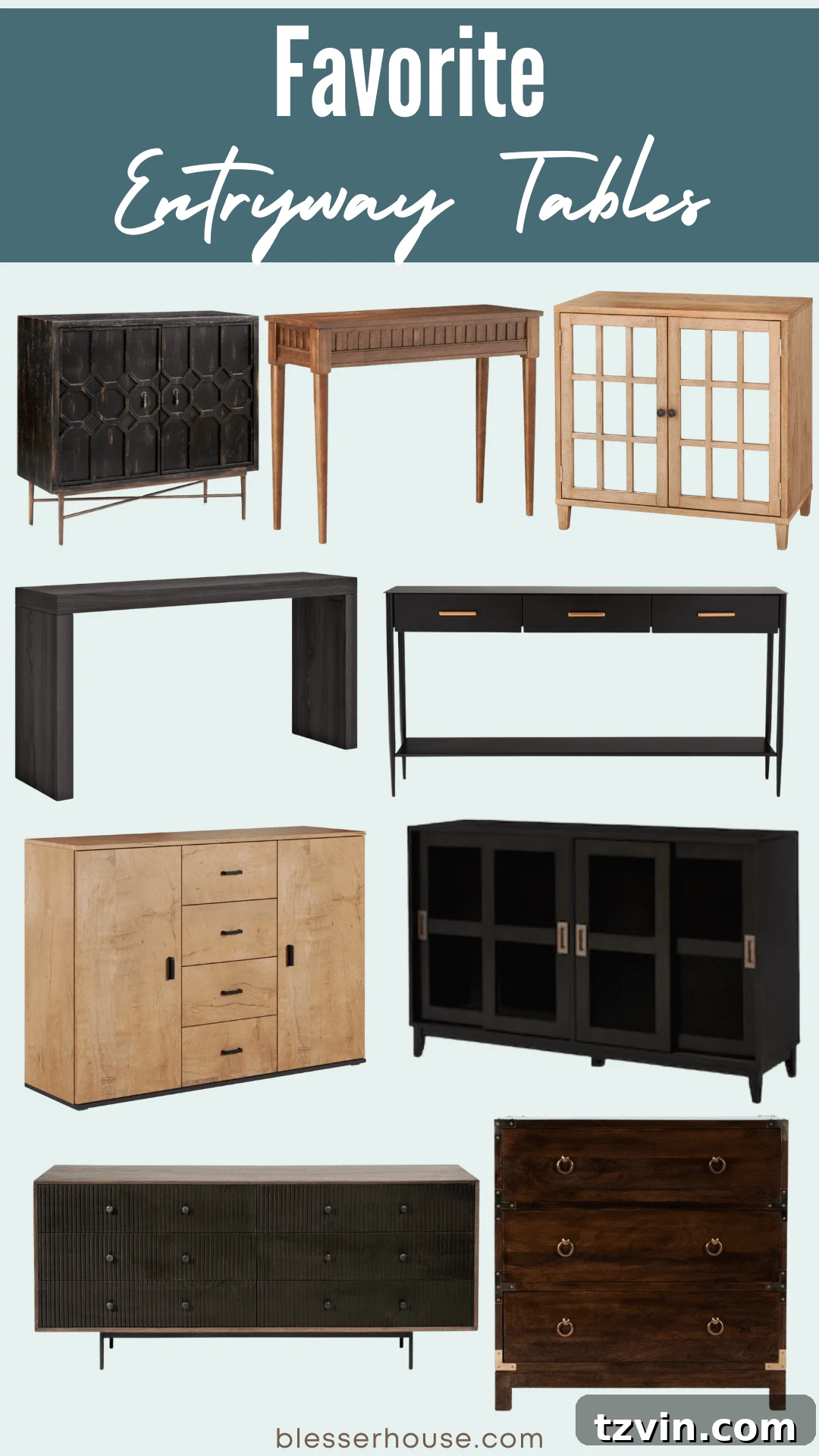
Step 1 – Choose the Right Entry Table for Your Space and Needs
Before you even begin decorating, the most crucial step is selecting the appropriate entry table. This piece of furniture will serve as the foundation for your decor, and its size, shape, and functionality must align with your space and lifestyle. Consider the dimensions of your entryway, your storage requirements, and your overarching personal decorating style.
- Chest of Drawers or Cabinet: Ideal for smaller or narrow entryways where storage is paramount. A chest offers closed storage for keys, mail, gloves, or other items you want to keep out of sight, maintaining a clutter-free look. Its solid presence can also anchor a space effectively.
- Credenza or Sideboard: Best suited for larger entryways, credenzas or sideboards provide maximum storage capacity and a substantial surface area for display. These pieces can make a grand statement and offer ample room for larger decor items or multiple vignettes.
- Console Table: Perfect for making small entryways feel more open and spacious. Console tables are typically narrow and leggy, offering a light visual footprint. While they provide minimal to no closed storage, their open design can be complemented with decorative baskets or trays underneath for functional storage.
Once you’ve assessed your functional needs from these three types, delve into your personal decorating style. Do you lean towards modern, rustic, traditional, or eclectic? The table you choose should reflect this style, whether it’s a sleek metal console, a distressed wooden chest, or a classic antique sideboard. This synergy between function and form is key to narrowing down the perfect entry table for your home.
Step 2 – Select Your Anchor: A Mirror or Statement Wall Art
With your entry table in place, the next step is to define the vertical anchor for your vignette: a mirror, a significant piece of wall art, or a curated art grouping. This element not only completes the visual composition above the table but also offers a powerful opportunity to express your personal style and even blend different aesthetics.
Consider the style of your entry table. If it’s a rustic wooden piece, a modern, abstract painting or a mirror with clean, minimalist lines can create a compelling contrast, balancing the rough textures with smooth finishes. Conversely, if your table has ornate carvings, echoing those details in a decorative gold mirror can create a harmonious, luxurious feel. Don’t be afraid to mix and match styles to create a unique and intriguing look.
For entryways lacking natural light, a mirror is an invaluable tool. It effectively bounces light around the room, making the space feel brighter and more expansive. Choose a mirror with an interesting frame to add an additional layer of style. If your entryway already receives ample light or if you prefer a different aesthetic, a large piece of art can introduce color, theme, and personality. A gallery wall, featuring several smaller pieces, can tell a more intricate story and offer greater flexibility in design.
When it comes to size, a common guideline suggests that the mirror or art piece should ideally be two-thirds to three-quarters the width of the table below it. This ratio ensures visual balance and prevents the wall decor from looking either too small and lost or too overpowering. However, remember that decorating rules are often made to be playfully broken if you feel bold enough to experiment and trust your eye for design.
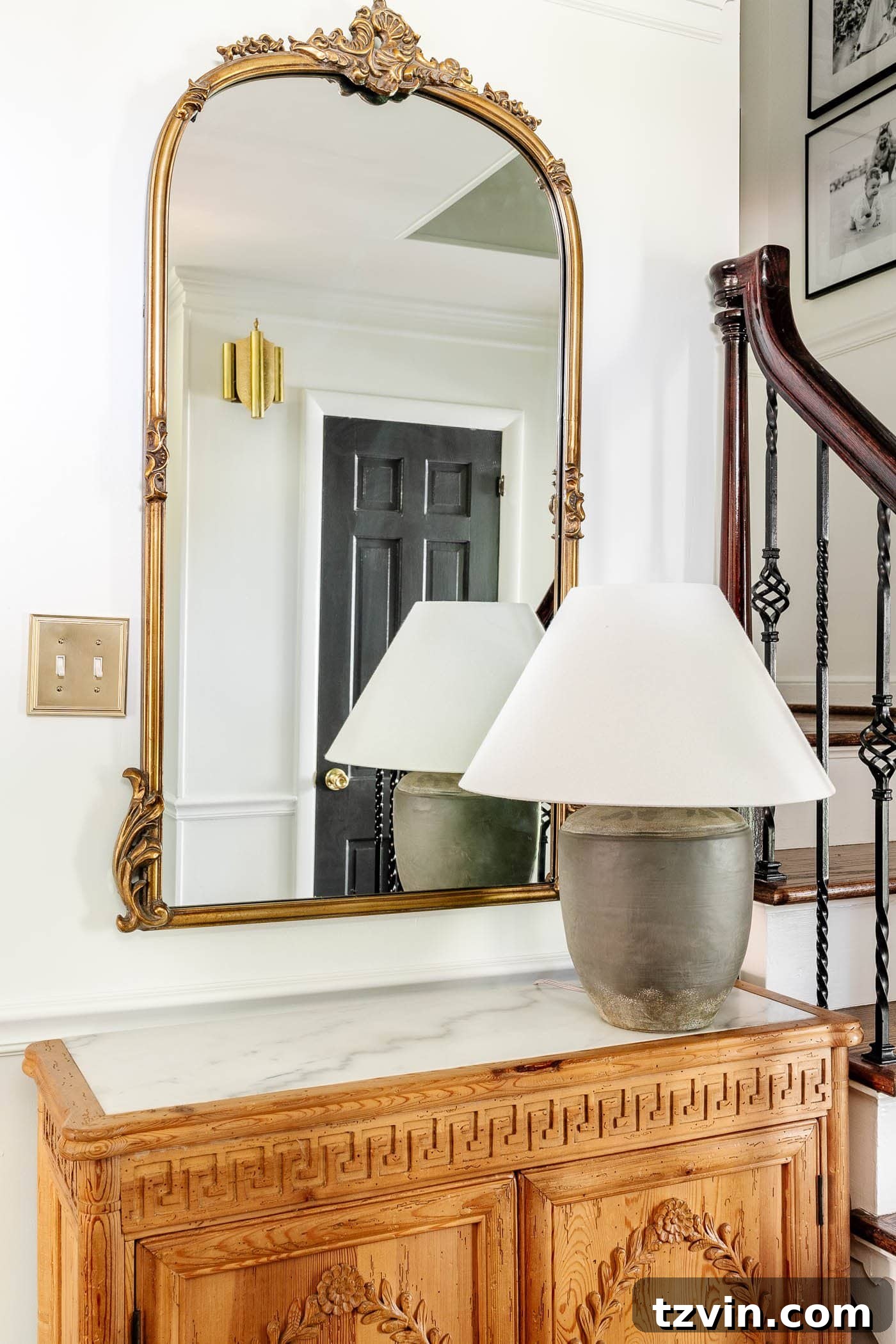
Step 3 – Establish Your Tabletop Anchor Piece
Once your mirror or artwork is proudly displayed, it’s time to bring life to the table surface. Your first tabletop addition should be your largest item, serving as the anchor around which the rest of your decor will be built. This substantial piece will establish height and presence, setting the stage for a balanced composition.
Think big and impactful. A tall, elegant table lamp is a classic choice, providing both light and significant vertical interest. Alternatively, a grand vase filled with striking branches, a substantial sculpture, or an oversized decorative bowl can serve this purpose beautifully. The key is to select an item that commands attention without overpowering the space. Place this anchor piece on one end of your entry table, typically closer to the wall, allowing space for other items to fan out from it. In my own entryway, a robust lamp was the perfect choice to begin the styling process.
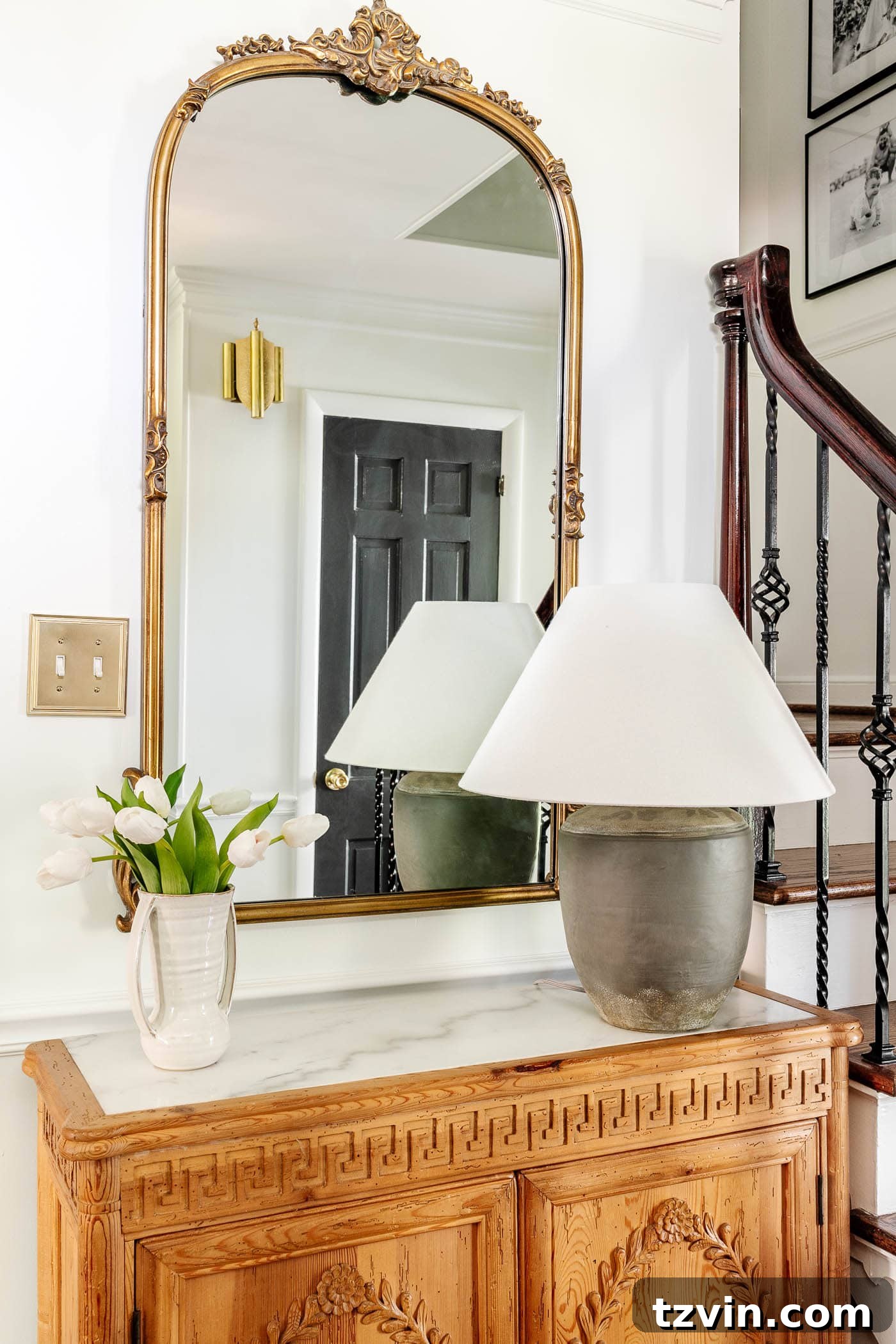
Step 4 – Introduce a Medium-Sized Item to Create Balance
With your main anchor securely in place, the next step involves introducing a medium-sized item to create visual balance on the opposite side of the table. This piece should add height and volume, but intentionally remain shorter than your primary anchor. The aim is to create a dynamic silhouette and prevent the table from looking lopsided.
Consider items such as a beautiful vase of fresh flowers, a healthy potted plant, a stack of aesthetically pleasing books, or a decorative box. I often find that pairing a lamp (my main anchor) with a plant or a vase of flowers creates a harmonious effect. The lamp provides a structured light source, while the organic element adds softness, life, and a natural touch to the entryway. This interplay of light and nature creates a welcoming and balanced ambiance, ensuring both ends of your entry table feel thoughtfully styled.
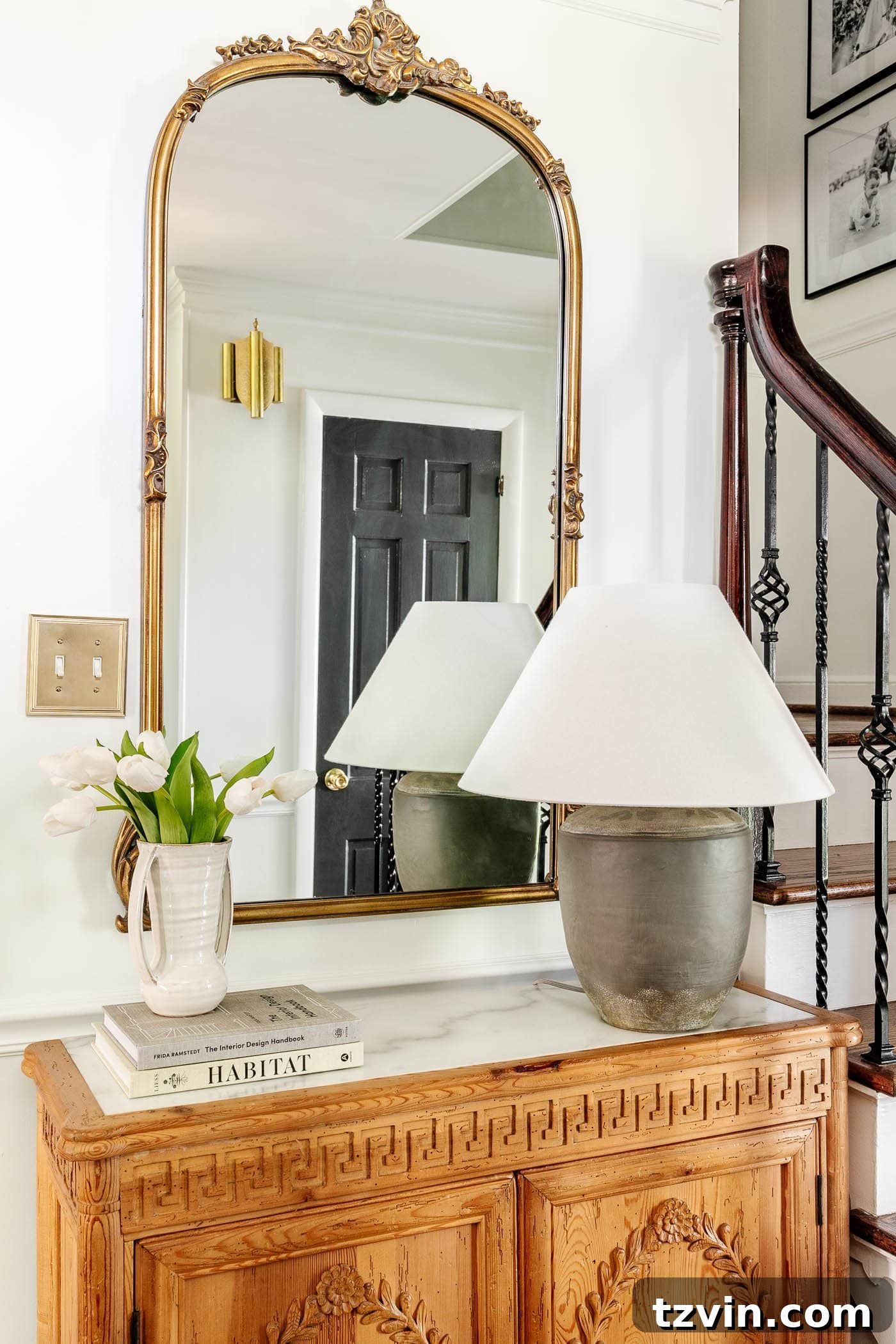
Step 5 – Incorporate Books for Height, Texture, and Personality
Books are a decorator’s secret weapon, offering a versatile way to add not just height but also texture, color, and a layer of personal interest to your entry table. If a particular item needs a little boost to achieve the desired height variation, a stack of books can serve as perfect risers.
Beyond their practical function as elevation, books contribute significantly to the aesthetic. Choose hardback books with attractive covers or intriguing titles. Our family loves collecting beautiful picture books from our travels, often about places we’ve visited or hobbies we enjoy. These become conversation starters and visual reminders of cherished memories. As an interior design enthusiast, I also collect inspiring decor books, which I frequently flip through for fresh ideas. Stacking two or three well-chosen books beneath a smaller decorative object or a plant can instantly elevate its presence and create a more curated look. Explore more coffee table books for all interests to find ones that resonate with your style and passions.
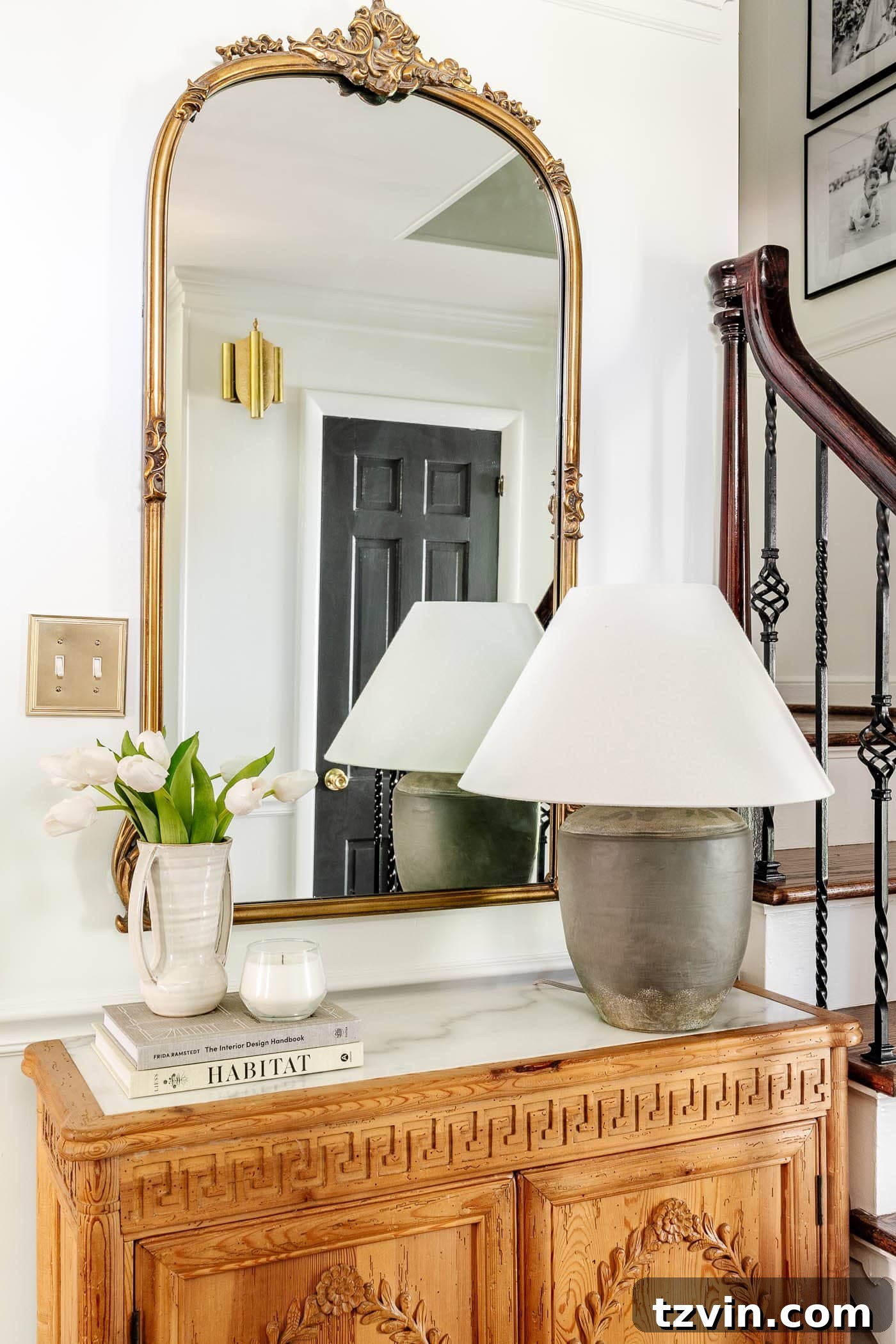
Step 6 – Infuse Warmth and Personality with Candles and Sentimental Touches
Now that the larger elements are in place, it’s time to layer in the smaller, more intimate details that truly make an entryway feel personal and inviting. This is where you introduce elements that appeal to the senses and tell your unique story.
A beautifully scented candle is an absolute must for an entry table. I make it a point to keep a candle in our foyer, ready to be lit in the evenings or whenever we anticipate guests. The gentle flicker of the flame adds a cozy ambiance, while a pleasant fragrance ensures the house smells fresh and clean upon entry. Choose a scent that complements the season or your desired mood.
Alongside the candle, incorporate truly sentimental items. These are the pieces that hold personal meaning and joy. This time, I chose to add a couple of small picture frames featuring cherished family photos. These aren’t just decorative items; they’re snippets of our life story. My daughter, Regan, particularly loves pointing to a picture and asking, “Mama! Is that ME in your tummy?” – a sweet daily ritual that reminds me of the warmth and love within our home. Other sentimental ideas include small heirlooms, trinkets from travels, a beautifully carved wooden box passed down through generations, or even a personalized catch-all dish for keys. These small, meaningful touches are what elevate an entryway from merely styled to genuinely welcoming.
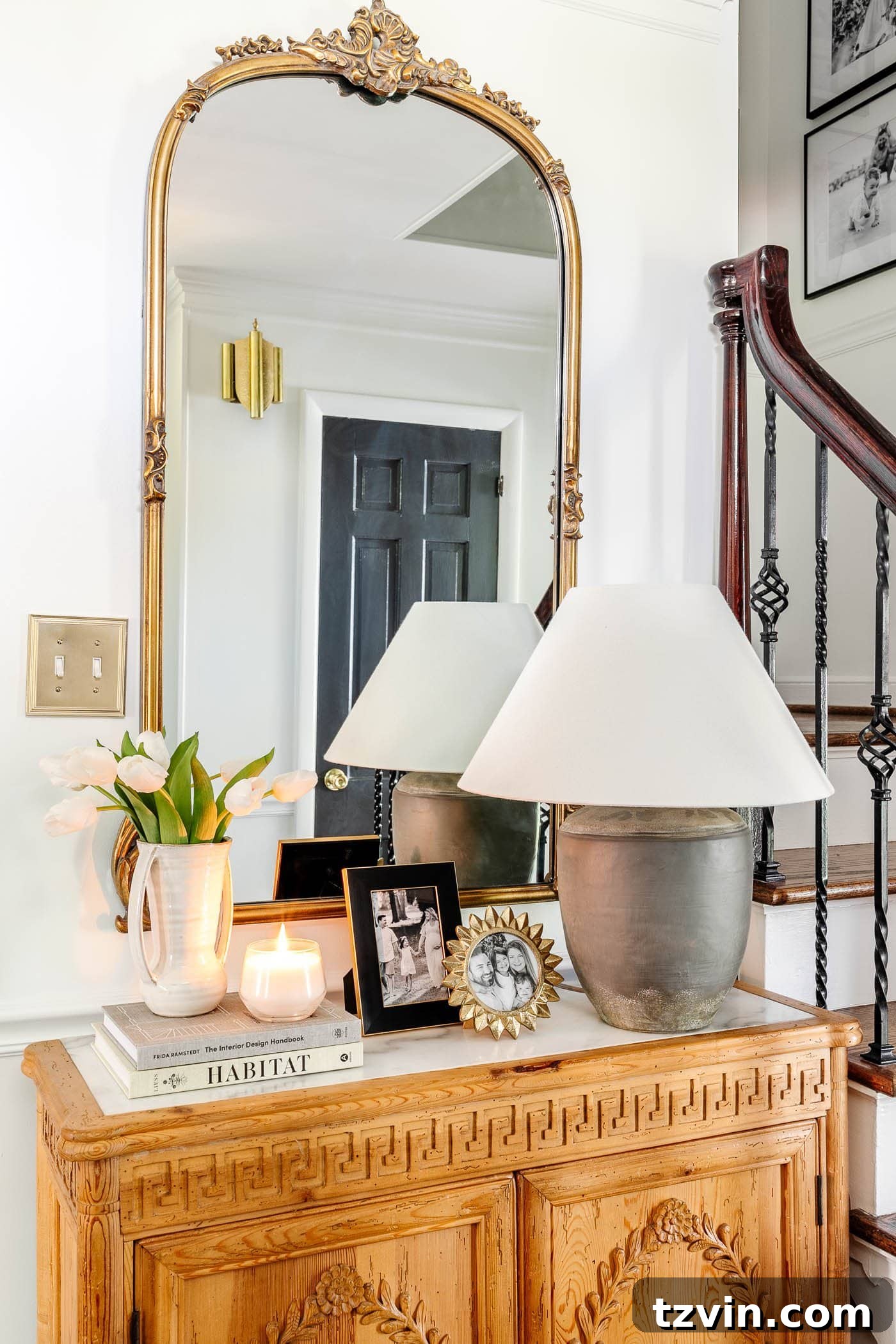
Step 7 – Master the Visual Triangle for Cohesive Groupings
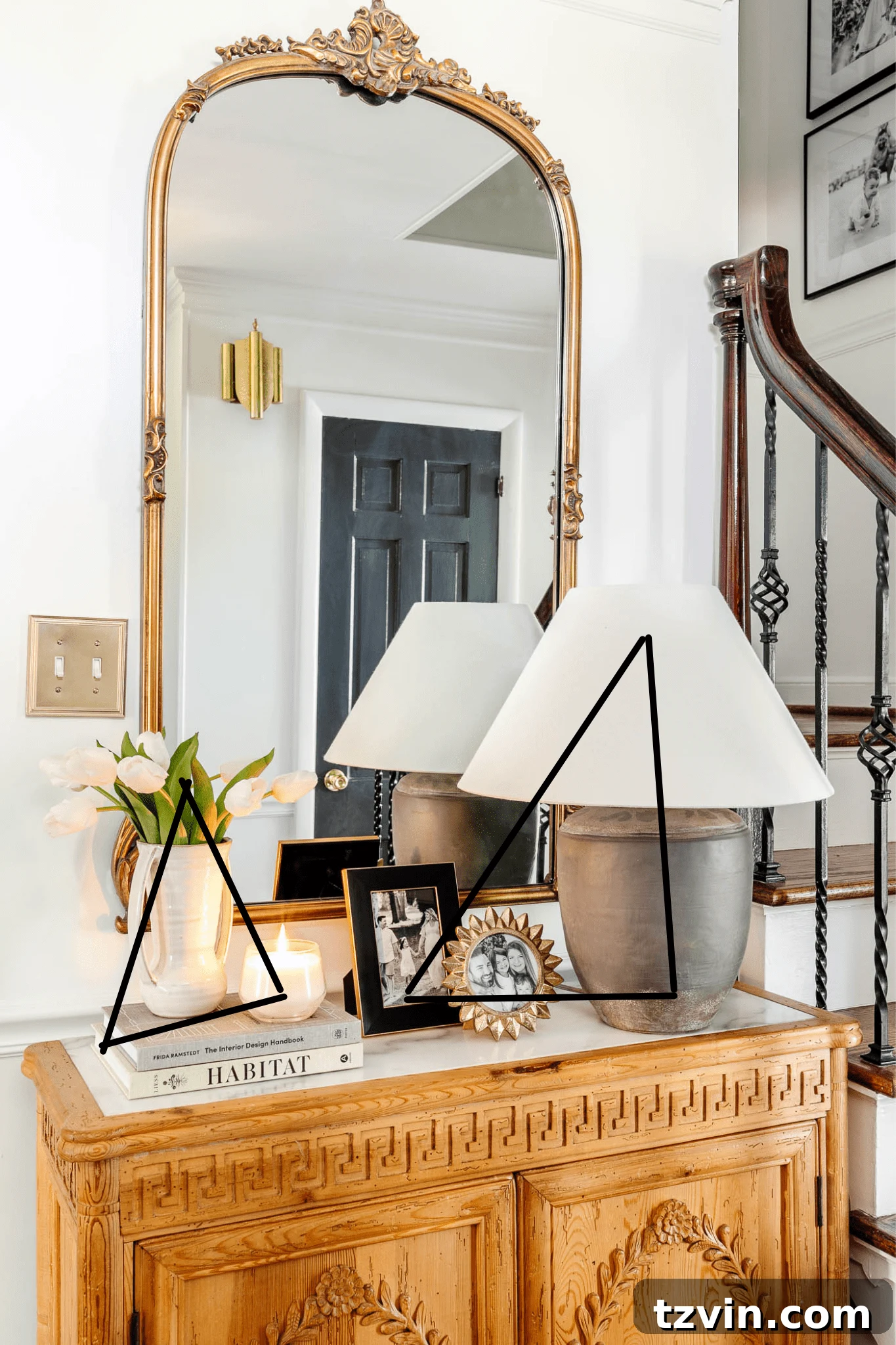
If you’ve followed the previous steps, you’ve likely already begun creating visual triangles without even realizing it. This final step is about intentionally refining those groupings to achieve perfect balance and aesthetic appeal. The “visual triangle” is a fundamental principle used by interior stylists to create vignettes that are pleasing to the eye and feel naturally cohesive. It involves arranging three items of varying heights – typically tall, medium, and short – together.
Look at your entry table vignette. Can you identify where a tall lamp, a medium-height vase, and a shorter decorative object (like a candle or a small stack of books) form an imaginary triangle? This technique works because our eyes naturally find triangular compositions stable and harmonious. Even if we don’t consciously register the triangle, our subconscious mind perceives the arrangement as balanced and well-designed.
This trick is incredibly powerful and particularly helpful when you feel “stuck” in your decorating process. When confronted with a styling block, simply start rearranging items to form these triangular shapes. The visual flow it creates will often resolve any perceived awkwardness in your decor. Experiment with different items – a tall plant, a medium statue, and a small decorative dish; or a large lamp, a framed picture on a stand, and a small box. The possibilities are endless, but the underlying principle of varying heights in groups of three (or odd numbers) remains constant, guiding you towards a beautifully composed entry table vignette every time.
Enhancing Functionality: What to Place Beside an Entry Table
While the entry table itself is the star, the space around it also offers opportunities for both enhanced functionality and continued aesthetic appeal. Depending on the size of your entryway and your specific needs, thoughtful additions beside the table can significantly improve the flow and practicality of the space.
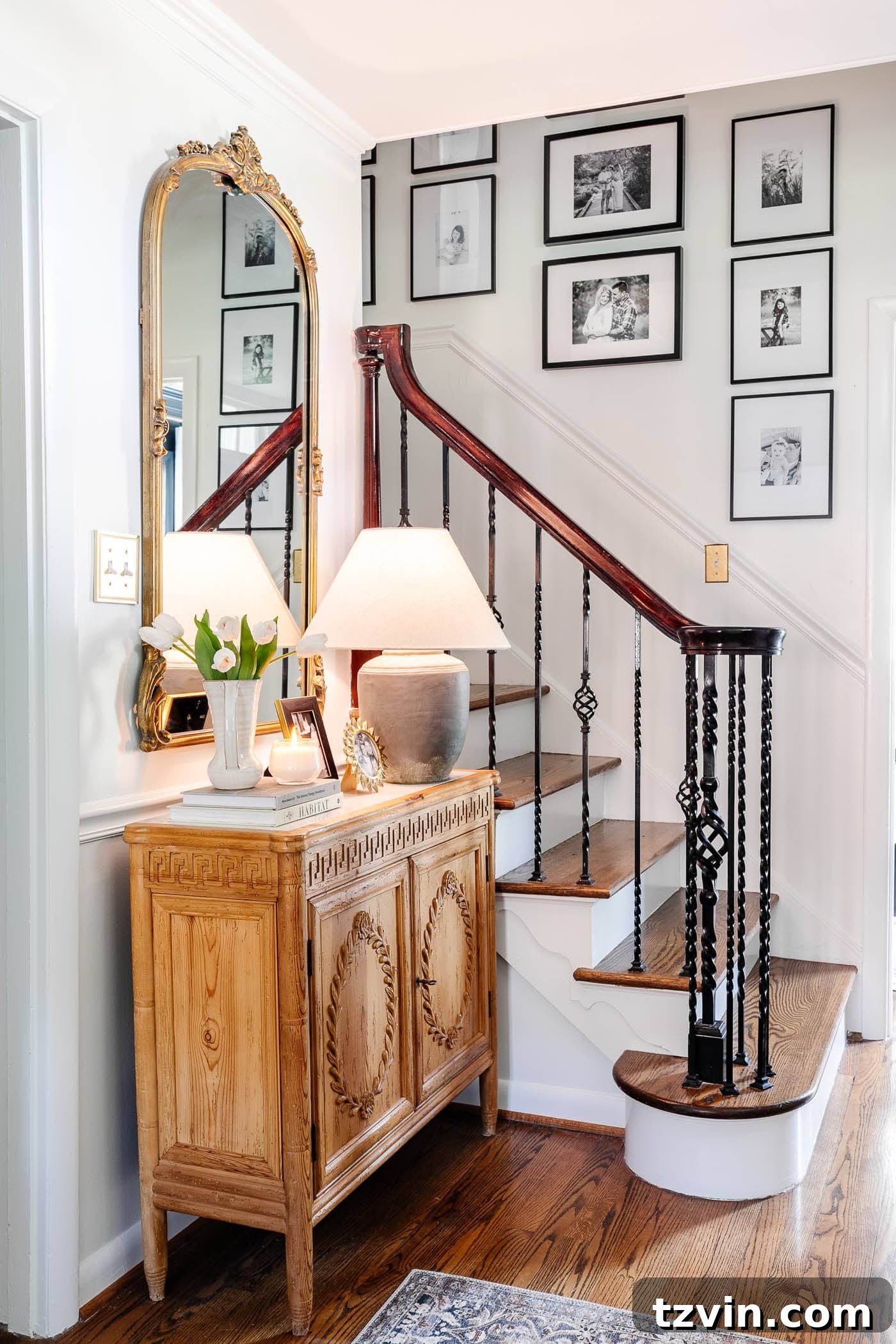
In our current home, the entryway is a bit tighter, limiting additional storage beside the table. However, if you have the luxury of extra space, consider incorporating elements that cater to everyday needs. An elegant umbrella stand is perfect for rainy days, keeping wet gear contained and accessible. A lidded cube ottoman can provide a discreet spot for tossing shoes, a quick perch for putting on footwear, or even extra seating. A large, decorative basket is another excellent option for corralling shoes, backpacks, or even dog leashes, maintaining a tidy appearance while offering practical storage. For homes needing a place for coats and bags, a stylish coat rack stand can be both functional and a design element. Other ideas include a small bench with storage underneath, a slim vertical shelving unit for books or decor, or even a small rug to define the space and add texture. Each addition should be considered for how it complements the entry table and contributes to a welcoming and organized entryway.
Expand Your Styling Skills: How to Decorate Other Areas of the House
Once you’ve mastered the art of entryway styling, you’ll find that many of these principles can be applied to other areas of your home. The confidence gained from transforming your foyer can inspire you to tackle more decorating projects and create cohesive, beautiful spaces throughout your entire house.
If you’re eager to continue honing your interior styling skills, explore these helpful guides:
- Coffee Table Decor Ideas and How to Style Them: Learn to curate a functional and visually appealing centerpiece for your living room.
- 4 Simple Nightstand Decor Ideas: Discover how to style your bedside table for both practicality and serene aesthetics.
- How to Decorate a Buffet & Style Anything: Get expert tips on styling larger surfaces like buffets, credenzas, and sideboards in any room.
- How to Decorate a Room from Start to Finish in 13 Steps: A comprehensive guide to designing an entire room, from concept to final touches.
As for my own entryway journey, I’m still pondering future enhancements. Later this year, I’d love to paint the cherry stair railing a sophisticated black to harmonize with the various wood tones now present in this space. Perhaps even swapping the balusters for a simpler, straight style could further modernize the look. However, with two significant projects kicking off next week, these grand ideas will have to marinate a little longer. What are your thoughts on updating stair railings, or what entryway challenges are you currently facing? I’d love to hear your insights!