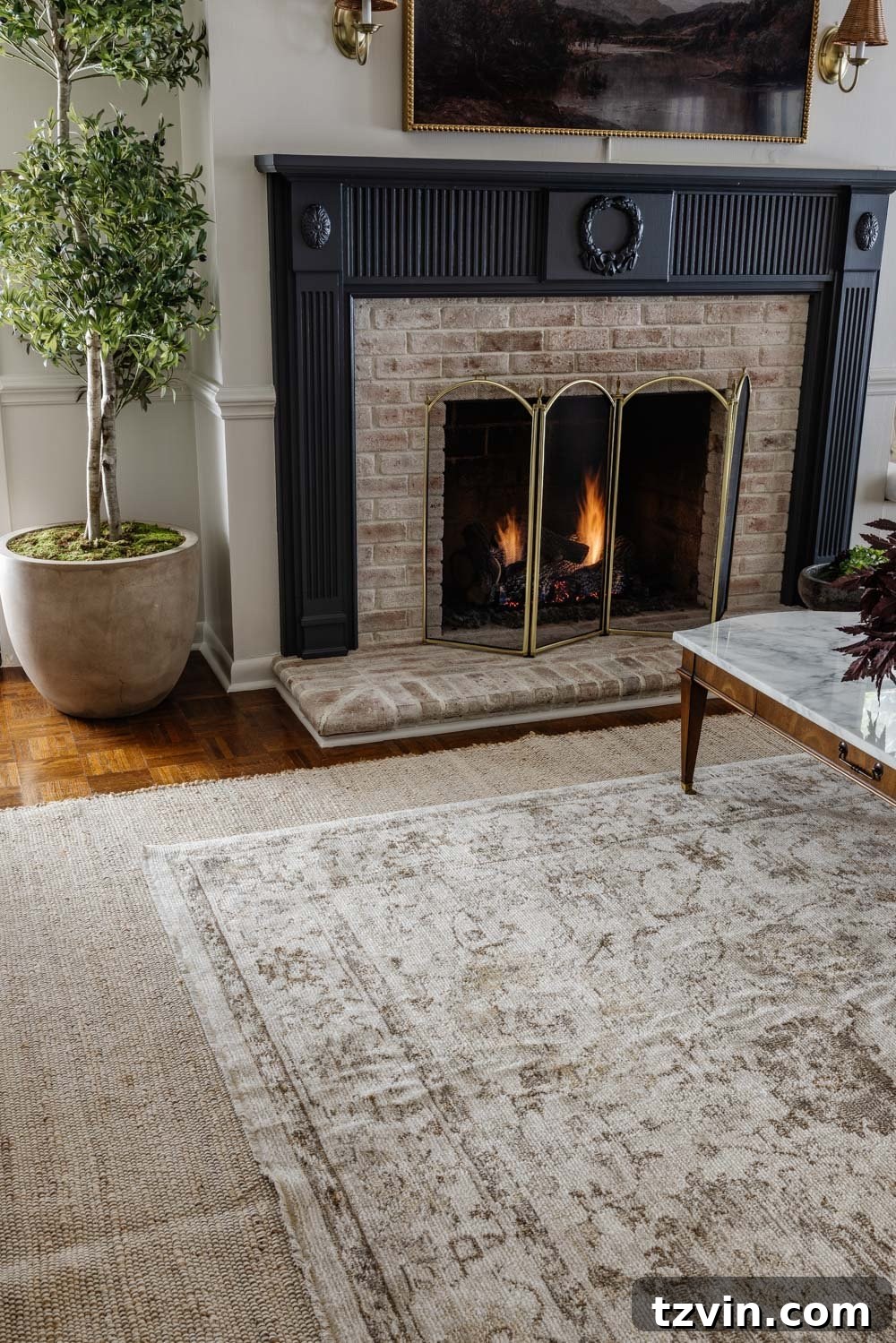
We recently experimented with layered rugs in our living room, and honestly, the immediate thought was: Why didn’t we try this sooner?
The impact was instant. The room felt significantly warmer, incredibly cozier, and remarkably more “finished” – all without altering anything else. This simple addition of a layered rug brought texture, depth, and that effortlessly chic, designer-inspired aesthetic we all aspire to achieve.
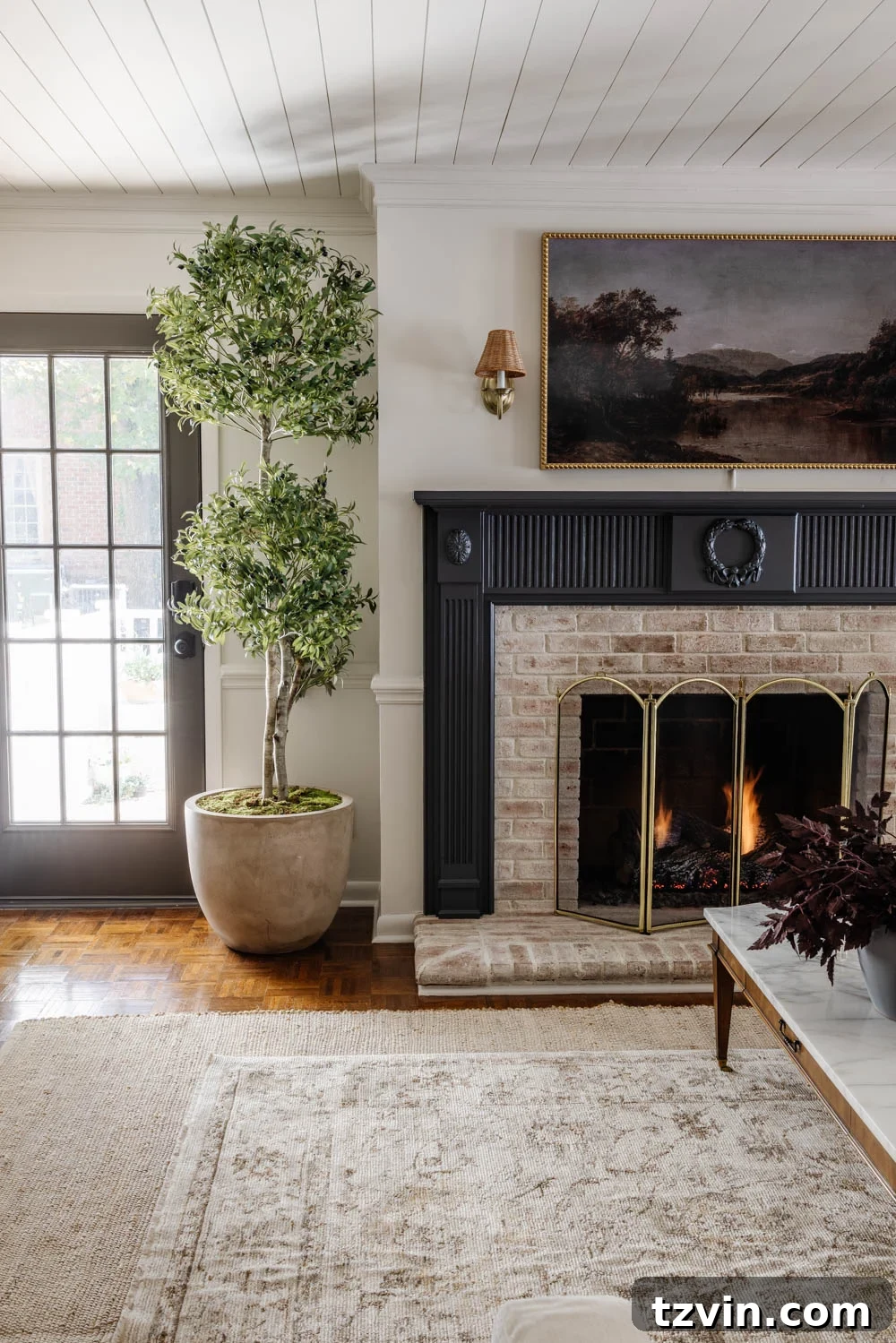
Jute Rug | Patterned Rug | Fireplace Screen | Artificial Tree | Sconce | Rattan Shade
One of the most significant advantages of layering rugs is its ability to rescue vintage rug finds that might be slightly undersized for your space. Scouring places like Facebook Marketplace often yields unique treasures. By layering a smaller vintage rug over a larger, more foundational rug, you achieve the perfect proportions while showcasing a design you truly adore.
However, it’s important to note that not all rug combinations are created equal. Some pairings simply don’t work visually and can result in a cluttered or mismatched appearance.
If you’ve ever contemplated the art of layering rugs but hesitated due to concerns about creating a messy or overwhelming look, this guide is for you. I’m going to share my tried-and-true methods for successful rug layering, along with my go-to rug pairings that consistently deliver stunning results. We’ll explore how to choose the right sizes, textures, and patterns to create a harmonious and stylish look in any room.
Why Layer Rugs? Unlocking the Benefits of Layered Rugs
Layering rugs is the design secret weapon for adding those essential elements that make a house feel like a home: texture, depth, and, most importantly, personality. It’s a simple yet powerful technique to elevate the ambiance of any room.
The benefits of layering rugs are numerous:
- Warmth and Comfort: Instantly warm up cold hardwood or tile floors, creating a more inviting and comfortable space underfoot. Say goodbye to chilly mornings and hello to cozy toes!
- Added Softness and Padding: Introduce an extra layer of cushioning, making your living areas more comfortable for lounging and relaxation. Perfect for families with children or anyone who enjoys spending time on the floor.
- Pattern Introduction: Inject pattern and visual interest into a room without overwhelming the overall design. Layering allows you to experiment with bolder patterns in a controlled and sophisticated way.
- Customization of Builder-Grade Spaces: Transform generic, builder-grade spaces into custom-designed havens that reflect your unique style and personality. Layering rugs is a fantastic way to add character and individuality to any home.
- Defined Seating Areas: Beautifully define seating areas within larger rooms, creating distinct zones for conversation, relaxation, or entertainment. This helps to anchor furniture and create a sense of order and intentionality.
And here’s a bonus: layering rugs can often be a more budget-friendly alternative to purchasing a single, large, designer rug. You can achieve a similar high-end look for less by combining more affordable options.
Don’t be afraid to layer rugs even if you have wall-to-wall carpeting! In fact, you absolutely can and likely should. Layering rugs on top of carpet provides an added layer of protection, preventing wear and tear, and it also helps to better define your furniture groupings, creating a more cohesive and visually appealing space. The carpet acts as a neutral base, allowing the layered rug to truly shine.
The Essential Rules for Layering Rugs: A Step-by-Step Guide
Layering rugs might seem straightforward, but mastering this technique requires a bit of know-how. These rules will ensure your layered rug arrangement looks intentional and stylish.
1. Choosing the Perfect Size for Your Base Rug
The base rug serves as the foundation for your entire layered rug arrangement, so selecting the right size is crucial. The ideal size will vary depending on the room and the furniture arrangement.
Living Room: At a minimum, the front legs of all sofas and armchairs should rest comfortably on the rug. For a more luxurious and grounded look, consider having all legs of your furniture pieces on the rug.
Dining Room: The rug should be generously sized to accommodate all dining chairs, even when they are pulled out from the table. Ensure the chair legs remain on the rug to prevent instability and maintain a cohesive look.
Bedroom: The rug should extend at least 18″-24″ beyond the sides and foot of the bed. This creates a soft and comfortable landing spot when you step out of bed in the morning.
2. Starting with a Neutral Foundation: The Importance of a Neutral Base Rug
Your bottom rug should serve as an anchor for the room, providing a subtle backdrop that allows the top rug to shine. Avoid overly busy or colorful base rugs that will compete for attention.
Excellent Choices for Base Rugs:
- Jute Rugs: Jute rugs offer natural texture and warmth, creating a grounded and organic feel.
- Sisal Rugs: Sisal rugs are similar to jute but tend to be more durable and slightly smoother in texture.
- Flatweave Wool Rugs: Flatweave wool rugs provide a soft and comfortable surface while maintaining a low profile.
- Neutral Striped Rugs: Subtly striped rugs can add visual interest without overpowering the top rug. Choose stripes in neutral colors like beige, gray, or cream.
These options provide texture and warmth without competing with the patterns and colors of your top rug.
Shop Base Rugs: [Insert links to shop base rugs here]
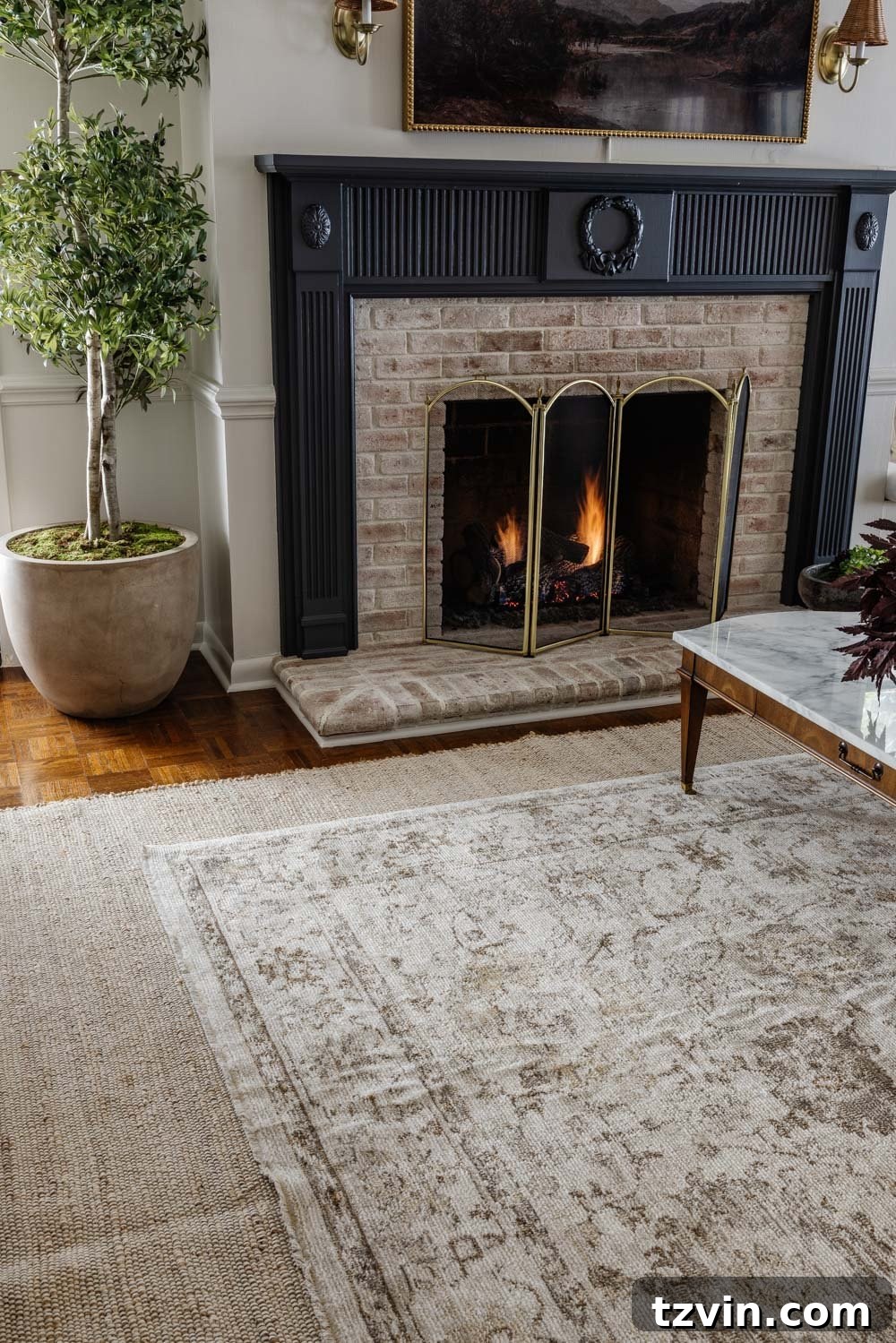
Related: 25 Best Places to Buy Rugs Affordably Online
3. The Size Relationship: Ensuring Your Top Rug Complements Your Base Rug
As a general rule, the top rug should be smaller than the base rug. This creates a visually appealing contrast and prevents the arrangement from looking cluttered.
A helpful guideline: Aim for the top rug to be approximately 2/3 the size of the base rug.
Common and Effective Combinations:
- 8×10 Base Rug + 5×7 Top Rug: A classic combination that works well in smaller living rooms or bedrooms.
- 9×12 Base Rug + 6×9 Top Rug: Ideal for larger living rooms or open-concept spaces.
Shop Top Rugs: [Insert links to shop top rugs here]
4. Texture Matters: Creating Visual Harmony Through Texture Contrast
The magic of layered rugs lies in the interplay of textures. Combining contrasting textures creates depth and visual interest, making the arrangement more appealing.
Effective Texture Combinations:
- Rough + Soft: Pair a rough jute or sisal base rug with a soft and plush wool or shag top rug.
- Flat + Plush: Combine a flatweave wool base rug with a plush or high-pile top rug.
- Neutral + Patterned: Juxtapose a neutral base rug with a patterned or textured top rug.
5. The Focal Point: Letting One Rug Take Center Stage
If one of your rugs features a bold pattern or vibrant colors, it’s best to keep the other rug relatively simple and understated. This ensures that one rug serves as the focal point while the other provides a complementary backdrop.
6. Placement Perfection: Finding the Right Spot for Your Layered Rugs
Don’t get too caught up in achieving perfect symmetry. While a centered arrangement can look classic and formal, a slightly angled or off-center placement can create a more relaxed and collected vibe. Experiment with different positions until you find what looks best in your space.
My Go-To Rug Pairings for Layering: Tried-and-True Combinations That Always Work
These are some of my favorite rug combinations that interior designers frequently use because they consistently deliver stunning results. These pairings offer a great starting point for your own rug layering adventures.
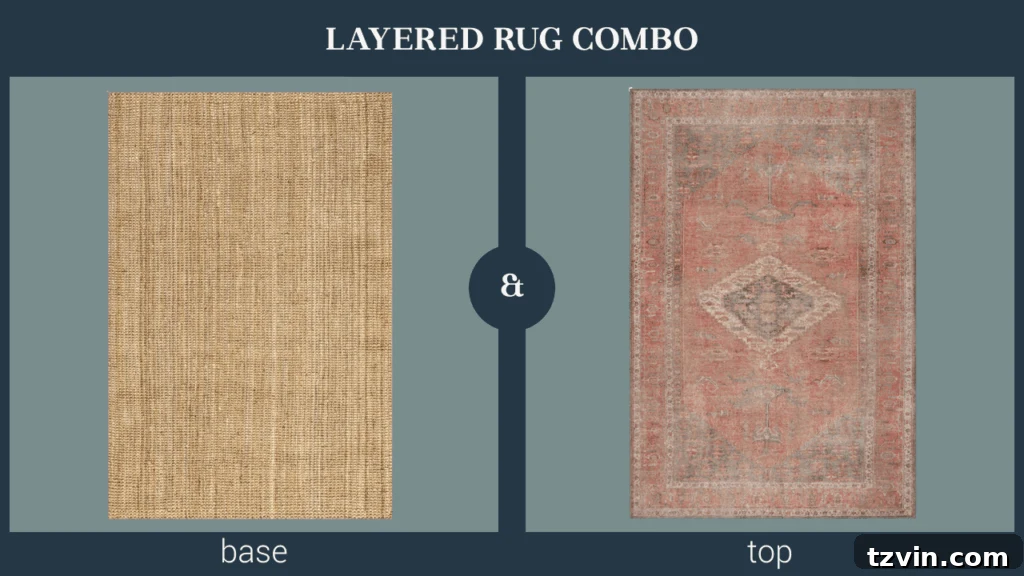
Base Rug | Top Rug
1. Jute Base + Persian Patterned Rug: A Timeless Combination
This pairing is a classic for a reason. The natural texture of the jute grounds the space, while the intricate pattern of the Persian rug adds personality and visual interest.
Why it Works:
- Natural Texture: The jute provides a grounding and organic foundation.
- Patterned Personality: The Persian rug injects character and visual appeal.
- Warm and Layered Feel: This combination creates a warm, inviting, and layered aesthetic.
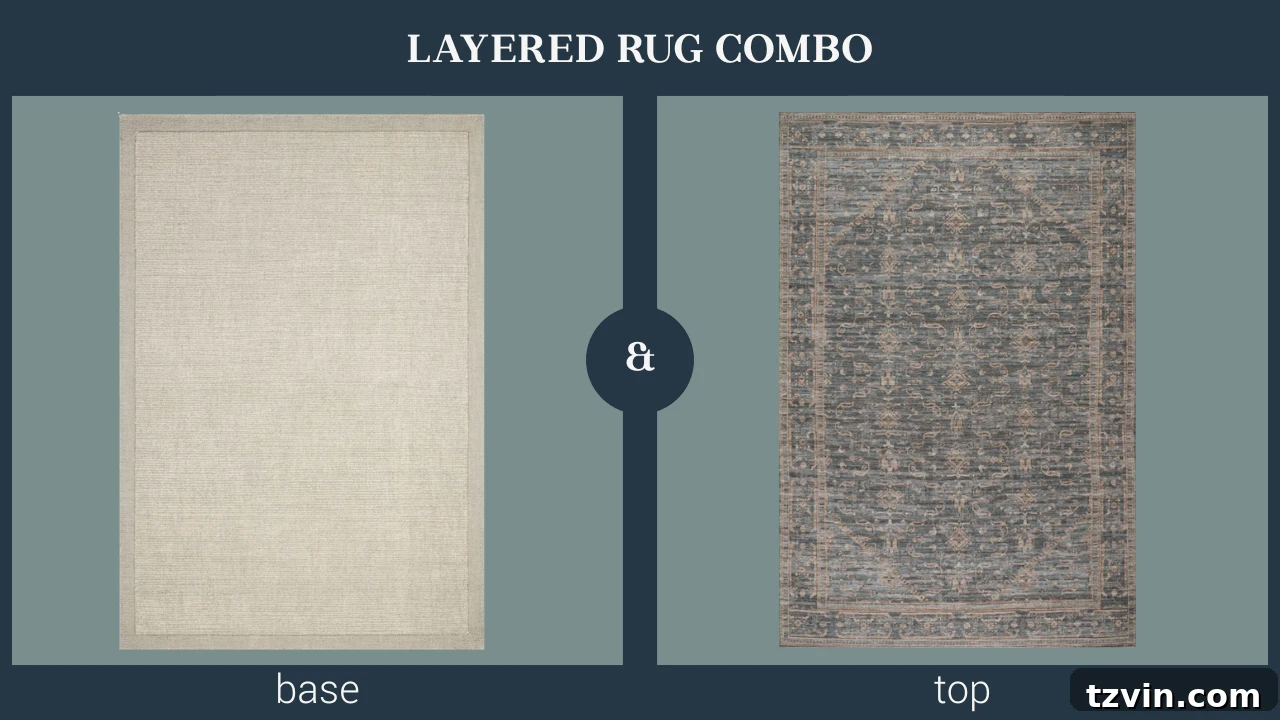
Base Rug | Top Rug
2. Wool Flatweave Base + Small Vintage Rug: A Touch of Character
This combination offers a soft yet structured foundation, allowing a smaller vintage rug to add character and charm. The flatweave wool provides a clean backdrop for the vintage rug’s unique patterns and colors.
Why it Works:
- Soft and Structured: The wool flatweave offers a comfortable yet stable base.
- Clean Foundation with Character on Top: The flatweave provides a neutral canvas for the vintage rug to shine.
- Cozy and Layered Homes: This pairing is ideal for creating a cozy and layered aesthetic.
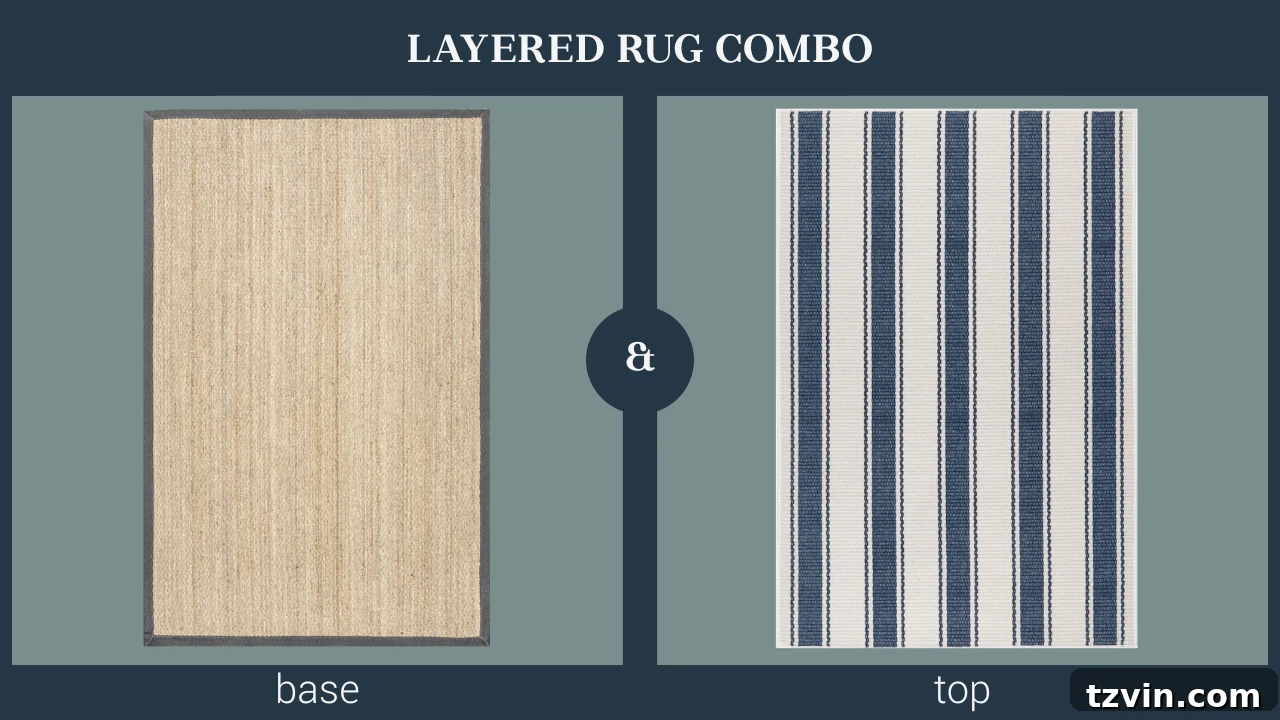
Base Rug | Top Rug
3. Seagrass Base + Striped or Patterned Flatweave: A Classic Combination
The seagrass base provides a natural and textured foundation, while the striped or patterned flatweave adds visual interest and rhythm. This combination is relaxed, designer-layered, and timeless.
Why it Works:
- Subtle Rhythm: The stripe adds rhythm without being overwhelming.
- Relaxed and Designer-Layered: This combination creates a relaxed and stylish aesthetic.
- Timeless Classic: This pairing is a classic that never goes out of style.
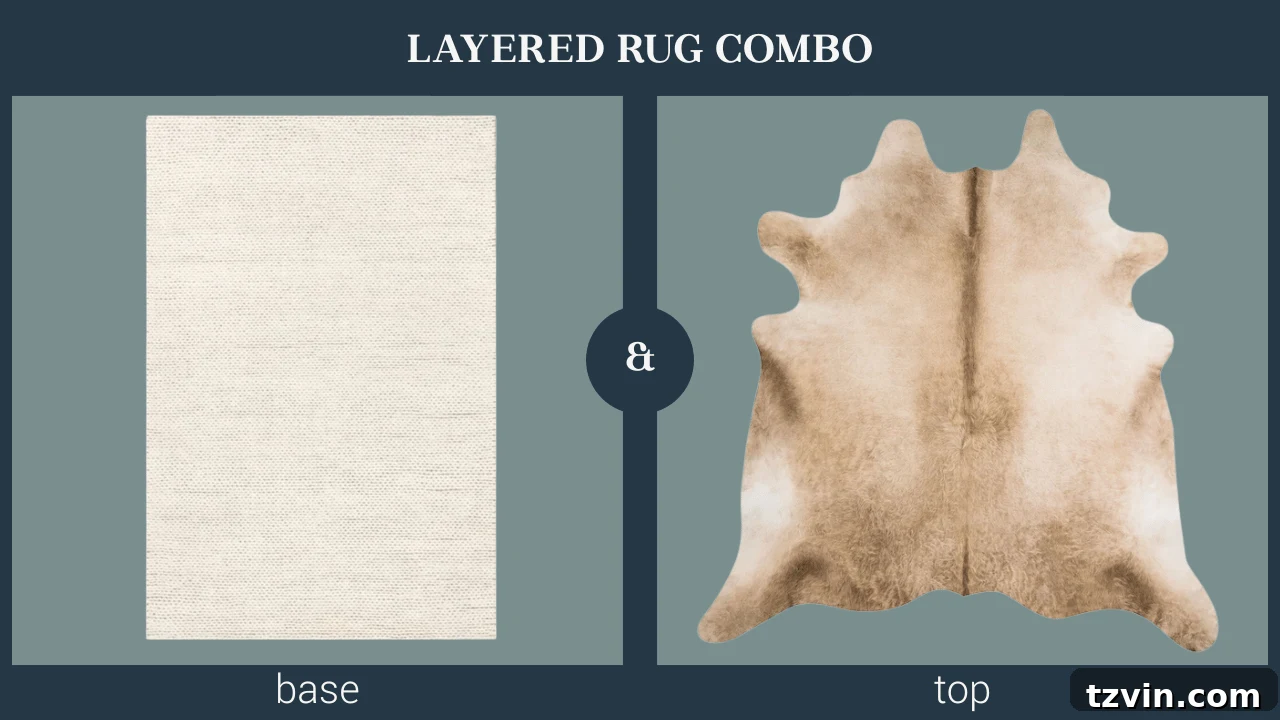
Base Rug | Top Rug
4. Braided Cotton Base + Soft Plush Accent: Adding Softness and Texture
This pairing is all about adding softness and texture to your space. The braided cotton base provides a comfortable foundation, while the plush accent rug adds a touch of luxury.
Pair With:
- Sheepskin
- Faux Hide
- Small Plush Wool Rug
Why it Works:
- Texture Contrast: The contrast between the braided cotton and plush accent creates instant cozy vibes.
- Softness Where You Walk Most: This combination adds softness to high-traffic areas.
- Great for Kids’ Spaces: Provides a soft and comfortable place for kids to play and crawl.
Common Layering Mistakes to Avoid: Tips for a Flawless Look
While layering rugs can be incredibly rewarding, it’s important to avoid these common mistakes to ensure a polished and intentional look:
- Using Two Busy Rugs Together: Overwhelming patterns can clash and create a cluttered appearance.
- Choosing Rugs Too Close in Size: A lack of size difference can make the layering look unintentional.
- Ignoring Rug Pads: This can lead to slipping and sliding, especially on hard floors.
- Not Using Rug Tape: Prevents corners from curling up, creating a safer and more polished look.
- Matching Textures Too Closely: A lack of texture contrast can make the layering look flat and uninteresting.
- Picking a Base Rug That’s Too Small for the Room: A small base rug can throw off the proportions of the entire space.
Where Layered Rugs Work Best: Inspiration for Every Room
Layered rugs can be incorporated into various rooms throughout your home to add warmth, style, and personality:
- Living Rooms: Under seating areas to define the space and add comfort.
- Bedrooms: At the foot of the bed or under the bed to create a cozy and inviting atmosphere.
- Hallways: Layered runners can add visual interest and dimension to otherwise basic spaces.
- Reading Corners and Playrooms: Provides a soft and comfortable area for relaxation and play.
Once you experience the transformative power of layered rugs, you’ll likely wonder why you didn’t try it sooner!
More Ways to Elevate Your Home with Rugs: Inspiration and Ideas
Looking for more ways to incorporate rugs into your home décor? Check out these helpful articles:
- How to Combine Small Rugs to Make a Large Rug
- The Dining Table Rug Trick I Swear By
- My Unbiased Brutally Honest Review of Ruggable