
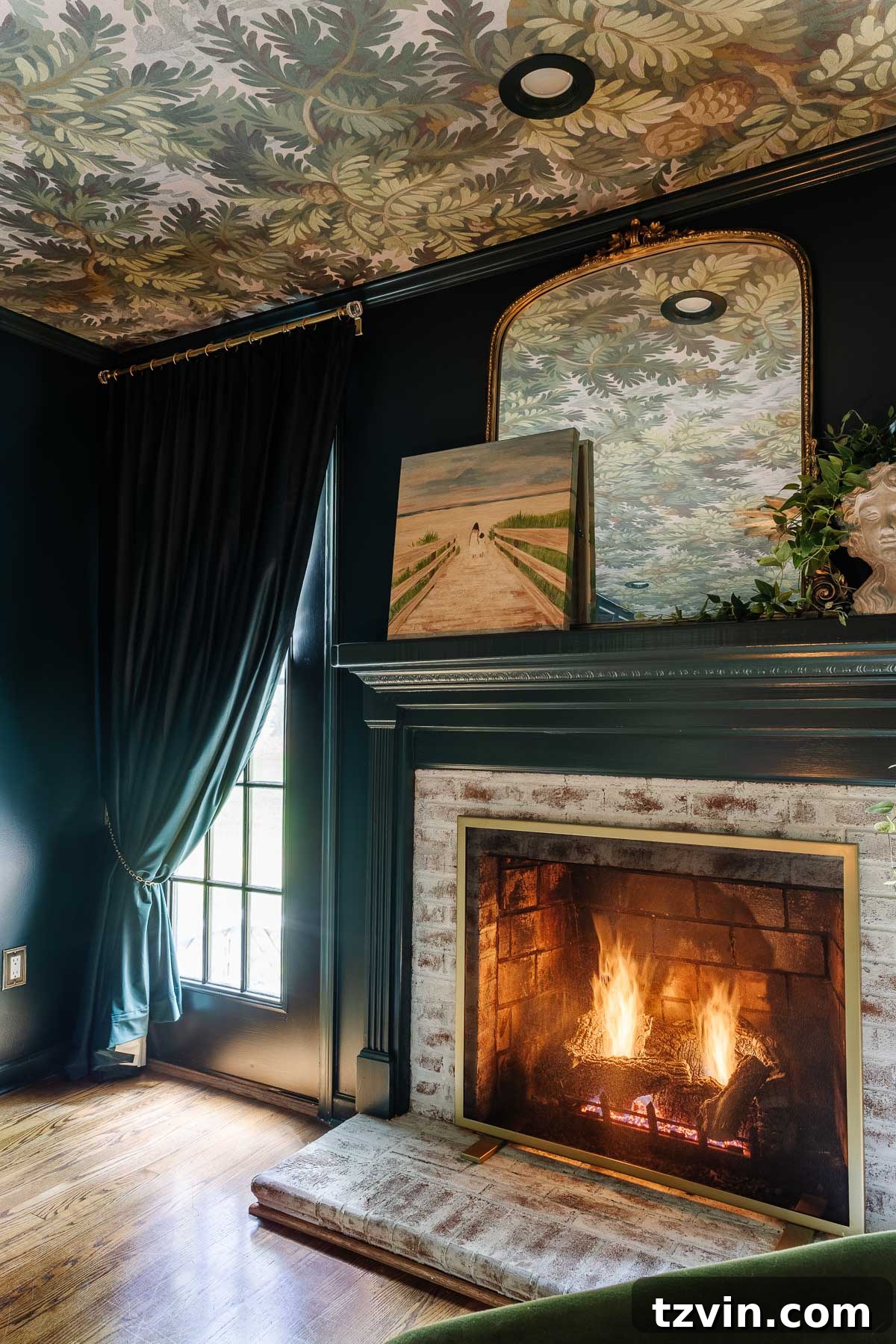
Transforming our playroom into a dedicated media room last year was a project filled with passion, and we couldn’t be happier with the outcome. The comfortable seating, the expansive hidden projector screen – it all came together beautifully. Yet, we realized one crucial element was missing to truly perfect the cinematic experience: proper blackout curtains for immersive daytime movie watching. This final touch was essential to elevate our media room from great to truly exceptional.
To add a touch of vintage elegance and achieve full light control, we opted for single panel drapes, thoughtfully pulled back, on our media room windows. This specific style creates a stunning vintage theater curtain look, reminiscent of classic movie houses, and perfectly complements the sophisticated ambiance we’ve cultivated in the space.
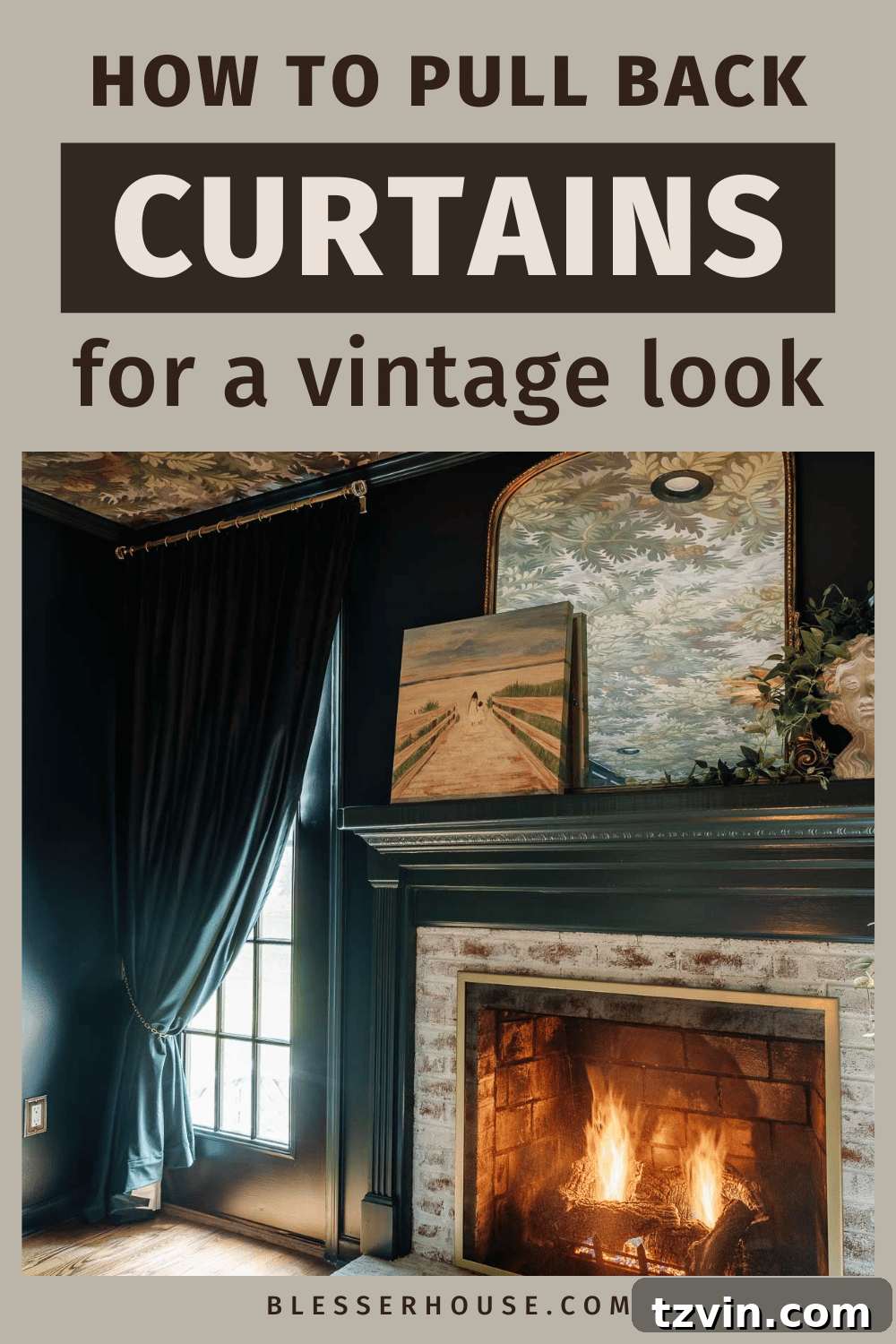
Pin it for later ⤵️
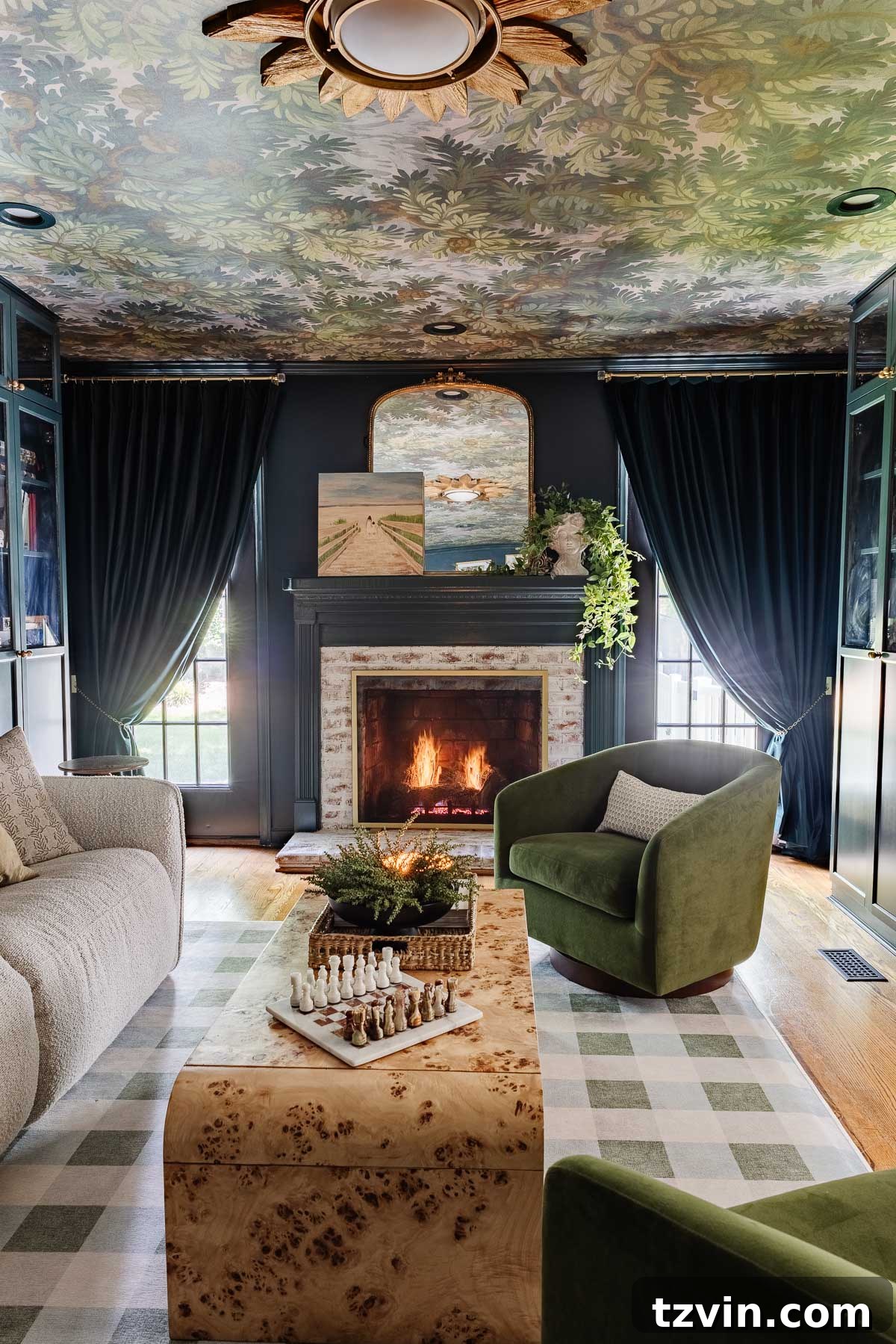
Curtains | Ceiling Wallpaper | Recliner Sofa | Rug | Mirror | Swivel Chairs | Fireplace Screen | Bust Planter | Curtain Rods | Curtain Tiebacks | Coffee Table | End Tables | Chess Set | Footed Bowl | Rattan Tray | Faux Plant Stems | Faux Trailing Plant
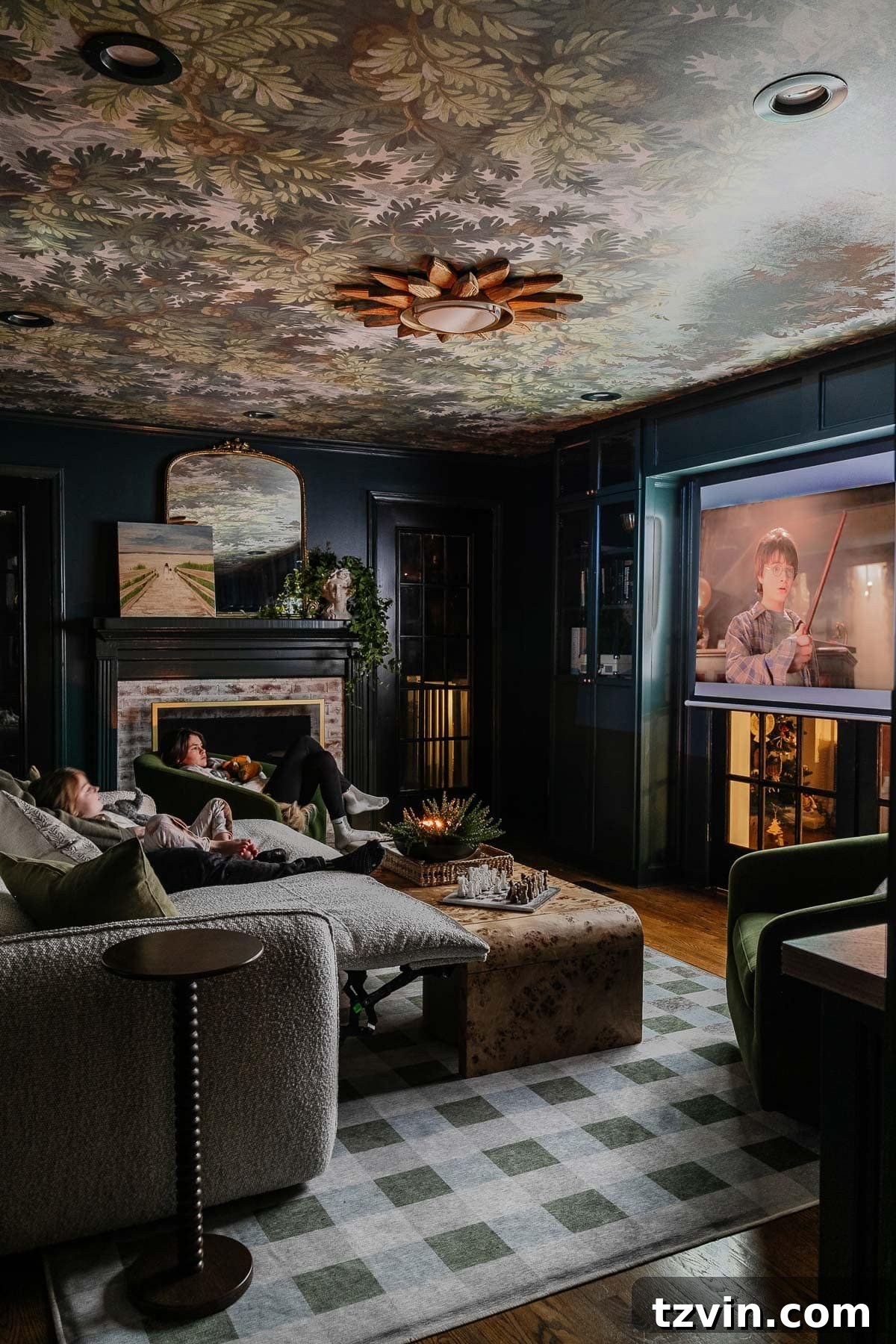
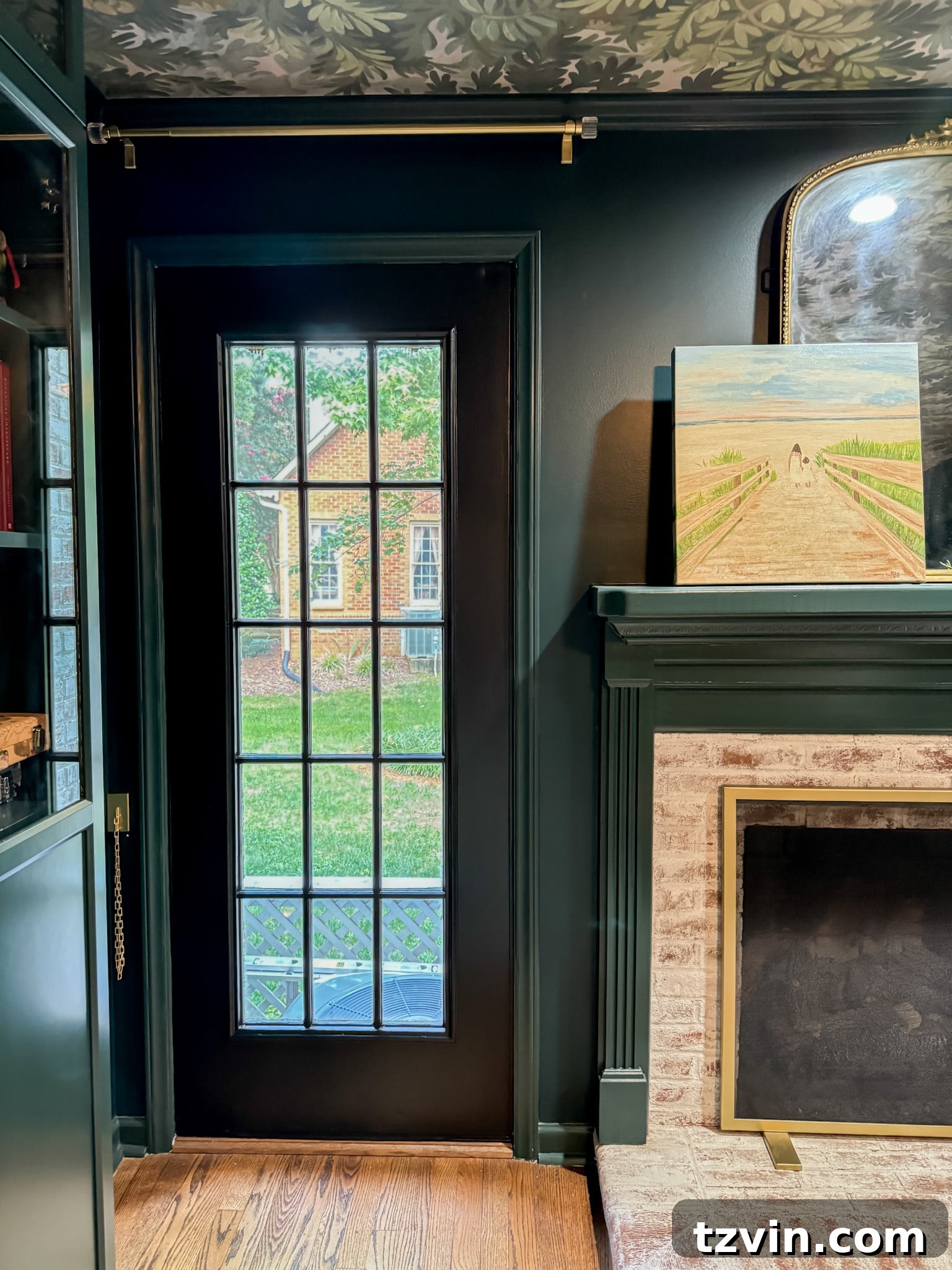
If you’re new to our journey, during our media room makeover, we ingeniously installed a hidden motorized projector screen directly above our double French doors. This clever design ensures the projector screen is out of sight when not in use, maintaining the room’s elegant aesthetic. However, the bare windows posed a significant challenge, especially during the brighter summer months when the sun lingers until late evening. This made achieving true cinematic darkness nearly impossible and highlighted the need for effective window treatments.
Related: Easy DIY No Sew Curtains With Trim: Step By Step Tutorial
The Ultimate Choice: Best Home Theater Curtains for Immersion
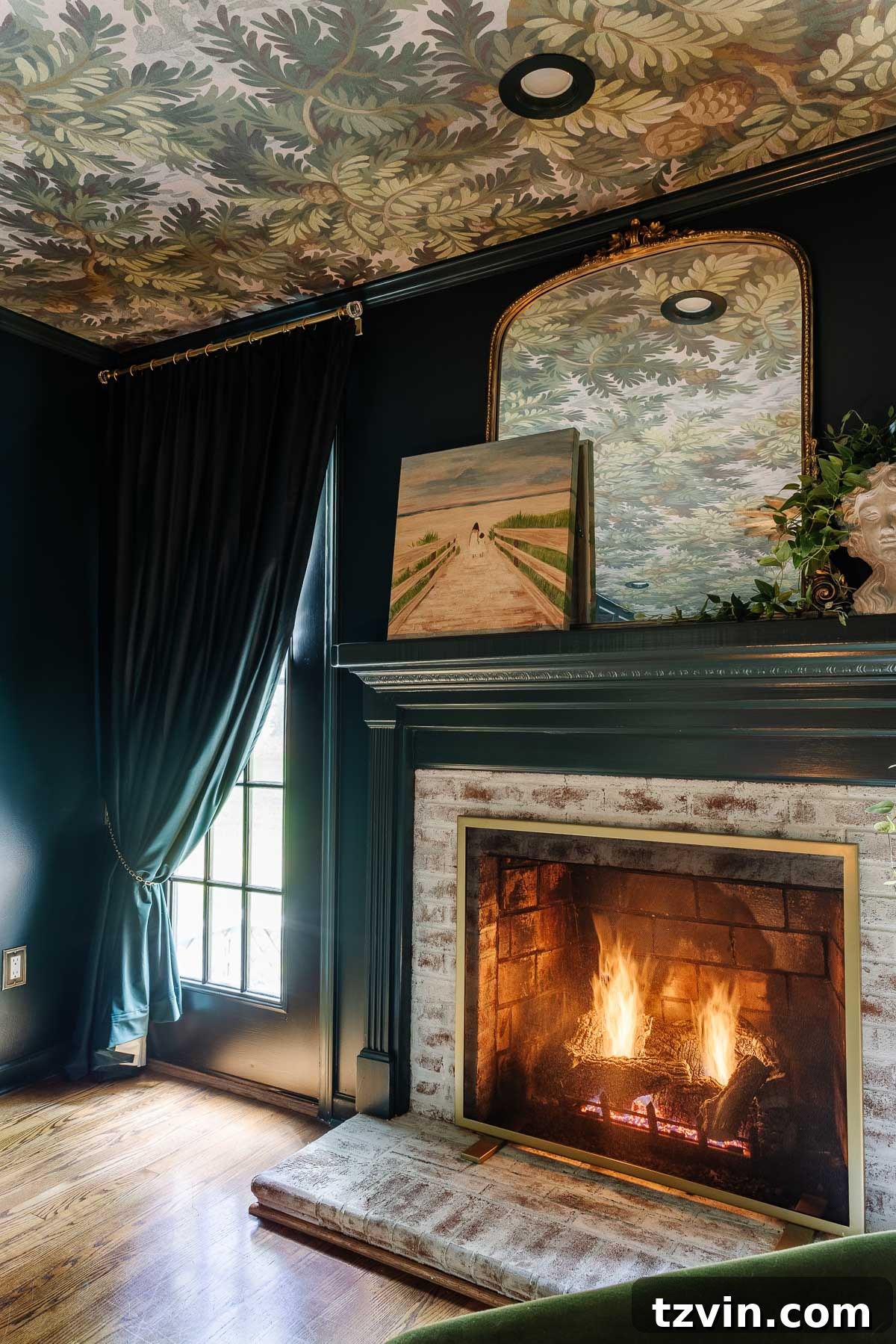
For our home theater, selecting the right curtains was paramount. We ultimately chose these exquisite luxe velvet curtains with an integrated blackout liner. Their benefits extend far beyond mere aesthetics:
- Complete Darkness: The blackout liner effectively blocks out all external light, creating a truly pitch-black environment essential for an authentic movie theater experience, even in broad daylight.
- Noise Reduction: A remarkable, often overlooked benefit of these thick velvet curtains is their noise-canceling effect. We’ve noticed a significant reduction in ambient sounds, from street traffic to neighborhood lawnmowers, enhancing the overall tranquility and immersion during film screenings. This acoustic dampening contributes greatly to the quality of sound within the room.
These curtains are so impressive that they’ve earned a top spot on my personal list of recommended Luxury for Less Amazon Curtains. Their quality, combined with their functional advantages, makes them an unbeatable choice for any media room.
Finding curtains that perfectly matched our walls, painted in Sherwin Williams Cascades, was a critical design consideration. To ensure an exact shade, I relied on a fabric swatch book, which allowed me to pinpoint the ideal “Dark Jungle Green.” This precision ensures a cohesive and sophisticated look that seamlessly integrates the curtains into the room’s existing color scheme.
Beyond their color and material, these curtains offer exceptional convenience. They come in 29 different color options, catering to diverse design palettes. Crucially, they arrived with hooks already attached to the pleated header and accompanying rings, making installation remarkably straightforward and eliminating the need for additional hardware purchases or complex assembly.
Related: DIY Lime Washed Brick Fireplace – Easy Tutorial
Mastering the Art of Pulling Back Curtains for a Vintage Look
While the process of pulling back curtains for a dramatic, vintage effect might seem intuitive, achieving the perfect balance of elegance and functionality requires a few thoughtful steps. This “tutorial” aims to demystify the process, ensuring your drapes not only look stunning but also operate smoothly when you need full light blockage.
Precision in Measurement: How to Measure for Curtains
Accurate measurement is the foundation of any successful curtain installation. For a luxurious, full-bodied drape that pulls back beautifully, the curtain’s width should significantly exceed that of your window. Here’s our recommended approach:
- Measure Window Width: Begin by measuring the exact width of your window frame.
- Calculate Curtain Width for Fullness: To achieve the desired fullness and a rich, gathered look when pulled back, multiply your window’s width by 2.5. This ratio ensures enough fabric to create elegant folds and prevent the curtains from appearing stretched or skimpy.
For example, with a window that is 30 inches wide, our calculation was:
30 inches (window width) x 2.5 (fullness factor) = 75 inches (ideal curtain width)
If you were purchasing a pair of curtain panels for a standard setup, you would divide this total by two to determine the width of each panel. However, for our unique single pull-back style, we used just one panel per window, requiring a single panel of approximately 75 inches wide.
Curtain panels often come in standard sizes, frequently in even number measurements. We ordered our panels to be 75 inches wide, as this was the closest available size to our calculated ideal. Minor adjustments in how tightly the curtain is pulled back can compensate for slight variations.
Next, consider curtain length. Our ceilings stand at 8 feet. By strategically placing the curtain rod directly beneath the crown molding, we aimed for a height that would elongate the room and create a grand impression. This placement necessitated curtain panels that were 90 inches long. This specific length allows the curtains to just “kiss” the floor, achieving a tailored, polished, and sophisticated look that avoids puddling or looking too short.
Related: Best Luxury for Less Amazon Curtains & Window Shades
Strategic Holdback Placement: What Height to Put Curtain Holdbacks?
The placement of your curtain rod and holdbacks is crucial for achieving the desired pulled-back aesthetic. Typically, when hanging a pair of curtain panels, I extend the curtain rod approximately 12 inches past each side of the window trim. This standard practice makes windows appear larger and allows for maximum light entry when curtains are open.
However, for our specific single pull-back curtain panel style, a slightly different approach was taken. We hung the curtain rod with only a modest 2-3 inches of overhang on each side of the window. This narrower extension helps to concentrate the curtain fabric and creates a more dramatic, gathered effect when pulled back, essential for the vintage theater look.
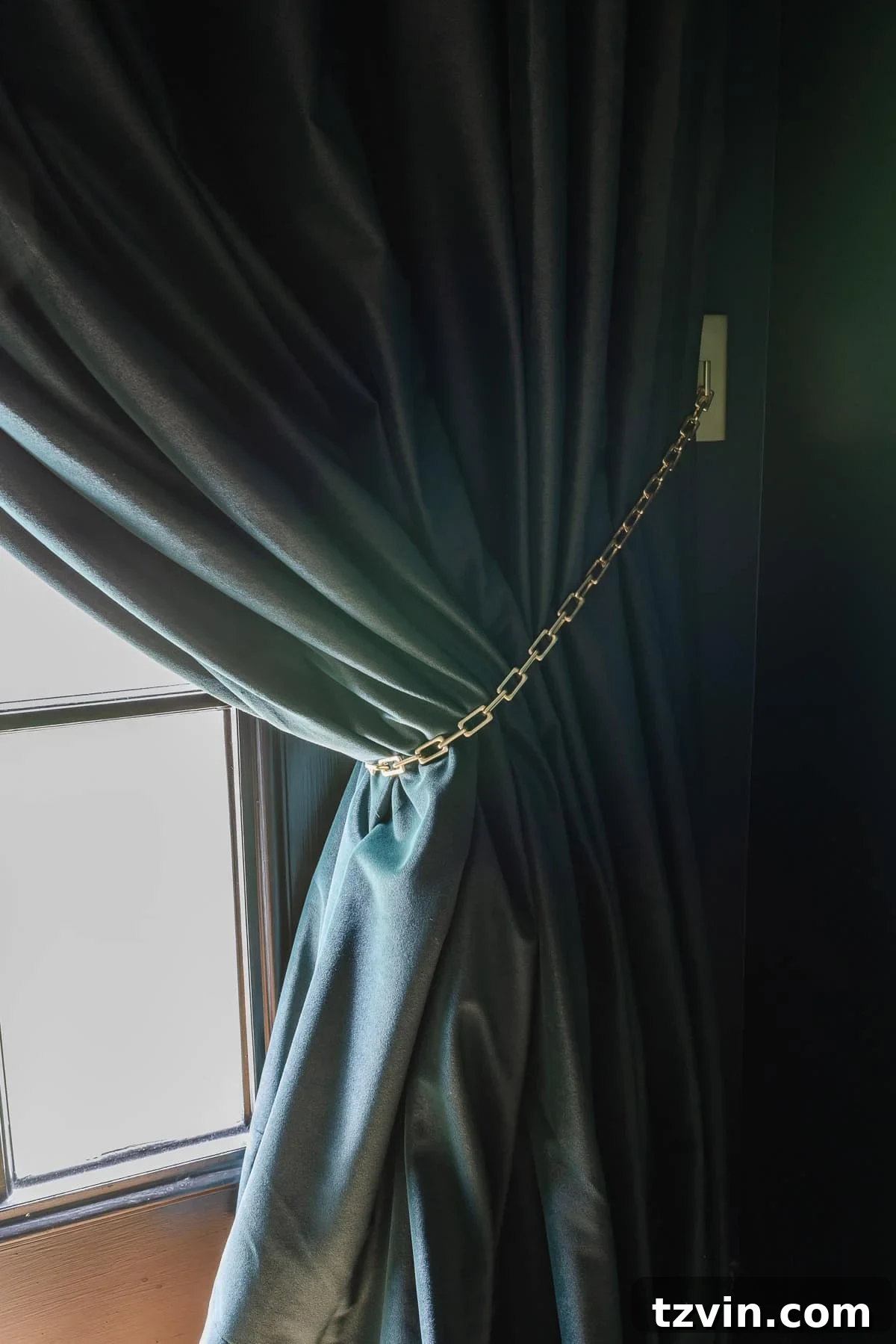
For the holdback itself, we utilized this elegant gold chain and hook tieback. The key to its perfect placement is its height: we attached it roughly one-third of the way up from the bottom of the curtain. This height allows the fabric to drape gracefully, creating a classic “swag” that is both decorative and functional. The chain style adds to the opulent, old-world charm we were aiming for.
The beauty of this design lies in its versatility. When it’s time for a movie, we simply unhook the tieback, allowing the single panel to fully extend and completely cover the window, plunging the room into the darkness needed for an optimal cinematic experience. This effortless transition from decorative to functional is what makes this setup truly ideal for a media room.
Related: How to Hang a Wall Tapestry Easily: 7 Easy Ways
Related: How to Make Easy No Sew DIY Cafe Curtains
The Secret to Flawless Drapes: What is Curtain Training?
One of the delights of selecting these pleated velvet curtains was discovering they arrived already “pre-trained.” The manufacturer thoughtfully ships them tied in an accordion-like shape, which ensures those crisp, clean lines and elegant pleats are perfectly formed right out of the box. This small but significant detail saved us valuable time and effort, as curtain training typically requires a dedicated process.
So, what exactly is curtain training? Often referred to as “drapery training” or “memory training,” it’s a vital process that helps curtains hang correctly and uniformly, giving them a polished, custom-tailored appearance. It involves meticulously creating and securing folds and pleats in the fabric so that they hold their shape over time. This technique elevates the look of even the most inexpensive curtains, transforming basic Walmart or Target drapes into something that appears far more high-end and luxurious.
The absence of proper curtain training can result in limp, shapeless drapes that detract from the overall aesthetic of a room. Conversely, well-trained curtains add an undeniable touch of sophistication and finish. It’s a small detail that makes a monumental difference, making ordinary window treatments look bespoke and expensive. If your curtains didn’t arrive pre-trained, don’t worry—it’s a DIY-friendly project. You can achieve this by:
- Creating Folds: Manually fold your curtains into an accordion style, ensuring consistent pleats from top to bottom.
- Securing with Ties: Use fabric ties, ribbon, or even string to gently secure these folds at several points along the curtain’s length.
- Allowing Time: Let the curtains hang in this tied position for several days, or even a week, allowing the fabric to “remember” its shape. Light steaming can sometimes help to set the pleats more quickly.
Here is a helpful tutorial to show you how to train your curtains and truly perfect their drape.
Related: DIY Light Fixture Made from a Repurposed Sunburst Mirror
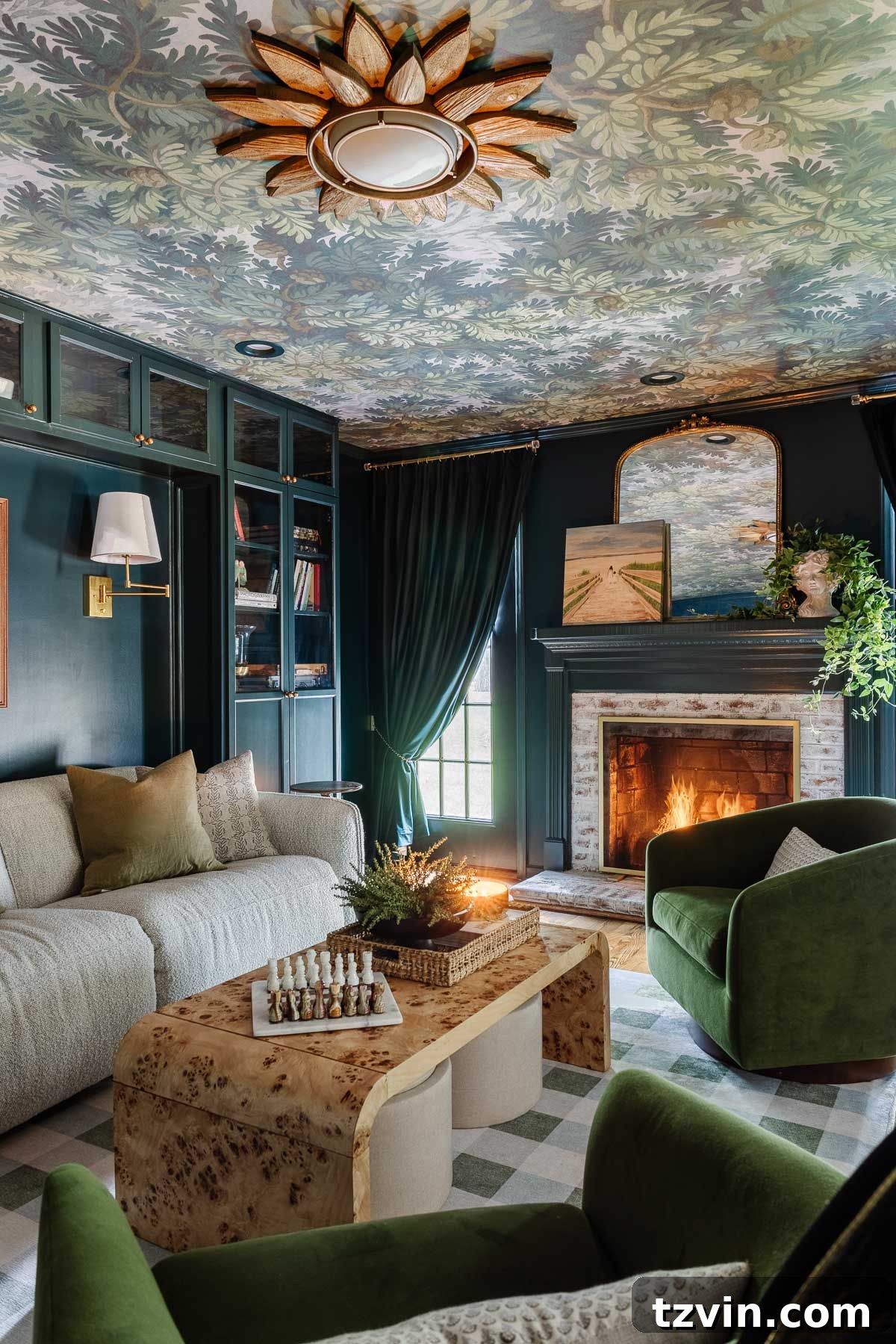
Curtains | Ceiling Wallpaper | Recliner Sofa | Rug | Mirror | Swivel Chairs | Fireplace Screen | Bust Planter | Curtain Rods | Curtain Tiebacks | Coffee Table | End Tables | Chess Set | Footed Bowl | Rattan Tray | Faux Plant Stems | Faux Trailing Plant
With the addition of these magnificent curtains, our media room truly feels complete. The atmosphere has become infinitely cozier, and we can now fully immerse ourselves in the ultimate home movie theater experience, any time of day. The combination of complete darkness and enhanced acoustics creates an unparalleled viewing environment.
What are your thoughts on this design choice? Typically, I don’t gravitate towards the pulled-back drapery look for every room. However, for a dedicated home theater aiming for that classic, vintage aesthetic, I wholeheartedly believe it makes a compelling exception. The dramatic flair and functional elegance perfectly align with the room’s purpose.
Pin it for later ⤵️

Should you be seeking further inspiration or practical advice for window treatments throughout your home, explore these additional resources:
More Window Treatment Ideas to Elevate Your Home
How to Make Easy No Sew DIY Cafe Curtains
Best Luxury for Less Amazon Curtains & Window Shades
Easy DIY No Sew Curtains With Trim: Step By Step Tutorial