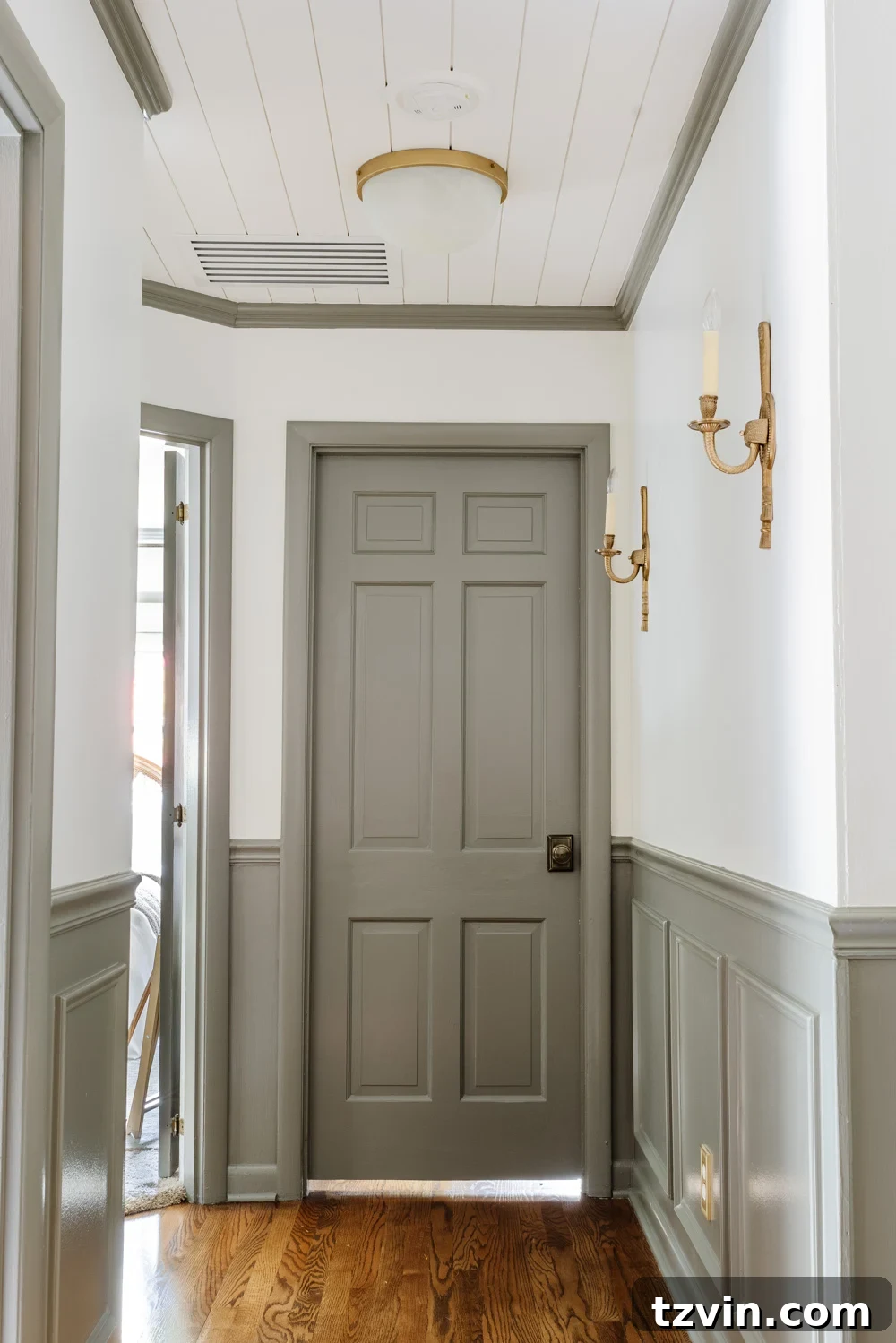
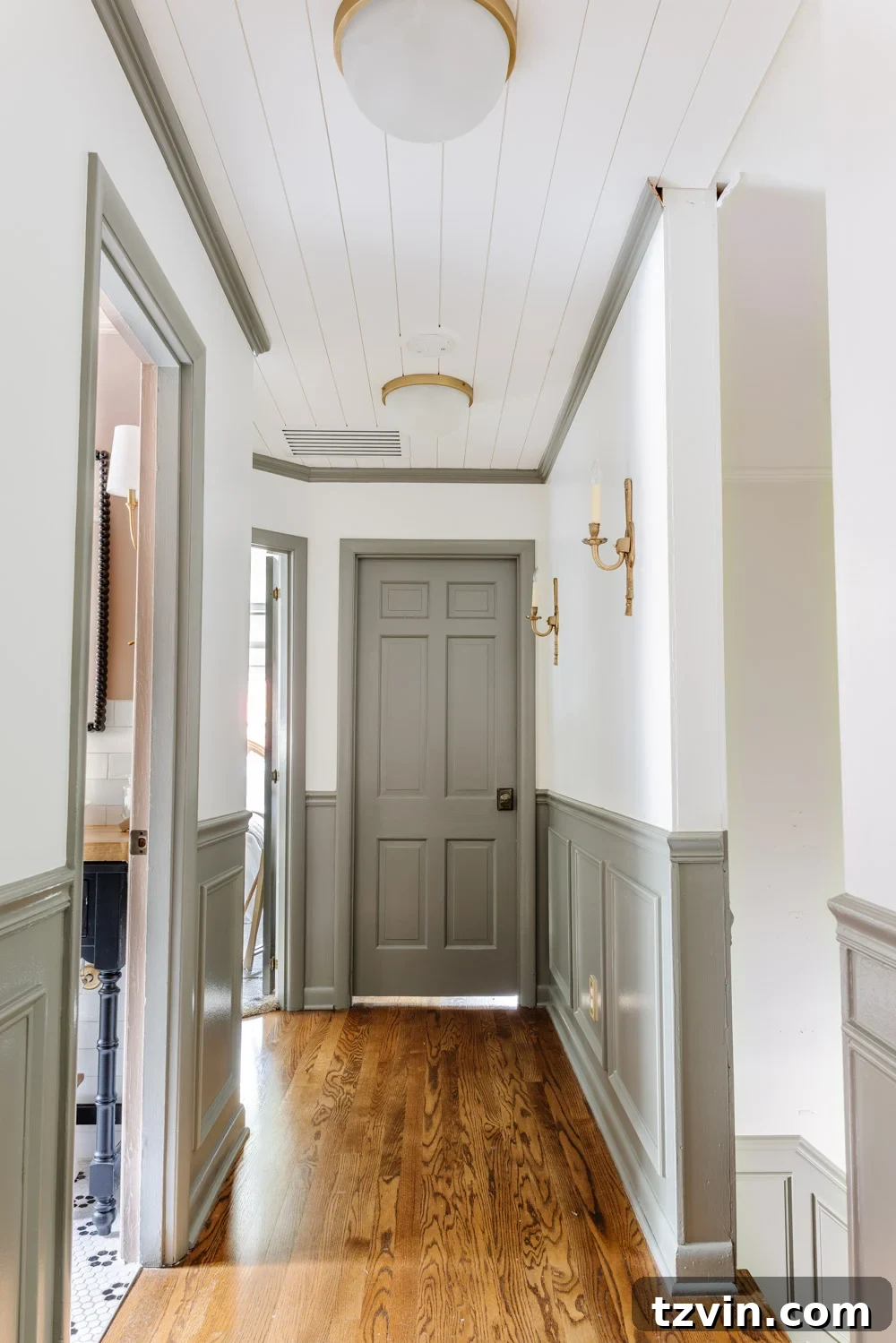
There are some home frustrations that truly test your patience, and a constantly sticking door is undoubtedly one of them. It’s the kind of daily annoyance you don’t realize is draining your energy until it’s finally resolved. You might invest time and effort into a beautiful home update, like giving your interior doors a fresh coat of paint, only to find yourself back at square one, battling doors that loudly pop open or scrape along the frame, chipping away at your hard work.
Several years ago, we embarked on a refreshing project: painting all the doors upstairs. The transformation was instant and delightful. There’s something truly magical about fresh paint that makes old doors feel brand new, elevating the entire space. The crisp lines and updated color brought a clean, contemporary feel to our home, and we were absolutely thrilled with the aesthetic upgrade.
However, this initial joy was quickly overshadowed by a persistent problem: every time we tried to open these newly painted doors, they would emit a jarring “pop” like a firecracker, often ripping a piece of paint right off the door jamb. It was an infuriating cycle. Despite meticulous preparation—deglossing, sanding, priming with high-quality products, applying durable enamel paint, and patiently waiting for the paint to fully cure—the sticking never ceased. The doors consistently stuck, creating a loud, unavoidable disruption, especially when someone was trying to be discreet.
This endless battle with noisy, paint-peeling doors became a significant source of irritation. It felt like a constant undermining of our efforts to beautify our home. The moment of quiet anticipation, opening a door, would invariably be shattered by an unwelcome crackle, accompanied by the sight of fresh paint flaking away. It drove me absolutely crazy.
So, when it came time to repaint our hallway doors, this time in a stunning new shade (Sherwin Williams Willowleaf, a gorgeous green-gray we adore and have also used in our foyer and stairway), I was determined. This time, I vowed to solve the mysterious case of the sticking door once and for all. I wasn’t just looking for a temporary patch; I needed a definitive, long-lasting solution that would prevent this common painting headache from ever returning.
My quest for a permanent fix led me down a deep rabbit hole of research. I delved into every contractor forum, DIY community, and professional painter’s guide I could find. I scoured countless threads, desperate for insights from those who tackle such issues daily. After sifting through a mountain of advice, tips, and product recommendations, I unearthed a few promising solutions that seemed to be repeatedly endorsed by seasoned professionals. It was time to put these expert-approved methods to the test.
How to Fix a Sticking Door: An Exhaustive Test of 3 Top Products
As an Amazon Associate, I earn from qualifying purchases. full disclosure
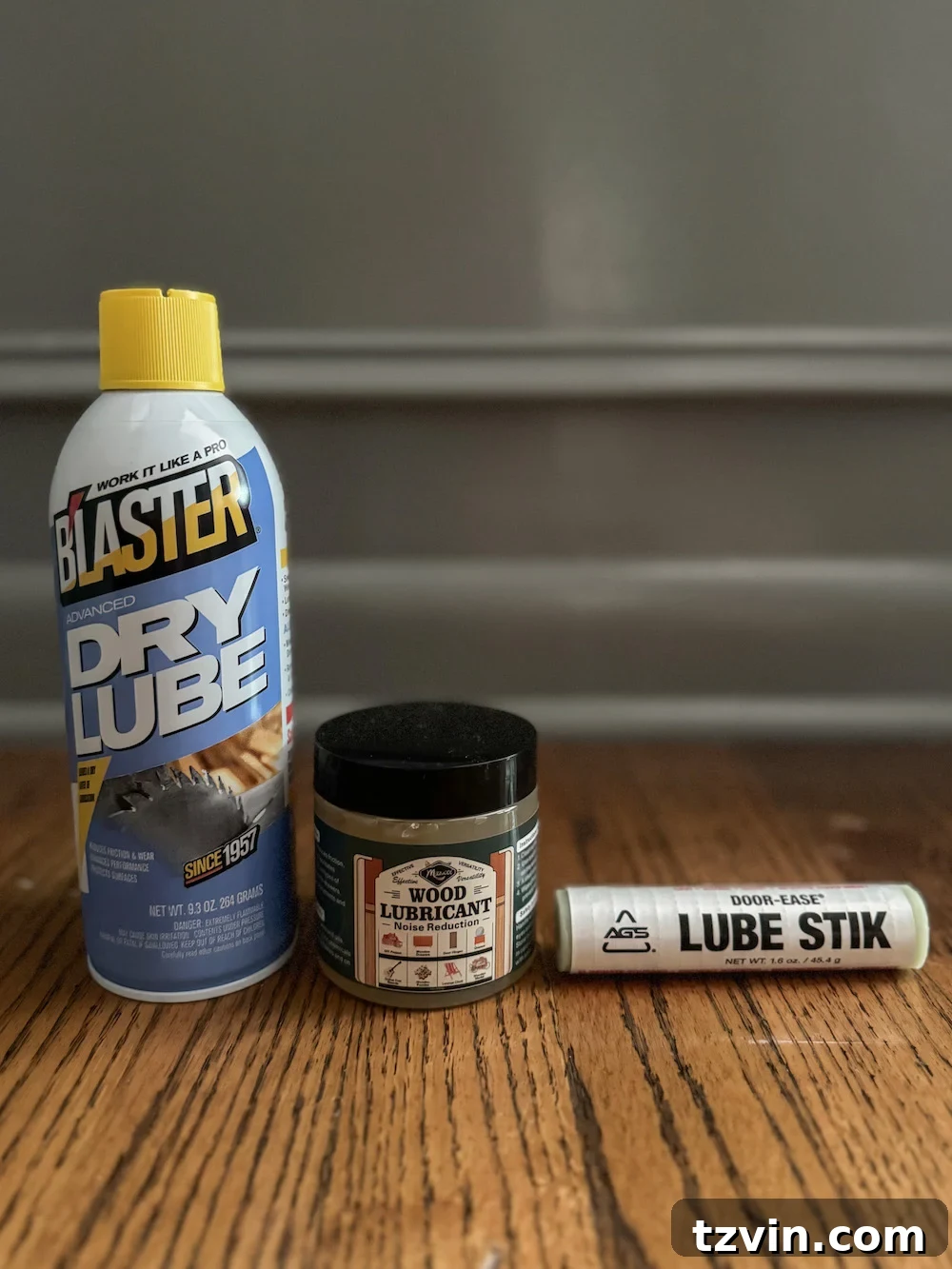
The logic was simple: if professionals are relying on specific products to effectively stop painted doors from sticking, then these products surely deserved a thorough personal evaluation. My goal was to identify not just a workable solution, but the *best* way to fix a sticking door, ideally one that was easy to apply, effective, and left no unsightly residue. I carefully narrowed my selection to three top contenders, each representing a different application method or lubrication type, and then proceeded to test each one on a different problem door in our home.
My testing process was straightforward: after ensuring the paint on each door and jamb was fully cured, I applied each product according to its instructions along the contact points where the door meets the frame. I then observed how quickly and effectively each product eliminated the sticking, noting any drawbacks or benefits in terms of application, mess, and long-term performance. Here’s a detailed breakdown of how each product performed under real-world conditions:
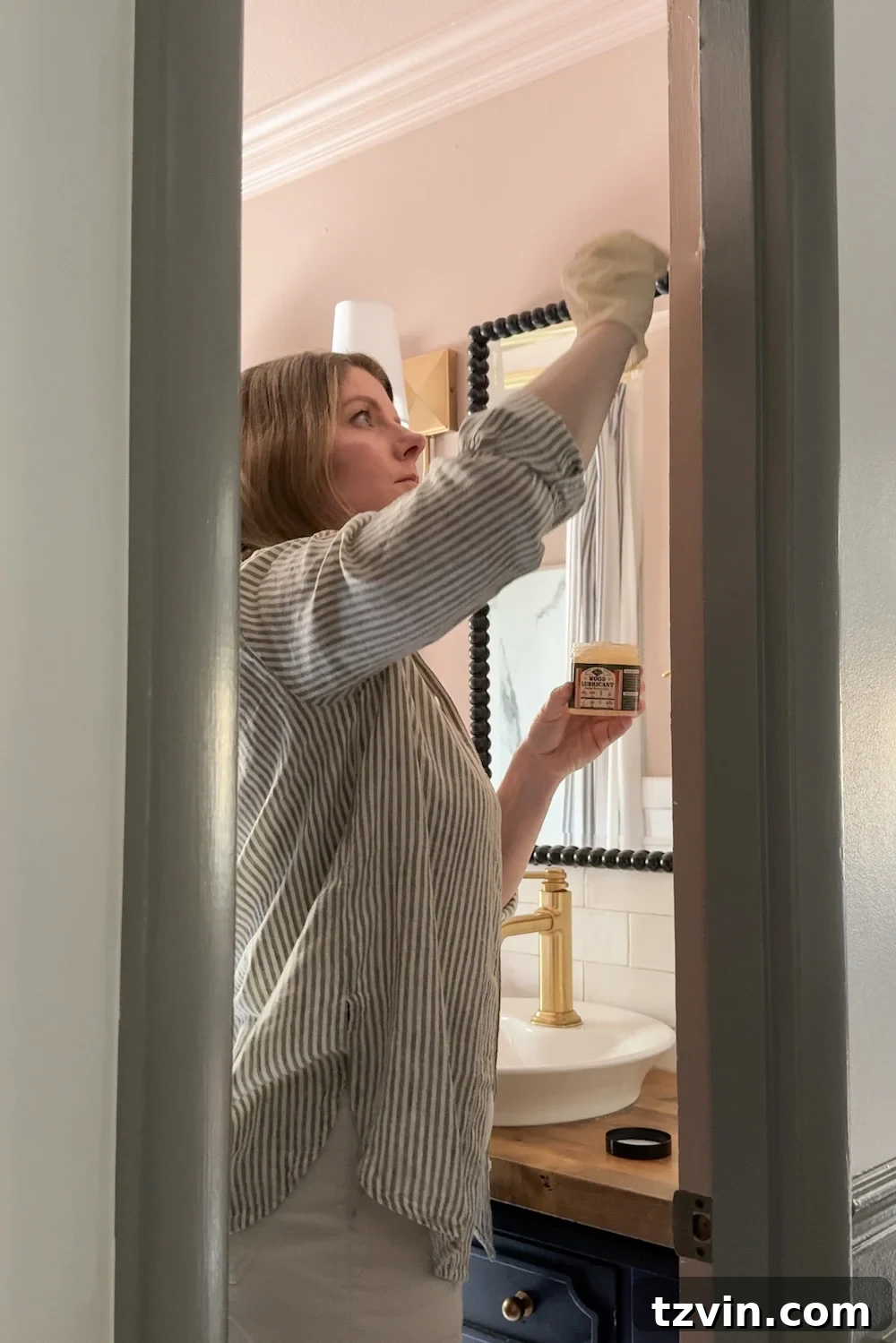
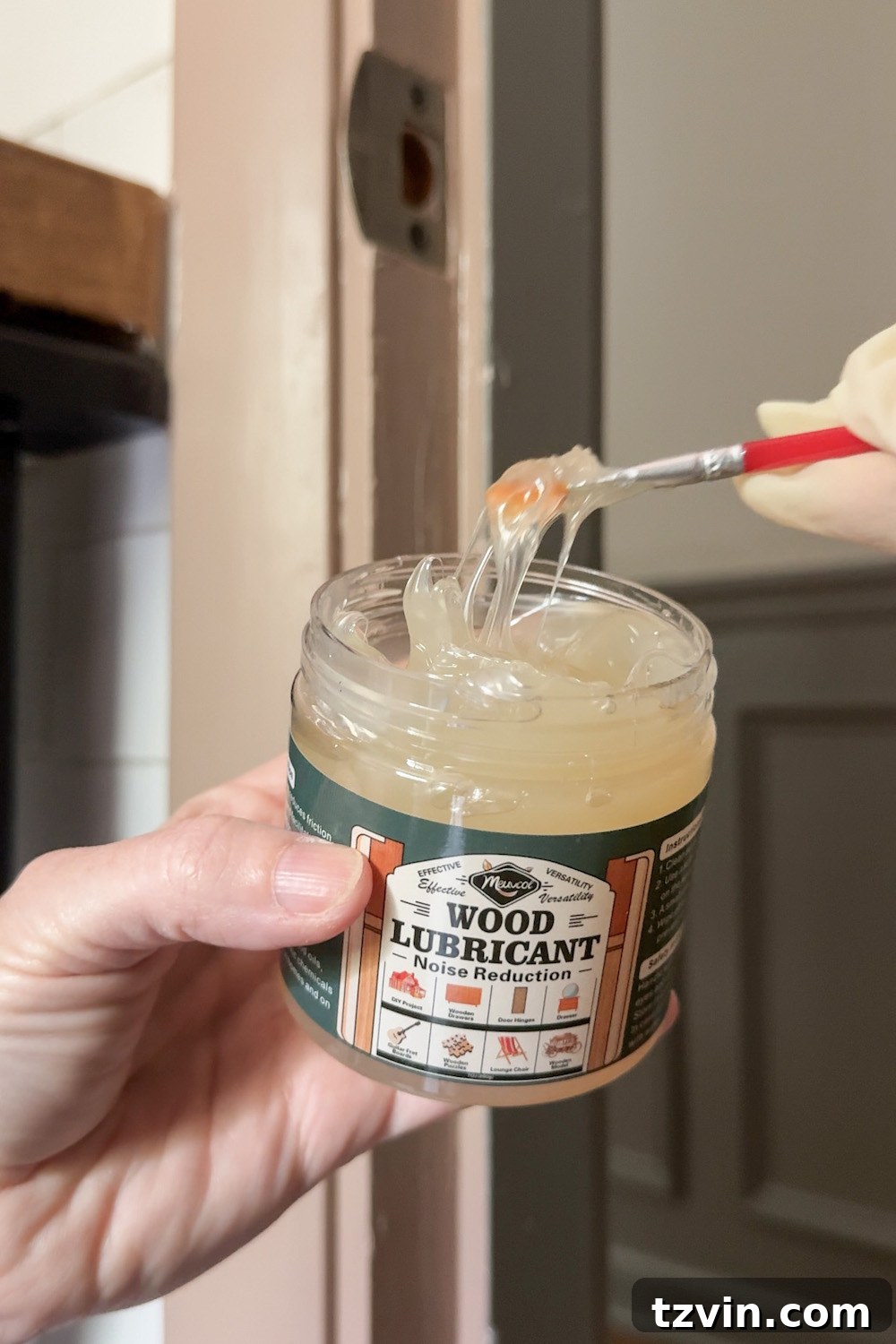
🥉 3rd Place: Wood Lubricant
Application method: Brush-on
Pros: Eventually resolves sticking issues
Cons: Highly messy, excessively time-consuming, leaves a thick, goopy residue
I genuinely had high expectations for this particular Wood Lubricant. The idea of a brush-on solution for a wood door seemed intuitively correct. However, the application process quickly became more of a chore than a fix. It felt less like I was applying a lubricant and more like I was re-painting the door frame, but with a product that had the consistency of thick, sticky syrup. It went on incredibly thick, was challenging to spread evenly, and left a discernibly unpleasant, goopy residue along the jamb.
While I can concede that it did eventually stop the sticking problem on the test door, the entire experience was cumbersome and far from ideal for a quick or clean resolution. The mess it created required additional clean-up time, and the tactile sensation of the dried, sticky film was not something I wanted on our freshly painted surfaces. This product felt more like a last resort than a convenient solution, proving unsuitable for homeowners seeking an efficient and tidy way to fix a sticking door without compromising their fresh paint job.
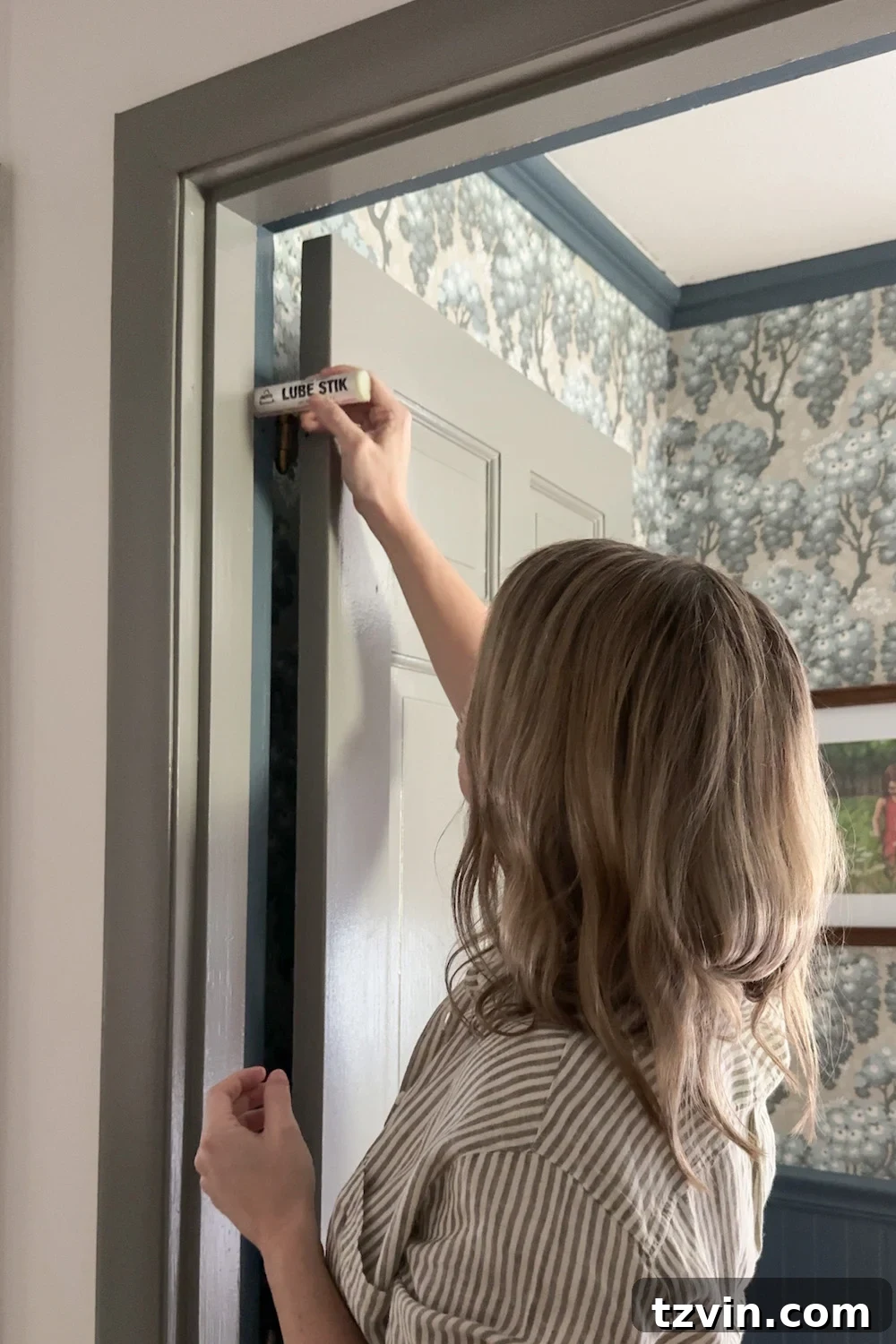
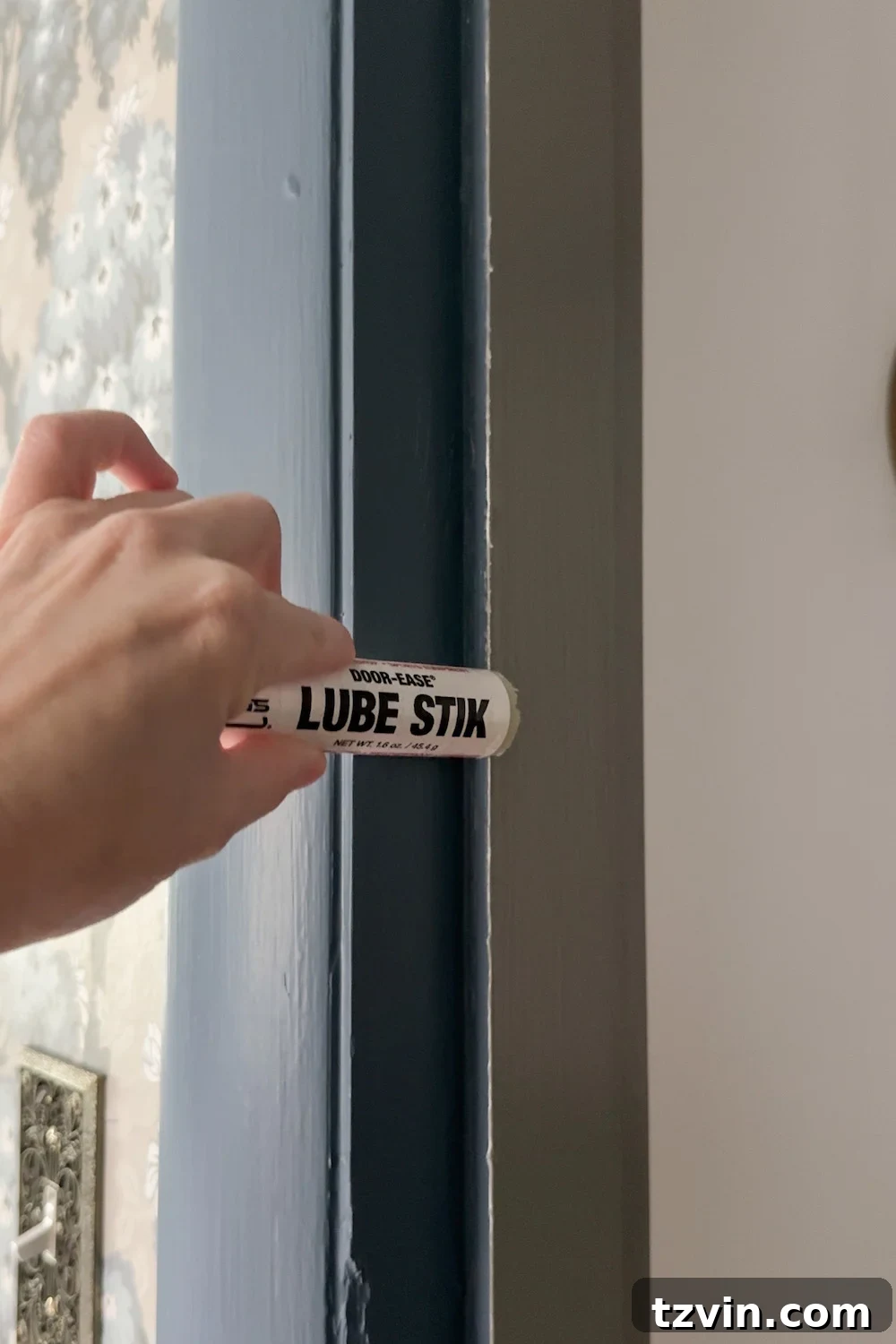
🥈 2nd Place: Door Ease Lube Stick
Application method: Rub-on wax stick
Pros: Significantly cleaner application compared to liquid wood lubricants
Cons: Difficult to apply evenly, requires considerable effort and time, may need frequent reapplication
The Door Ease Lube Stick offered a noticeable improvement in cleanliness over the brush-on lubricant. The application method felt familiar, almost like coloring the door jamb with a giant, waxy crayon. This eliminated the drips and excessive mess associated with liquid solutions, which was a definite plus for maintaining the pristine look of freshly painted surfaces.
In terms of performance, it did work adequately to reduce the friction causing the door to stick. However, achieving an even, consistent coating along the entire contact surface of the door jamb proved to be more challenging and time-consuming than anticipated. The wax-based formula required a fair amount of physical effort and repeated passes to ensure sufficient coverage. While it’s a perfectly acceptable option if you’re in a bind and don’t mind putting in a little elbow grease, and perhaps only have one door to treat, it still fell short of being the effortless, ideal solution I was searching for. For multiple doors or a quick fix, its demanding application made it less appealing.
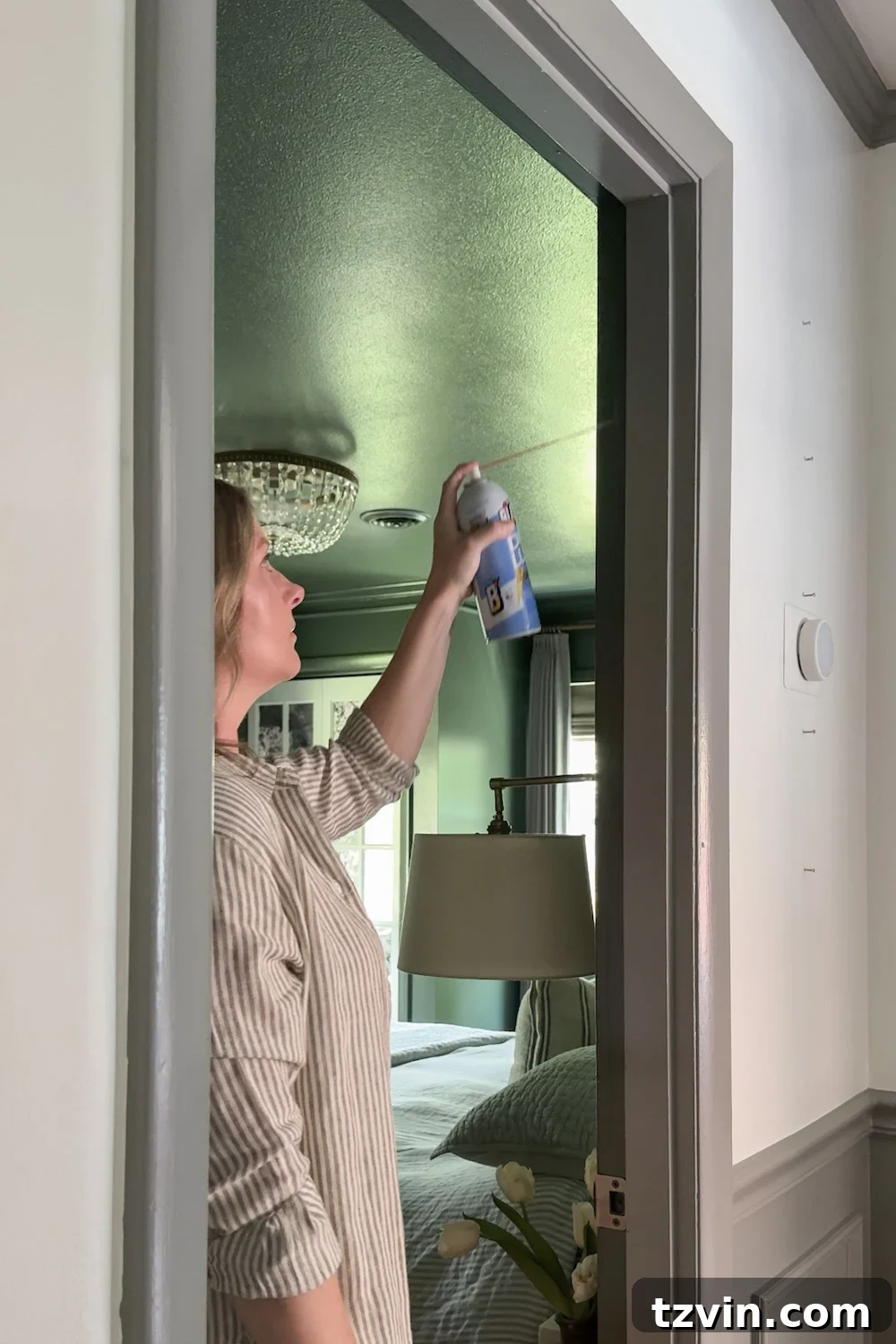
🥇 1st Place: Blaster Dry Lube Spray
Application method: Convenient spray-on
Pros: Incredibly fast and highly effective, dries completely clean with no residue
Cons: Produces a slight, temporary odor for approximately 30 minutes, initial application is wet before drying
The Blaster Dry-Lube Spray was, without a doubt, the ultimate game-changer in my quest to fix a sticking door. This product truly delivered on all fronts. The application process was remarkably quick, taking mere seconds to coat the necessary areas. Immediately after application, the door’s behavior transformed; it glided smoothly and silently, completely free from the frustrating sticking and popping that had plagued it for so long.
Upon spraying, the lubricant initially appears wet, and it does emit a relatively strong chemical odor, so I highly recommend ensuring proper ventilation by opening a window or door during application. However, this wetness and smell are very temporary. The product dries incredibly fast, leaving behind absolutely no messy residue or visible film. Its dry film lubricant technology means it creates a slick, friction-reducing layer without attracting dust or dirt, which is crucial for maintaining clean door jambs and hinges.
I simply sprayed a thin, even layer along the edge where the door meets the jamb, as well as on the hinge pins, and the results were instant and dramatic. Boom—no more loud popping sound, no more unsightly peeled paint, and finally, no more daily frustration. This dry lubricant truly solved the problem, providing a quiet and effortlessly functioning door. It’s effective, efficient, and leaves no trace, making it the clear winner in our rigorous testing.
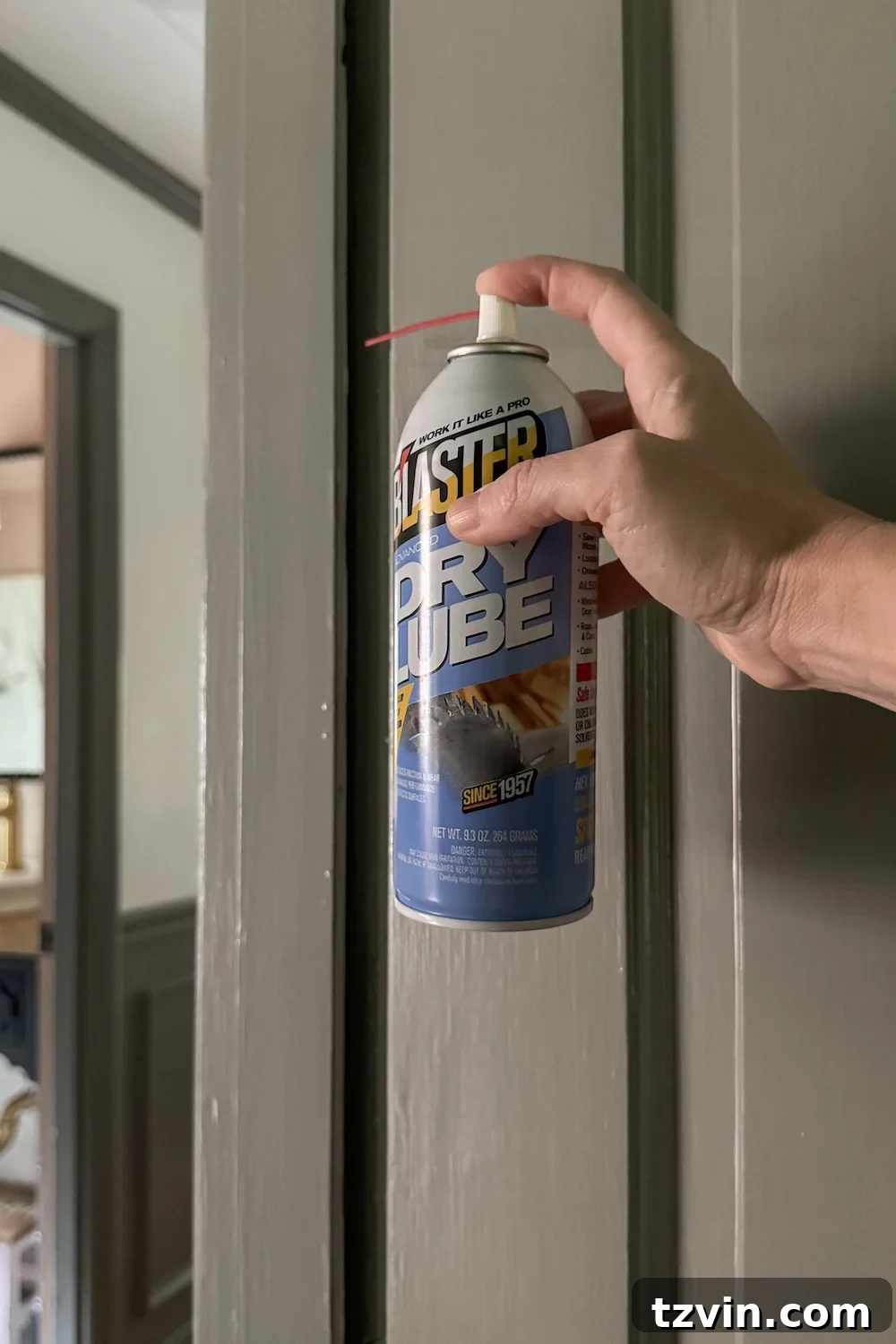
The only humorous downside? Now our kids have discovered they can sneak out of their rooms in full ninja-style silence, and I won’t hear a peep! But honestly, that’s a small, perhaps even endearing, price to pay for the profound peace and quiet of a hallway free from jarring door pops, and the sheer satisfaction of doors that finally function exactly as they should.
Final Verdict: The Ultimate Solution for Sticking Doors
If you’ve ever found yourself desperately typing “how to fix a door that sticks” into a search engine, you are certainly not alone. It’s one of those common, yet incredibly irritating, home maintenance challenges that often gets overlooked until it morphs into an unavoidable, everyday annoyance. The constant friction, the irritating noise, and the damage to freshly painted surfaces can really chip away at your domestic tranquility. But rest assured, a simple and effective solution exists.
After thoroughly trying all three of these highly recommended door lubricants side-by-side on various problem doors, the verdict is overwhelmingly clear. The Blaster Dry Lube Spray is hands-down the undisputed champion and the definitive winner when it comes to how to fix a sticking door. It excels in every critical aspect: it works fast, applies cleanly, and requires minimal effort, delivering immediate and lasting results. I only wish I had discovered this incredibly effective product years ago; it would have saved me countless moments of frustration and the need for repeated paint touch-ups.
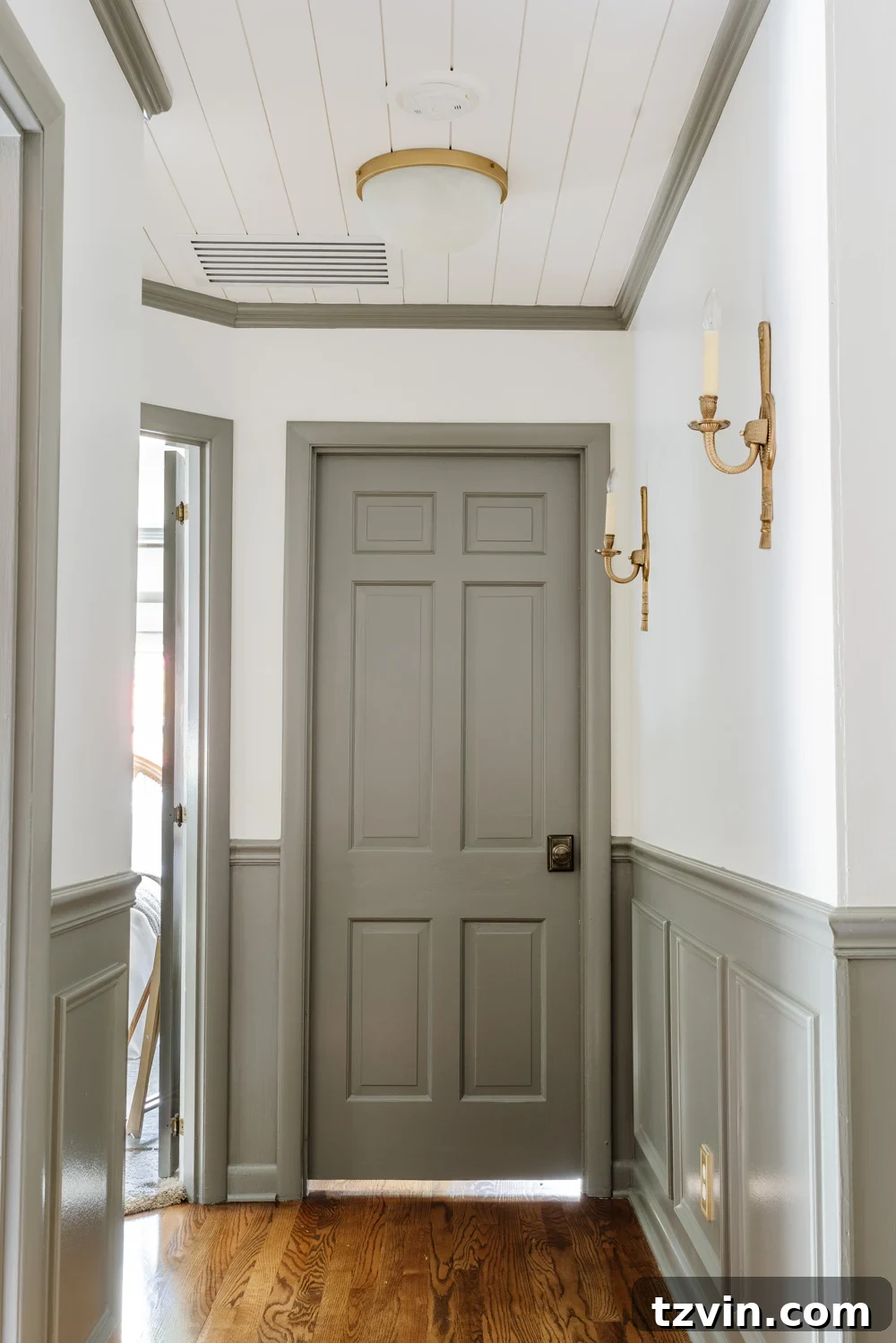
(Side note for observant eyes: Doesn’t that sleek, clean, modern ceiling vent cover look infinitely better than the rusty, crusty old one we had gracing our ceiling before? It’s a small detail, but these little upgrades make a huge difference!)
Now that our hallway doors are officially unstuck, silently functioning, and the previously awkward attic door is cleverly hidden within a beautiful tongue and groove ceiling, we finally feel ready to introduce the “fun stuff.” This includes carefully selected art, elegant mirrors, and a plush rug to infuse a significant amount of life, character, and warmth into this central part of our home. The foundational issues are resolved, paving the way for aesthetic enhancements.
But before diving into the decor, I’m going to take a moment to simply revel in the quiet serenity of our hallway, finally free from the cacophony of doors popping like bubble wrap. DIY wins like this might not always be the most glamorous or Instagram-worthy projects, but the sheer satisfaction and daily comfort they bring are immeasurable. It’s these practical, problem-solving victories that truly make a house feel like a harmonious home.
More DIY Door Upgrade Ideas to Transform Your Home
- How to Paint Interior Doors for a Professional Finish
- The Best Trick for Painting French Doors and Windows Like a Pro
- How to Change Door Hinge Colors in Seconds for a Cohesive Look
- Easy DIY Mirrored French Bi-Fold Door Makeover to Brighten Your Space