Master the Art of Mixing and Matching Throw Pillows Like an Interior Designer
The “Magic Formula” for Stunning Throw Pillow Combinations + Top Resources for Buying Them
Welcome back to our Simplified Decorating series, where we break down complex design concepts into easy-to-understand, actionable tips! It’s been a while, but today we’re diving into a topic that many homeowners find challenging: how to effortlessly mix and match throw pillows to achieve a cohesive and stylish look. If you’ve ever stared at a pile of beautiful pillows, wondering if they actually “go together,” then this guide is for you.
As someone who isn’t a formally trained interior designer but has passionately researched and learned through real-world application – the good old school of hard knocks – I’ve discovered practical strategies that simplify decorating. Recently, I asked my amazing community on Instagram what decorating dilemma they wanted to solve next, and the overwhelming response was about throw pillows. So, consider this your comprehensive guide to becoming a throw pillow styling pro!
Unveiling the “Magic Formula” for Perfect Pillow Pairings
As I recently completed styling our master bedroom for the fall and winter seasons, it presented the perfect opportunity to share my most reliable secret weapon: the “Magic Throw Pillow Mixing and Matching Formula.” This isn’t a rigid, unbreakable rule, but rather a powerful framework that offers a clear starting point when you feel creatively stuck. It’s designed to help you create visually balanced and inviting arrangements every single time, whether for your sofa, bed, or accent chairs.
(Note: Some affiliate links are provided below. For full disclosure, please see here.)
The Foundation: The Magic Throw Pillow Mixing and Matching Formula (Patterns & Textures)
This formula simplifies the process of combining diverse pillows into a cohesive whole. It ensures you have enough variety to be interesting, but not so much that it becomes chaotic. Here’s the core pattern and texture rule:
1 Complex Pattern/Print + 1 Geometric Print + 1 Solid/Textured Fabric
Let’s break down each element to understand its role in your pillow ensemble:
1. The Complex Pattern/Print: The Storyteller
This pillow is your statement piece, the visual anchor that introduces personality and often dictates the color story of your arrangement. A complex pattern features intricate details, multiple colors, or organic shapes. Think beautiful florals, sophisticated toile, ornate damasks, vibrant ikat, traditional paisley, or even a detailed scenic print. This is where you can showcase your personal style and create a focal point.
- Choosing Wisely: Select a pattern that resonates with your room’s overall aesthetic. If your space is elegant, a large-scale botanical might be perfect. For a bohemian feel, consider a global-inspired print. Ensure it subtly incorporates one or two existing colors from your room or introduces a new accent color you want to highlight.
- Impact: This pillow sets the tone, adding visual richness and depth. Its intricate design prevents the arrangement from looking flat or simplistic.
2. The Geometric Print: The Modern Contrast
The geometric print is essential for adding structure, rhythm, and a contemporary edge to your pillow grouping. Its clean lines and repetitive forms provide a much-needed contrast to the organic flow of the complex pattern. Geometric options are vast: crisp stripes, classic plaids, modern trellises, chevron, houndstooth, or even abstract lineal designs.
- Balancing Act: Pick a geometric print that shares at least one color with your complex pattern, ensuring continuity. Pay attention to scale – if your complex pattern is large, a smaller, tighter geometric print usually works best, and vice-versa. This variation in scale keeps the eye moving without clashing.
- Purpose: It provides a visual break from the more ornate pattern, adding a sense of order and modernity.
3. The Solid/Textured Fabric: The Grounding Element
This often-underestimated pillow is the secret to a professional-looking arrangement. A solid-colored pillow crafted from a rich, tactile fabric – such as sumptuous velvet, natural linen, cozy faux fur, chunky knit, or sleek faux leather – grounds the entire composition. It gives the eye a place to rest, allows the patterns to truly shine, and adds crucial depth through texture.
- Embrace Texture: Texture is paramount here. A flat cotton solid is less impactful than a deeply textured material. The tactile quality adds luxury and comfort, inviting interaction.
- Color Harmony: Choose a solid color that is pulled from either your complex or geometric pattern, or opt for a versatile neutral (like cream, charcoal, taupe, or white) that beautifully complements your chosen palette. This solid color acts as a unifying agent.
The Color Theory Behind Your Perfect Pillow Combination
While patterns provide visual interest, the strategic use of color is what truly binds your throw pillows into a harmonious unit. Here’s a simple color formula to guide your choices:
1 Main Color + 1 Accent Color + 1 Neutral
Let’s elaborate on how to apply this color strategy:
- 1 Main Color: This color should already be dominant in your room’s decor – perhaps matching your sofa, a prominent piece of artwork, or your wall color. It creates a sense of cohesion and ensures your pillows feel integrated into the space.
- 1 Accent Color: This is your opportunity to introduce a vibrant pop or a complementary hue that adds energy and visual intrigue. This color should appear sparingly within your room, perhaps in a smaller decorative object, allowing the pillow to draw attention to it.
- 1 Neutral: Neutrals are non-negotiable. Whether it’s ivory, white, various shades of beige, gray, or even black, a neutral pillow provides a calm backdrop. It allows your main and accent colors to truly stand out, preventing the arrangement from feeling overwhelming or too busy.
Putting the Formula to the Test: Examples from Our Home
Let’s look at how these formulas translate into real-world applications in our own living spaces:
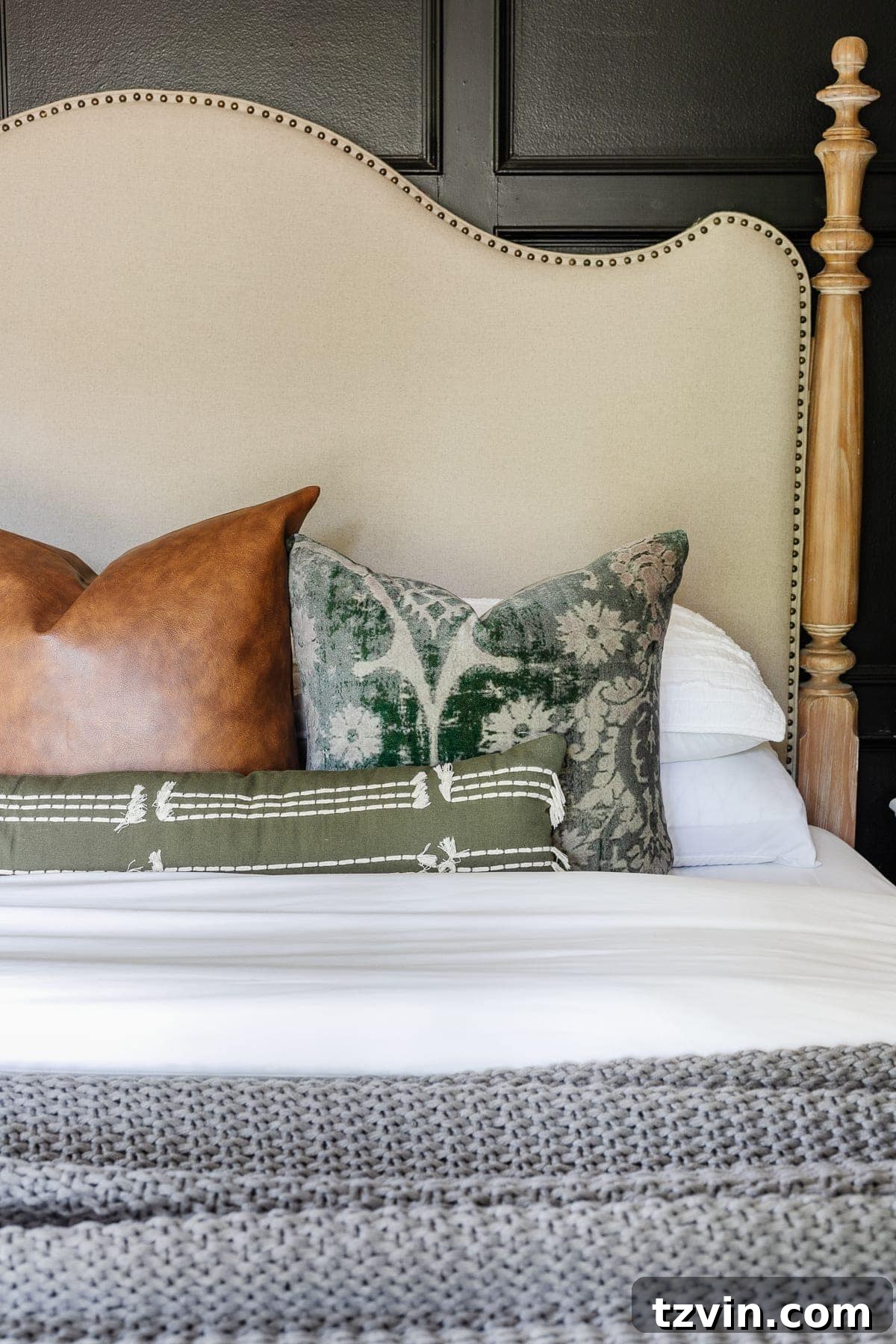
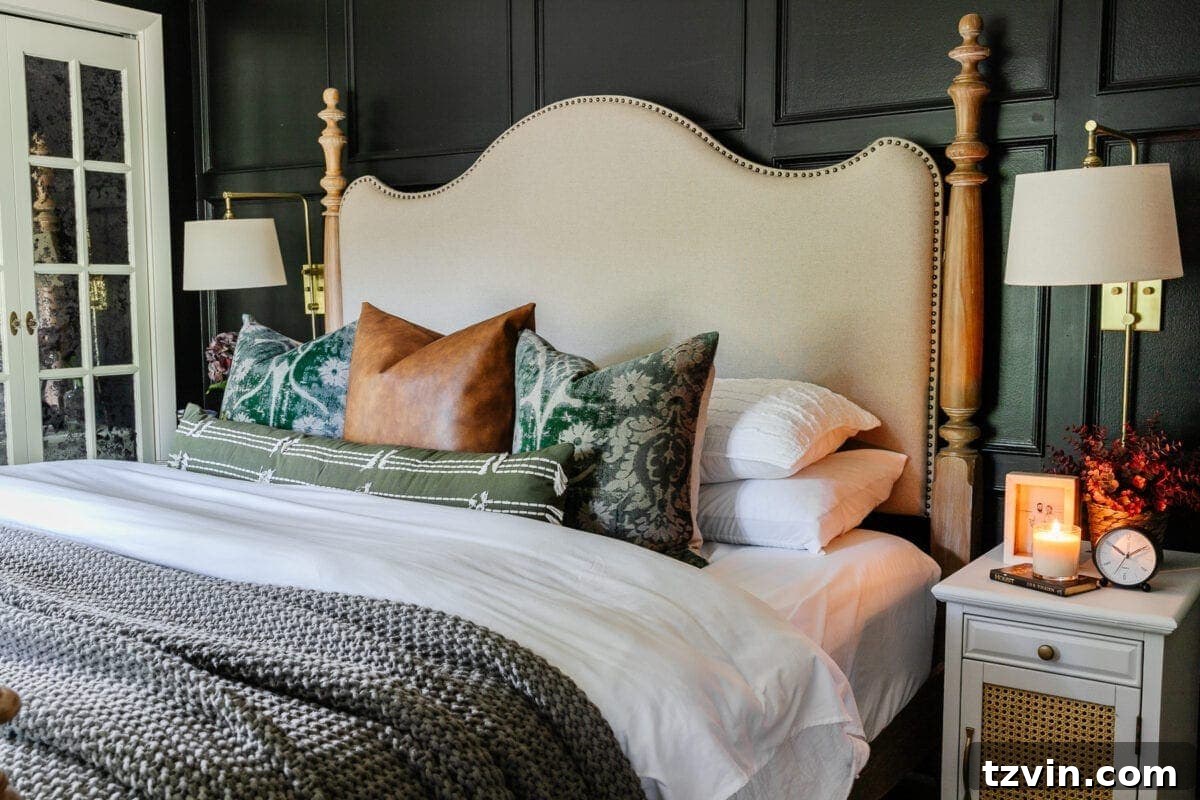
On Our Master Bed:
For a serene yet sophisticated bedroom retreat, our pillow selection included:
- A complex antique jade print pillow: This piece introduced an elegant, intricate pattern and a rich, deep jade green as our main color.
- A geometric stitched olive lumbar pillow: Its structured stitching provided the geometric element, offering a subtle pattern contrast and a complementary olive accent color.
- A faux leather pillow: This brought in a unique, rich texture and a grounding neutral tone, adding a touch of modern sophistication without competing with the patterned pieces.
Here, the antique jade was the main color, olive green served as the accent, and the faux leather provided the essential neutral. The combination resulted in a beautifully layered and inviting bedscape.
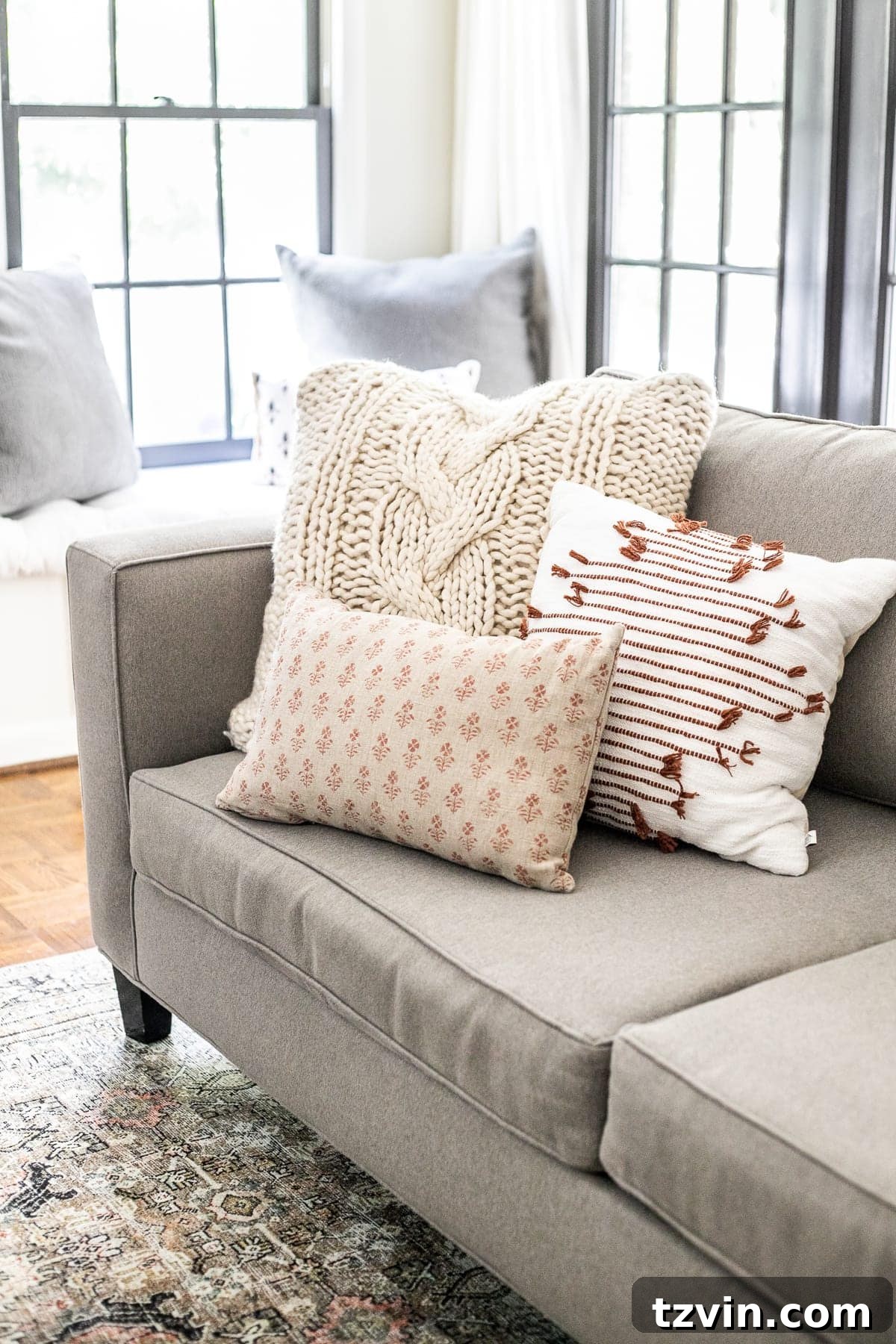
On Our Living Room Sofa:
To create a cozy and visually engaging living space, our sofa features a carefully curated selection:
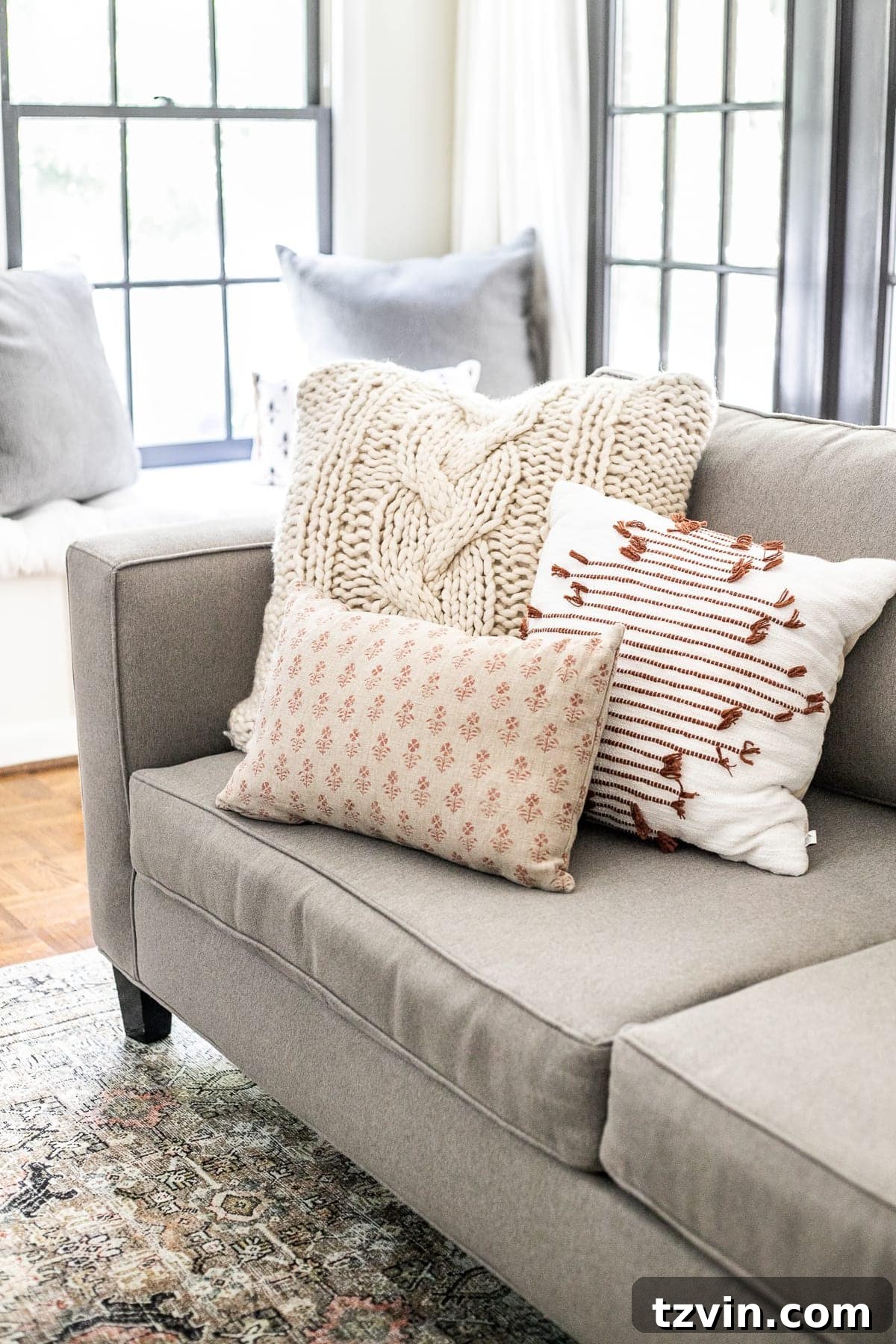
- A 12″x20″ coral floral block print lumbar pillow: This acted as our complex pattern, introducing a lovely pop of coral and an organic, artistic design.
- An 18″ rust geometric stitched pillow: The rich rust color beautifully complemented the floral, while its geometric stitching offered a clean, structured contrast.
- A 24″ ivory cable knit pillow: This provided the essential solid/texture element in a soft neutral, grounding the entire arrangement and adding an inviting, tactile layer perfect for cozying up.
In this setting, coral was our main color, rust provided a warm accent, and ivory served as the grounding neutral. The outcome is a vibrant yet balanced arrangement that exudes comfort and style.
Mastering Throw Pillow Sizing and Arrangement for Every Space
Beyond choosing the right patterns and colors, the size and placement of your throw pillows are crucial for achieving that coveted designer look. Proportion and thoughtful arrangement make all the difference!
For Sofas and Sectionals:
- The Foundation: Begin by placing larger 20″-24″ square throw pillows at the ends of your sofa. These provide a substantial base and define the edges of your pillow grouping.
- Layering for Depth: In front of each large pillow, introduce a slightly smaller 18″-22″ square pillow. This layering creates depth and visual interest, making the arrangement feel more complex and inviting.
- The Lumbar Accent: If your sofa boasts a deep seat, consider adding a smaller lumbar pillow (typically 12″x20″ or 14″x22″) in front of your layered square pillows. A lumbar pillow can be a fantastic way to introduce a unique pattern or texture and often becomes a focal point.
- Sofa Size Considerations: For a standard three-seater sofa, a classic arrangement often includes two large, two medium, and one lumbar pillow (a total of five). For larger sectionals, you can repeat this grouping on each major section or vary it slightly for an eclectic, collected feel. Remember, avoid overcrowding; leave enough room for comfortable seating.
For Beds:
- Euro Shams – The Plush Backdrop: Start by leaning 24″-26″ Euro pillows against your headboard. These large square pillows create a luxurious, plush backdrop. Use three for a King bed, two for a Queen or Full, and one for a Twin.
- Standard Pillows: Layer your regular sleeping pillows (ensuring they are neatly encased in their shams) in front of the Euro pillows.
- Accent Pillows: Next, place two 22″-24″ accent pillows on either side, in front of your standard pillows. This is where your chosen patterned and textured pillows from the “magic formula” can truly shine.
- The Finishing Touch (Long Lumbar): Complete the look with a long lumbar pillow (sizes vary, often 14″x36″ or 16″x48″, depending on your bed size) placed horizontally across the front. This not only unifies the entire arrangement but also adds a sophisticated, tailored finish.
Smart Shopping for Throw Pillows: My Essential Preferences
Making smart choices when buying throw pillows can significantly impact both the look and longevity of your home decor. Here are my tried-and-true preferences for pillow shopping:
- Invest in Pillow Covers Only: This is a game-changer! Whenever possible, purchase only the pillow covers. This saves immense storage space, makes cleaning a breeze, and allows for endless versatility. You can easily swap covers seasonally or whenever your style evolves, without needing to store dozens of bulky, full pillows. It’s also a more sustainable and budget-friendly approach in the long run.
- Prioritize Quality Inserts: This is perhaps the single most impactful tip for achieving that coveted high-end, designer look. Always opt for down or down-alternative inserts (these are my personal favorites). They offer a luxurious feel, maintain their shape beautifully, and allow for the stylish “karate chop” (that gentle indent in the center) that signals quality.
- Size Up Your Inserts by 2 Inches: For a consistently plump, full, and utterly luxurious appearance, always choose pillow inserts that are 2 inches larger than your pillow cover. For instance, if you have an 18-inch cover, use a 20-inch insert. This simple trick prevents sagging, fills out the corners, and makes even an inexpensive cover look incredibly high-end.
- Look for Zippers: If you find yourself buying entire pillows (and sometimes you just can’t resist a good find!), make sure they come with a zipper. This foresight provides the flexibility to replace a flat or uncomfortable polyester insert with a higher-quality down or down-alternative option down the line, significantly extending the pillow’s life and enhancing its comfort.
- Opt for Versatile, Not Season-Specific Designs: While a festive Santa-themed pillow has its charm for a few weeks, choosing versatile designs offers far greater longevity and value. Instead of explicit seasonal prints, select pillows with textures or colors that evoke a season (e.g., a chunky cable knit for winter, light linen for summer) but can be enjoyed for several months, or even year-round. This approach reduces clutter, saves money, and streamlines your seasonal decorating efforts.
(I confess, sometimes a truly unique or irresistibly charming pillow might cause me to completely disregard these guidelines – but for consistent, elegant results, these preferences are gold!)
Beyond the Formula: Advanced Tips for Pillow Perfection
Once you’ve mastered the basic “magic formula,” these additional considerations will help you fine-tune your pillow styling to an expert level:
- Vary Scale Thoughtfully: Ensure your chosen patterns have varying scales. If your complex pattern is large and bold, ensure your geometric and textured pillows have smaller patterns (or no pattern) to create visual harmony and prevent an overwhelming look.
- Embrace Odd Numbers: For a more organic, dynamic, and visually interesting arrangement, aim for odd numbers of pillows (e.g., three or five) on your sofa or bed. Odd numbers often create a more natural, asymmetrical balance that feels effortlessly styled.
- Avoid Overcrowding: While it’s tempting to pile on all the beautiful pillows, too many can make a seating area uncomfortable and appear cluttered rather than chic. Aim for a curated selection that enhances comfort and style without overwhelming the space.
- Align with Room Style: Always choose pillows that complement and enhance the overarching aesthetic of your room. Whether your decor is modern farmhouse, bohemian, minimalist, traditional, or eclectic, your pillows should reinforce that chosen style.
- Strategic Repetition: Use subtle repetition of a color, a texture, or a minor motif across several pillows to tie the entire arrangement together, even if the primary patterns are distinct. This creates a cohesive narrative throughout your pillow grouping.
My Absolute Favorite Throw Pillow Sources: Where to Find Your Perfect Match
Finding that perfect throw pillow can sometimes feel like a treasure hunt! Here are my most trusted go-to sources, offering a fantastic range of styles, qualities, and price points to suit every decorator’s needs:
- H&M Home: An excellent destination for trendy, budget-friendly pillow covers with a great selection of contemporary patterns and unique textures.
- Etsy: A true gem for discovering unique, handmade, and custom pillow covers. Ideal for finding those one-of-a-kind complex or geometric prints that add character.
- Pottery Barn: Renowned for classic, high-quality, and enduring designs. A reliable choice for durable solid-colored pillows and sophisticated, timeless patterns.
- HomeGoods / TJ Maxx / Marshalls: These sister stores are fantastic for budget-friendly finds and uncovering unexpected treasures. Shopping here often requires patience but can yield truly stylish results.
- Boutique Rugs: Surprisingly, they offer a wonderful selection of decorative pillows that often beautifully coordinate with their rug collections, featuring distinct patterns and rich textures.
- IKEA: A go-to resource for affordable basic pillow inserts and a decent selection of simple, modern pillow covers that can be easily styled.
- Bed Bath & Beyond: Offers a vast variety of styles and price points, catering to everything from basic needs to more decorative and specific design choices.
- Amazon: An almost endless online marketplace for both pillow covers and high-quality inserts. Always remember to read reviews thoroughly!
- World Market: Excellent for globally inspired prints, vibrant colors, and richly textured pillows that can add an exotic and unique touch to your home decor.
- Wayfair: A huge online retailer featuring an expansive collection of pillows to suit virtually every style, budget, and design preference imaginable.
- Target: Consistently reliable for stylish and affordable seasonal and everyday pillow options, frequently collaborating with popular designers for on-trend collections.
- Walmart: Increasingly expanding its home decor offerings with on-trend and budget-friendly choices, including a growing selection of decorative throw pillows.
I hope this “magic formula” and these detailed tips help clarify the sometimes-intimidating art of pillow mixing and matching for you! My greatest wish is that these guidelines provide a solid, confident starting point. Always remember, while rules are incredibly helpful, especially when you’re navigating “decorators’ block,” they are ultimately meant to be broken and adapted to perfectly suit your unique taste and living space. The most important outcome is that your home feels wonderfully comfortable, beautifully styled, and authentically *you*.
Do you have any other cherished throw pillow sources you’d love to add to this comprehensive list? Or perhaps some personal decorating rules or ingenious tips that you swear by? Please share your wisdom and insights in the comments below – we’d love to hear from you!
If you want to save this invaluable post for later, you can easily pin it here: