
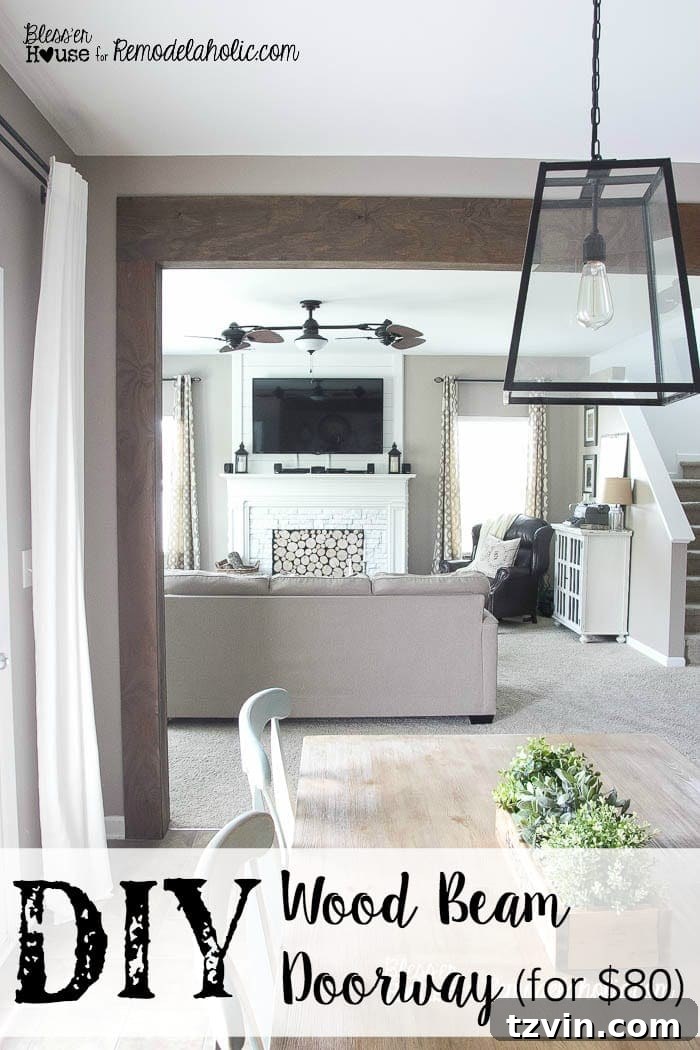
Transform Your Builder-Grade Home: How to Create a Stunning DIY Wood Beam Doorway for Under $80
Every home tells a story, but some builder-grade houses start with a rather blank chapter. If you’ve ever felt that your living space lacks character, depth, or that unique architectural flair, you’re not alone. We’ve certainly been there, and our latest project has us feeling a surge of satisfaction, reminiscent of hitting a perfect note – perhaps like a catchy 90s pop song you just can’t get out of your head. But instead of an “Oops!… I Did It Again” moment, this is an “Oh Wow! We Did It Again” triumph.
Our journey to infuse our home with personality has been an ongoing labor of love. We’ve discovered a passion for architectural details, transforming generic spaces into areas brimming with warmth and individuality. These aren’t just cosmetic changes; they are fundamental upgrades that redefine the very essence of our home. And the best part? Many of these impactful transformations are surprisingly budget-friendly DIY projects.
The Power of Architectural Details in Home Transformation
For many homeowners, the term “builder-grade” often conjures images of functional yet uninspired spaces – standard layouts, neutral palettes, and a distinct lack of custom touches. While practical, these homes often crave character. That’s where architectural details come in. Features like substantial moldings, impressive fireplaces, and, as you’re about to see, rustic wood beams can elevate a room from ordinary to extraordinary.
Our addiction to these details started innocently enough. It began with our DIY faux fireplace, which instantly added a focal point and cozy ambiance to our living room. Next, we tackled the bathroom with our industrial factory window shower doors, bringing a touch of urban chic. We’re still dedicated to completing the chunky farmhouse window molding throughout our house, a detail that dramatically frames views and adds a custom feel. Each project builds on the last, creating a cohesive and personalized aesthetic that truly reflects our style.
Before: A Blank Canvas Awaiting Character
The living room and breakfast area in our home have undergone significant changes since we first moved in. We’ve poured countless hours into making these spaces more functional and beautiful. Yet, despite all our efforts, the doorway connecting these two high-traffic areas remained a gaping void of blandness. It was a utilitarian opening, devoid of the charm and definition we sought to create throughout our evolving modern farmhouse abode.
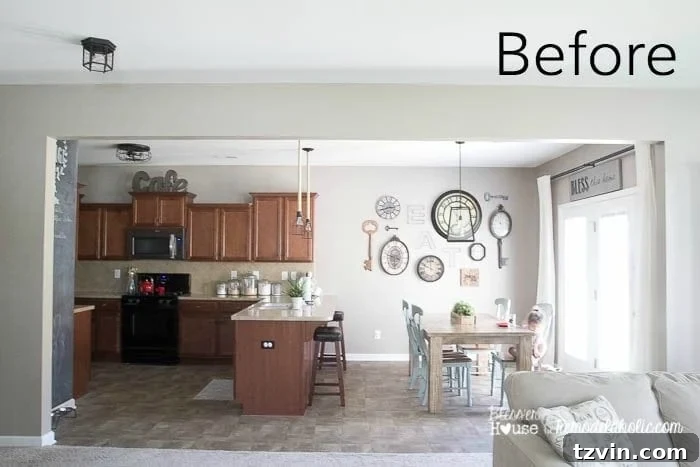
We envisioned a substantial wooden beam, something that would naturally delineate the two spaces while adding an element of rustic elegance. The problem, as is often the case with grand ideas, was the cost. A genuine reclaimed wooden beam of the size and quality we desired would easily set us back $1,000 or more – a budget-breaker for a single architectural feature.
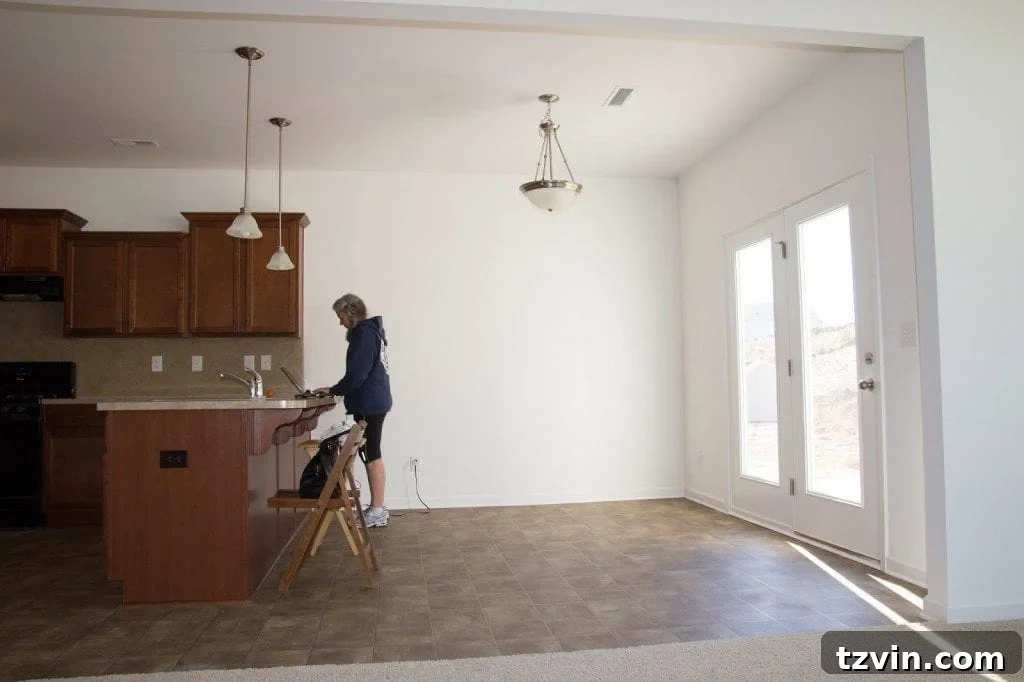
The $80 Faux Wood Beam Transformation: A DIY Success Story
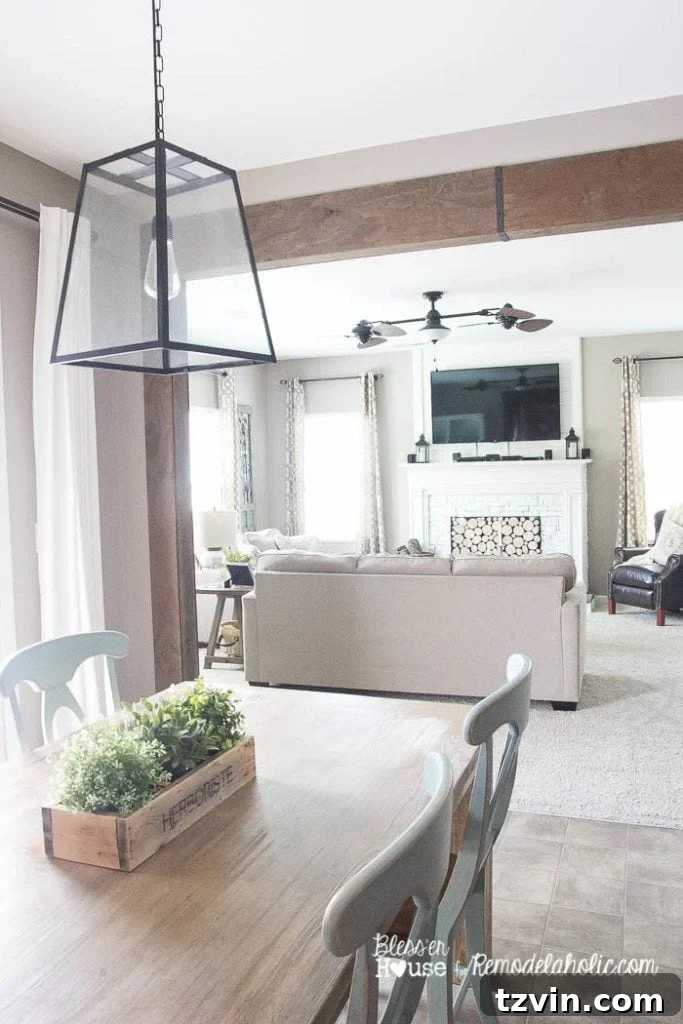
Refusing to be deterred by prohibitive costs, we put our DIY ingenuity to the test. Over the course of just three days, and with an investment of merely $80, we completely revolutionized that plain doorway. What once was an unremarkable transition became a striking focal point, a testament to the power of creative problem-solving and smart budgeting in home improvement.
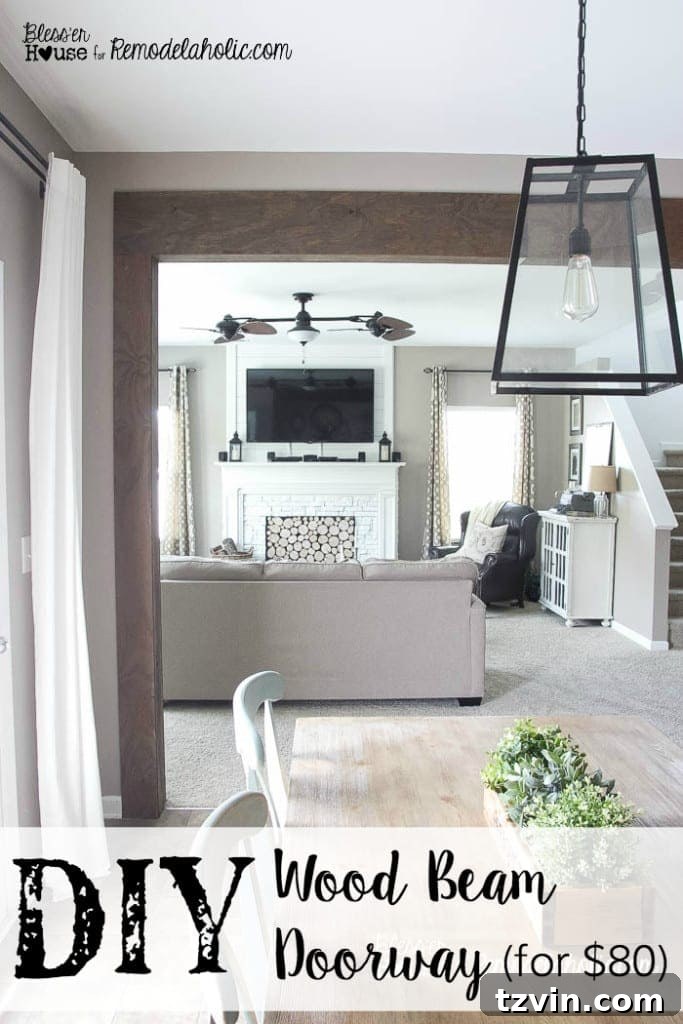
We couldn’t be more thrilled with how this DIY wood beam doorway turned out! While it required some dedicated time and precision, the process itself was surprisingly straightforward. It wasn’t overly complicated, making it an achievable project for many DIY enthusiasts looking to add significant impact without breaking the bank. For those ready to dive into the specifics, the full step-by-step tutorial is available over on Remodelaholic, detailing every cut, stain, and installation trick we used.
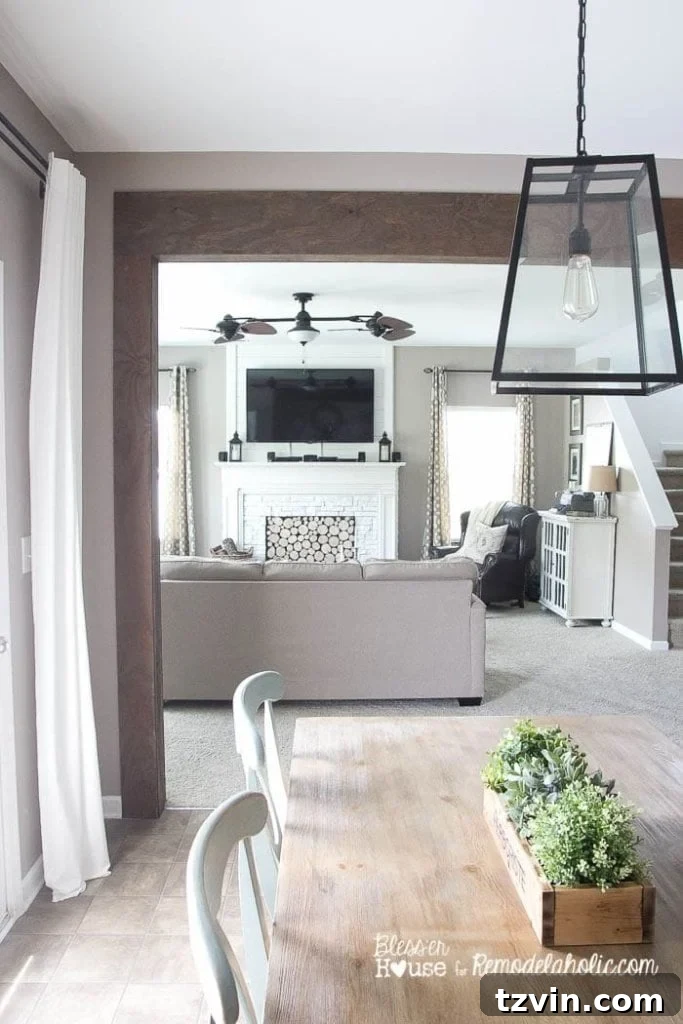
The Aesthetic Impact: Defining Spaces with Rustic Charm
The installation of the faux wood beam has profoundly changed the perception of our open-plan living and breakfast areas. It provides a visual anchor, creating a sense of distinct zones without closing off the space. The rich, distressed finish of the beam introduces a warm, organic element that contrasts beautifully with our lighter walls and contemporary furnishings. This single feature has tied together disparate elements, bringing a much-desired rustic charm that perfectly aligns with our evolving modern farmhouse vision.
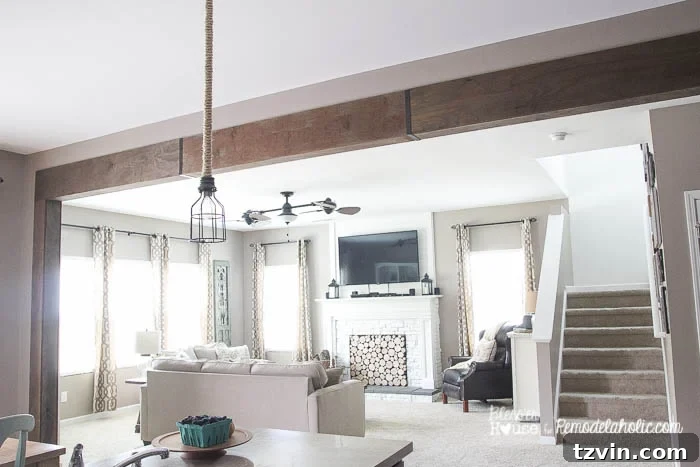
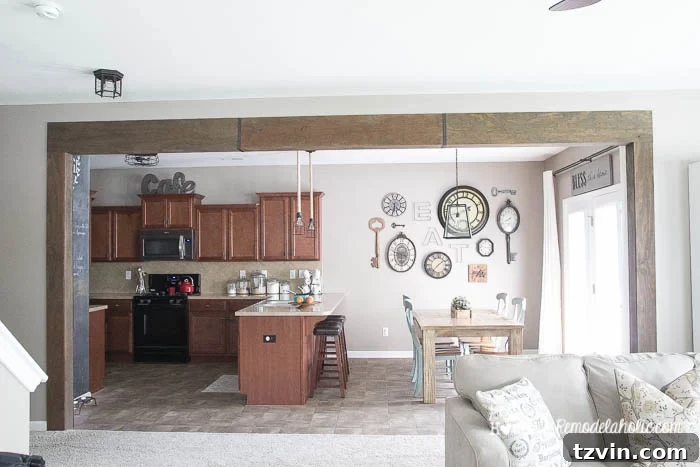
With the beam now firmly in place, it highlights other areas ripe for improvement. For instance, the cherry wood cabinets in the adjacent kitchen now stand out even more, making us eager to tackle a cabinet refresh sooner rather than later. Such is the nature of home renovation – one completed project often inspires the next!
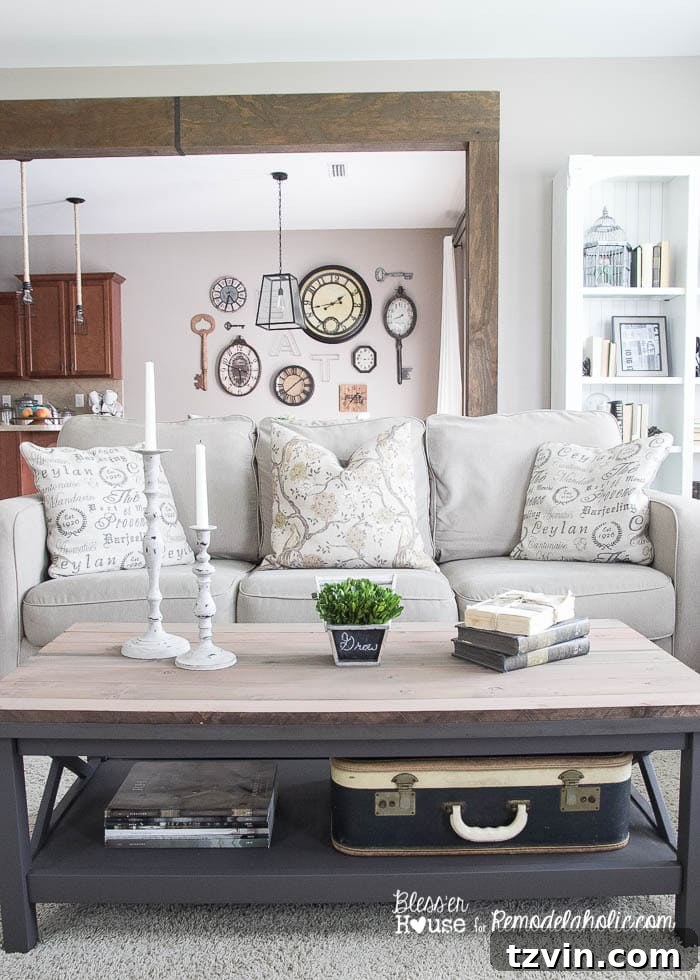
The back of our sofa, a prominent feature in the living area, also seems to be calling for a custom console table to complete the look. These ongoing desires are part of the charm of creating a home that truly reflects you. There always seems to be another project on the horizon, but it’s equally important to pause, take a deep breath, and appreciate how far we’ve come. Each successful DIY project adds another layer of personality and value to our home, making it feel more like ‘us’ with every hammer swing and paint stroke.
Why Choose a DIY Faux Wood Beam?
- Cost-Effective: As demonstrated, achieving the look of a solid wood beam for a fraction of the cost is entirely possible. Plywood or common lumber, when properly cut, assembled, and stained, can mimic expensive reclaimed wood remarkably well.
- Lightweight: Real solid wood beams are incredibly heavy, often requiring extensive structural reinforcement. Faux beams are much lighter, making installation easier and safer for DIYers, with less strain on existing structures.
- Versatile Style: Whether your home leans towards modern farmhouse, rustic, industrial, or even traditional, a wood beam can complement and enhance the aesthetic. The choice of stain and distressing techniques allows for complete customization.
- Significant Impact: Few other budget-friendly projects can deliver such a dramatic transformation. A beam instantly draws the eye, defines spaces, and adds a sense of permanence and quality.
- DIY-Friendly: While it involves some basic carpentry skills and tools, the construction of a faux beam is largely about cutting straight lines, assembling boxes, and applying finishes – all achievable for the enthusiastic amateur.
Ready to Add Character to Your Home?
If your home features a bland doorway that’s begging for a dose of personality, a DIY wood beam might just be the perfect project for you. It’s a fantastic way to introduce architectural interest, define an open-plan space, and elevate your home’s overall aesthetic without a hefty price tag. We wholeheartedly recommend exploring this project for its sheer impact and the immense satisfaction it brings.
We’re genuinely thrilled with the progress we’re making on our modern farmhouse journey, and projects like this wood beam doorway are crucial steps in transforming our builder-grade house into a personalized sanctuary. It proves that with a little vision, some elbow grease, and smart material choices, you can achieve high-end results on a DIY budget.
Curious about the nitty-gritty details, material lists, and step-by-step instructions? You can discover all the comprehensive details here to start planning your own stunning wood beam doorway transformation.
Frequently Asked Questions About DIY Wood Beams
Q: What materials are typically used for a faux wood beam?
A: Faux wood beams are commonly constructed from lightweight lumber like pine or fir, often using plywood or common dimensional lumber (e.g., 1x6s, 1x8s) to form a three-sided box. This box is then stained or painted to resemble solid wood.
Q: How difficult is it to install a DIY wood beam doorway?
A: The difficulty level is moderate. It requires basic carpentry skills, including accurate measuring, cutting, and assembly. Having a helper is highly recommended for holding pieces during installation. If you’ve tackled other DIY projects like building shelves or trim, this project should be within your capabilities.
Q: Can I achieve different looks with a faux wood beam?
A: Absolutely! The beauty of a faux beam lies in its customizability. You can choose stains ranging from light natural wood tones to dark, rich walnuts. Distressing techniques can add an aged, reclaimed look. You can also vary the beam’s dimensions and placement to suit different architectural styles.
Q: Is this project suitable for renters?
A: As it involves permanent structural changes (attaching to the doorway frame), this project is generally not suitable for renters unless you have explicit written permission from your landlord and are prepared to reverse the changes upon moving out (which can be difficult).
Q: What tools will I need for this project?
A: Essential tools typically include a miter saw or circular saw, a drill, measuring tape, level, stud finder, wood glue, and a nail gun (or hammer and nails). Sandpaper, wood filler, and staining supplies will also be necessary for finishing.
What are your thoughts? Are you envisioning a wooden beam in your own home? We’d love to hear your ideas and experiences!